Search
00
GBAF Logo
trophy
Top StoriesInterviewsBusinessFinanceBankingTechnologyInvestingTradingVideosAwardsMagazinesHeadlinesTrends

Subscribe to our newsletter

Get the latest news and updates from our team.

Global Banking & Finance Review®

Global Banking & Finance Review® - Subscribe to our newsletter

Company

    GBAF Logo
    • About Us
    • Profile
    • Privacy & Cookie Policy
    • Terms of Use
    • Contact Us
    • Advertising
    • Submit Post
    • Latest News
    • Research Reports
    • Press Release
    • Awards▾
      • About the Awards
      • Awards TimeTable
      • Submit Nominations
      • Testimonials
      • Media Room
      • Award Winners
      • FAQ
    • Magazines▾
      • Global Banking & Finance Review Magazine Issue 79
      • Global Banking & Finance Review Magazine Issue 78
      • Global Banking & Finance Review Magazine Issue 77
      • Global Banking & Finance Review Magazine Issue 76
      • Global Banking & Finance Review Magazine Issue 75
      • Global Banking & Finance Review Magazine Issue 73
      • Global Banking & Finance Review Magazine Issue 71
      • Global Banking & Finance Review Magazine Issue 70
      • Global Banking & Finance Review Magazine Issue 69
      • Global Banking & Finance Review Magazine Issue 66
    Top StoriesInterviewsBusinessFinanceBankingTechnologyInvestingTradingVideosAwardsMagazinesHeadlinesTrends

    Global Banking & Finance Review® is a leading financial portal and online magazine offering News, Analysis, Opinion, Reviews, Interviews & Videos from the world of Banking, Finance, Business, Trading, Technology, Investing, Brokerage, Foreign Exchange, Tax & Legal, Islamic Finance, Asset & Wealth Management.
    Copyright © 2010-2026 GBAF Publications Ltd - All Rights Reserved. | Sitemap | Tags | Developed By eCorpIT

    Editorial & Advertiser disclosure

    Global Banking & Finance Review® is an online platform offering news, analysis, and opinion on the latest trends, developments, and innovations in the banking and finance industry worldwide. The platform covers a diverse range of topics, including banking, insurance, investment, wealth management, fintech, and regulatory issues. The website publishes news, press releases, opinion and advertorials on various financial organizations, products and services which are commissioned from various Companies, Organizations, PR agencies, Bloggers etc. These commissioned articles are commercial in nature. This is not to be considered as financial advice and should be considered only for information purposes. It does not reflect the views or opinion of our website and is not to be considered an endorsement or a recommendation. We cannot guarantee the accuracy or applicability of any information provided with respect to your individual or personal circumstances. Please seek Professional advice from a qualified professional before making any financial decisions. We link to various third-party websites, affiliate sales networks, and to our advertising partners websites. When you view or click on certain links available on our articles, our partners may compensate us for displaying the content to you or make a purchase or fill a form. This will not incur any additional charges to you. To make things simpler for you to identity or distinguish advertised or sponsored articles or links, you may consider all articles or links hosted on our site as a commercial article placement. We will not be responsible for any loss you may suffer as a result of any omission or inaccuracy on the website.

    Home > Top Stories > Analysis-As Japan aligns with U.S. chip curbs on China, some in Tokyo feel uneasy
    Top Stories

    Analysis-As Japan aligns with U.S. chip curbs on China, some in Tokyo feel uneasy

    Published by Uma Rajagopal

    Posted on July 24, 2023

    5 min read

    Last updated: February 1, 2026

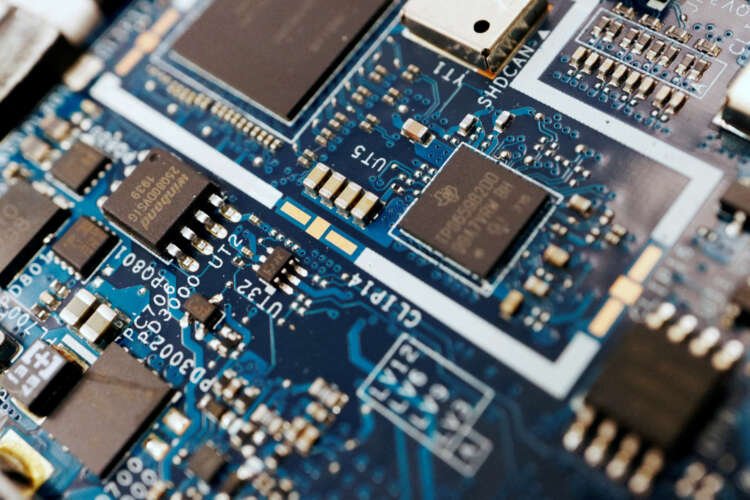
    An illustration showcasing semiconductor chips on a circuit board, relevant to Japan's recent export restrictions on chip-making tools aligned with U.S. policy against China. This image reflects the growing tensions in global chip manufacturing.
    Illustration of semiconductor chips on a circuit board, highlighting Japan's chip export controls - Global Banking & Finance Review
    Why waste money on news and opinion when you can access them for free?

    Take advantage of our newsletter subscription and stay informed on the go!

    Subscribe

    Tags:technologyinnovationfinancial servicesInternational tradeinvestment

    Analysis-As Japan aligns with U.S. chip curbs on China, some in Tokyo feel uneasy

    By Tim Kelly, Karen Freifeld and Kentaro Sugiyama

    TOKYO/NEW YORK (Reuters) – Japan’s imposition of export controls on chip making tools to align with a U.S. policy restricting China’s ability to produce advanced semiconductors is worrying some officials in Tokyo who believe a combative U.S. approach may hamper coordination and needlessly provoke Beijing.

    From this week, Japan is restricting 23 types of equipment, ranging from machines that deposit films on silicon wafers to devices that etch out the microscopic circuits of chips that could have military uses.

    But, while the U.S. referenced China 20 times in its October announcement targeting Chinese companies, Japan has chosen broad equipment controls not specifically aimed at its bigger neighbour.

    “We feel an odd discomfort with how the U.S. is doing this. There’s no need to identify the country, all you need to do is control the item,” a Japanese industry ministry official told Reuters. Japan can’t sanction countries unless they are involved in a conflict, the source added.

    Japan’s trade and industry minister told reporters when announcing Japan’s measure in March that China was only one of 160 countries and regions that would be subject to controls and that Japan’s rules were not meant to follow the U.S.

    Even so, China has warned Japan to backdown.

    Tokyo and Washington share concerns about China’s push for advanced technologies and in May agreed with other Group of Seven industrial democracies on “de-risking” from potential Chinese economic coercion.

    However, differences in chip making equipment controls could test that unity, should either gain a competitive advantage over the other by allowing exports the other blocked.

    “Each country is responsible for its own licensing policies, and on top of that it’s up to each country to enforce the licensing decisions that it undertakes,” said Emily Benson, the director of the trade and technology project at the bipartisan nonprofit Center for Strategic and International Studies in Washington.

    Japan is not applying a U.S. standard of presumption of denial and will allow exports whenever possible, a second Japanese government official said. The Japanese government sources asked to remain anonymous because of the sensitivity of the issue.

    There may also be underlying tensions because unlike Japan and the Netherlands, which will implement controls starting September, the U.S. is not limiting restrictions to specific tools.

    “The U.S. rules still restrict other items and services the others do not,” said Washington trade lawyer Kevin Wolf.

    Reuters contacted six chip tool makers in Japan. Two of them, deposition machinery maker Kokusai Electric and Japan’s leading chip tool maker Tokyo Electron, said they expect Japan’s controls to have a limited business impact.

    Chip tester company Advantest Corp said none of its products are affected.

    Lithography machine makers Nikon Corp and Canon Inc, and wafer cleaner manufacturer Screen Holdings did not respond.

    COORDINATION

    Dovetailing Japan’s controls with those of the U.S. and the Netherlands will require close coordination.

    “The issue in all these things is, what is it you can let go safely and what do you need to block. Everyone draws the line a little bit differently,” said Jim Lewis, a former U.S. State Department and Commerce Department official, and a researcher at the Center for Strategic and International Studies (CSIS). He has met with Japanese trade officials and believes Tokyo is committed to curbing certain exports.

    Tokyo, Amsterdam and Washington have all indicated they would like chip tools added to a list of weapons, dual-use goods and technologies controlled by the 42 nations that are party to the Wassenaar Arrangement established after the Cold War.

    They are unlikely, however, to win the unanimous backing they need from its members.

    “The Wassenaar arrangement is next to hopeless because Russia’s a member,” said Lewis. “You’re never going to start by getting universal consensus. So, pick the guys who care and get them to work together.”

    The alternative is to form a closer group with the U.S. and the Netherlands to oversee chip manufacturing tools that could eventually include other countries, the first Japanese industry ministry official said.

    The U.S. Commerce Department and Dutch government declined to comment. The White House did not respond to a request for comment.

    BROADER RESTRICTIONS

    In the meantime, U.S. President Joe Biden’s administrationis expected to update its October rules, in part to align with the broader Japanese tool list.

    It could also go further than the Netherlands in limiting what Dutch lithography manufacturer ASML can supply to certain Chinese plants, Reuters exclusively reported last month. The U.S. can regulate ASML directly as its equipment includes U.S. parts. At the time, sources expected the updates in July, but that now appears unlikely.

    “Part of the reason it’s taking so long is that the U.S. is still talking to Japan. They need to make sure that if they block anything, that they similarly block it in Japan,” said a source familiar with the discussion.

    Tokyo remains worried that targeting China will provoke damaging retaliation, such as a ban on Japanese electric cars, a third Japanese industry official said.

    “What advantage is there to making someone lose face, unless that is your objective.”

    (Reporting by Tim Kelly Karen Freifeld, Kentaro Sugiyama; additional reporting by Toby Sterling and Yoshifumi Takemoto; Editing by Lincoln Feast)

    Frequently Asked Questions about Analysis-As Japan aligns with U.S. chip curbs on China, some in Tokyo feel uneasy

    1What is military use in technology?

    Military use in technology refers to the application of technological advancements for defense and warfare purposes, including weapons systems, surveillance, and communication technologies.

    2What are dual-use goods?

    Dual-use goods are items that can be used for both civilian and military applications, often subject to export controls to prevent misuse.

    More from Top Stories

    Explore more articles in the Top Stories category

    Image for Lessons From the Ring and the Deal Table: How Boxing Shapes Steven Nigro’s Approach to Banking and Life
    Lessons From the Ring and the Deal Table: How Boxing Shapes Steven Nigro’s Approach to Banking and Life
    Image for Joe Kiani in 2025: Capital, Conviction, and a Focused Return to Innovation
    Joe Kiani in 2025: Capital, Conviction, and a Focused Return to Innovation
    Image for Marco Robinson – CLOSE THE DEAL AND SUDDENLY GROW RICH
    Marco Robinson – CLOSE THE DEAL AND SUDDENLY GROW RICH
    Image for Digital Tracing: Turning a regulatory obligation into a commercial advantage
    Digital Tracing: Turning a regulatory obligation into a commercial advantage
    Image for Exploring the Role of Blockchain and the Bitcoin Price Today in Education
    Exploring the Role of Blockchain and the Bitcoin Price Today in Education
    Image for Inside the World’s First Collection Industry Conglomerate: PCA Global’s Platform Strategy
    Inside the World’s First Collection Industry Conglomerate: PCA Global’s Platform Strategy
    Image for Chase Buchanan Private Wealth Management Highlights Key Autumn 2025 Budget Takeaways for Expats
    Chase Buchanan Private Wealth Management Highlights Key Autumn 2025 Budget Takeaways for Expats
    Image for PayLaju Strengthens Its Position as Malaysia’s Trusted Interest-Free Sharia-Compliant Loan Provider
    PayLaju Strengthens Its Position as Malaysia’s Trusted Interest-Free Sharia-Compliant Loan Provider
    Image for A Notable Update for Employee Health Benefits:
    A Notable Update for Employee Health Benefits:
    Image for Creating Equity Between Walls: How Mohak Chauhan is Using Engineering, Finance, and Community Vision to Reengineer Affordable Housing
    Creating Equity Between Walls: How Mohak Chauhan is Using Engineering, Finance, and Community Vision to Reengineer Affordable Housing
    Image for Upcoming Book on Real Estate Investing: Harvard Grace Capital Founder Stewart Heath’s Puts Lessons in Print
    Upcoming Book on Real Estate Investing: Harvard Grace Capital Founder Stewart Heath’s Puts Lessons in Print
    Image for ELECTIVA MARKS A LANDMARK FIRST YEAR WITH MAJOR SENIOR APPOINTMENTS AND EXPANSION MILESTONES
    ELECTIVA MARKS A LANDMARK FIRST YEAR WITH MAJOR SENIOR APPOINTMENTS AND EXPANSION MILESTONES
    View All Top Stories Posts
    Previous Top Stories PostUK firms grow at slowest in 6 months as rate hikes weigh: PMI
    Next Top Stories PostPhilips slightly raises 2023 outlook after Q2 core profit beat