Search
00
GBAF Logo
trophy
Top StoriesInterviewsBusinessFinanceBankingTechnologyInvestingTradingVideosAwardsMagazinesHeadlinesTrends

Subscribe to our newsletter

Get the latest news and updates from our team.

Global Banking & Finance Review®

Global Banking & Finance Review® - Subscribe to our newsletter

Company

    GBAF Logo
    • About Us
    • Profile
    • Privacy & Cookie Policy
    • Terms of Use
    • Contact Us
    • Advertising
    • Submit Post
    • Latest News
    • Research Reports
    • Press Release
    • Awards▾
      • About the Awards
      • Awards TimeTable
      • Submit Nominations
      • Testimonials
      • Media Room
      • Award Winners
      • FAQ
    • Magazines▾
      • Global Banking & Finance Review Magazine Issue 79
      • Global Banking & Finance Review Magazine Issue 78
      • Global Banking & Finance Review Magazine Issue 77
      • Global Banking & Finance Review Magazine Issue 76
      • Global Banking & Finance Review Magazine Issue 75
      • Global Banking & Finance Review Magazine Issue 73
      • Global Banking & Finance Review Magazine Issue 71
      • Global Banking & Finance Review Magazine Issue 70
      • Global Banking & Finance Review Magazine Issue 69
      • Global Banking & Finance Review Magazine Issue 66
    Top StoriesInterviewsBusinessFinanceBankingTechnologyInvestingTradingVideosAwardsMagazinesHeadlinesTrends

    Global Banking & Finance Review® is a leading financial portal and online magazine offering News, Analysis, Opinion, Reviews, Interviews & Videos from the world of Banking, Finance, Business, Trading, Technology, Investing, Brokerage, Foreign Exchange, Tax & Legal, Islamic Finance, Asset & Wealth Management.
    Copyright © 2010-2026 GBAF Publications Ltd - All Rights Reserved. | Sitemap | Tags | Developed By eCorpIT

    Editorial & Advertiser disclosure

    Global Banking & Finance Review® is an online platform offering news, analysis, and opinion on the latest trends, developments, and innovations in the banking and finance industry worldwide. The platform covers a diverse range of topics, including banking, insurance, investment, wealth management, fintech, and regulatory issues. The website publishes news, press releases, opinion and advertorials on various financial organizations, products and services which are commissioned from various Companies, Organizations, PR agencies, Bloggers etc. These commissioned articles are commercial in nature. This is not to be considered as financial advice and should be considered only for information purposes. It does not reflect the views or opinion of our website and is not to be considered an endorsement or a recommendation. We cannot guarantee the accuracy or applicability of any information provided with respect to your individual or personal circumstances. Please seek Professional advice from a qualified professional before making any financial decisions. We link to various third-party websites, affiliate sales networks, and to our advertising partners websites. When you view or click on certain links available on our articles, our partners may compensate us for displaying the content to you or make a purchase or fill a form. This will not incur any additional charges to you. To make things simpler for you to identity or distinguish advertised or sponsored articles or links, you may consider all articles or links hosted on our site as a commercial article placement. We will not be responsible for any loss you may suffer as a result of any omission or inaccuracy on the website.

    Home > Top Stories > Analysis-As inflation bites, Japan’s PM finds unlikely ally in labour unions
    Top Stories

    Analysis-As inflation bites, Japan’s PM finds unlikely ally in labour unions

    Published by Wanda Rich

    Posted on August 4, 2022

    5 min read

    Last updated: February 5, 2026

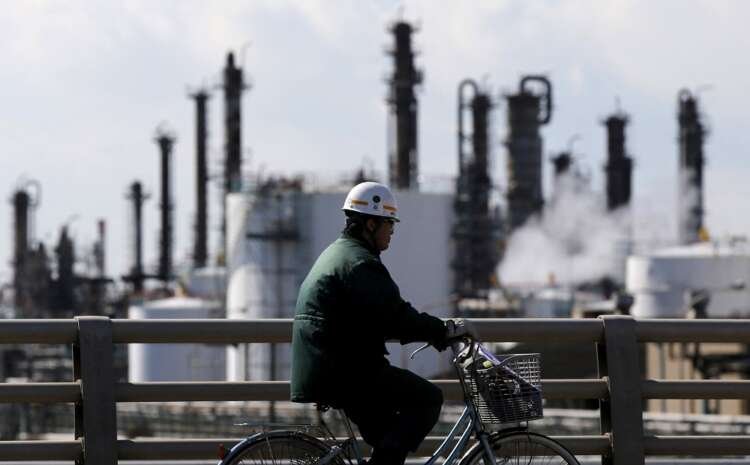
    This image depicts a worker cycling by a factory in Japan, symbolizing the crucial role of labor unions as Prime Minister Kishida seeks to address inflation and wage stagnation in the country's economy.
    A worker cycling near a factory in Japan, highlighting the connection between labor unions and economic recovery - Global Banking & Finance Review
    Why waste money on news and opinion when you can access them for free?

    Take advantage of our newsletter subscription and stay informed on the go!

    Subscribe

    Tags:economic growthfinancial stability

    By Tetsushi Kajimoto and Leika Kihara

    TOKYO (Reuters) – As Japan faces its first major battle with inflation in decades, Prime Minister Fumio Kishida is extending a rare olive branch to labour unions, who he sees as crucial to his wider push to boost household wealth.

    Wage stagnation has blighted Japan’s workers for years as the country was mired in a deflationary mindset that stopped firms raising salaries, and as weakened unions shied away from demanding more pay.

    As part of his “new capitalism” platform to widen wealth distribution, Kishida has urged firms to boost pay and give households spending power to tolerate higher prices.

    He is also approaching unions for help in achieving what other countries would frown upon: a spiral of rising inflation triggering strong wage growth.

    In January, Kishida became the first premier in almost a decade to attend a new year party held by Rengo, the main umbrella union, in a rare gesture to organised labour by the head of the pro-business Liberal Democratic Party.

    At the event, he called for labour union help in achieving “a bold turnaround in the downtrend in wage levels seen in recent years” and “wage hikes befitting an era of new capitalism.”

    In June, he made a similarly rare visit to Toyota Motor Corp’s factory in what some politicians saw as a bid to court union votes.

    The attempt to close some of the distance between unions and government illustrates the depth of Japan’s economic woes and has, at least for now, put Kishida on the same side as organised labour in calling for higher wages.

    SEIZING THE MOMENT

    Japan’s recent union history has been unspectacular.

    Most unions are in-house bodies representing employees at their firms, rather than on an industry basis. As such, they tend to prioritise job security over pay.

    Now, however, conditions for higher wages appear to be falling into place in ways never seen in deflation-prone Japan.

    The job market is at its tightest in decades and inflation exceeded the central bank’s 2% target for the first time in seven years, pressuring firms to raise wages.

    Shedding its image as a counter-force to a pro-business government, labour unions, too, are warming to the administration as they seek ways to put their ideas into practice beyond relying on a weak, fragmented opposition.

    Tomoko Yoshino, head of Rengo, attended a ruling party meeting in April as a token gesture of support toward its policy on work-style reform.

    “It’s true some of Kishida’s proposals mesh with ours,” such as steps to narrow income disparity, said Hiroya Nakai, an executive at Japanese Association of Metal, Machinery and Manufacturing Workers – a union for small manufacturers.

    “At times it’s necessary to make proposals to the ruling party,” he said.

    The relationship between Kishida and unions contrasts with that of many other countries, where governments see current demands for wage hikes as a risk that could trigger unwelcome inflation.

    It also highlights Japan’s unique situation where a tight job market does not necessarily lead to broad-based wage rises.

    Japan’s average wages have hardly risen since the early 1990s and were the lowest among G7 advanced nations last year, according to OECD data.

    There are signs of change as a rapidly ageing society intensifies labour shortages. Firms agreed with unions to raise average wages by 2.07% this fiscal year, up from 1.78% last year to mark the biggest hike since 2015, Rengo estimates show.

    With inflation rising above 2%, unions are gearing up to demand even higher pay next year.

    “We must bear in mind that inflation is accelerating and pushing real wages into negative territory,” said Akira Nidaira, an executive at Rengo. “The key is whether Japan can finally eradicate the public’s deflationary mindset.”

    DEFLATION IS OVER

    Many analysts, however, doubt unions have the teeth to demand wage hikes big enough to offset rising inflation, and see the changing nature of work undermine such efforts.

    “Japan’s job market is diversifying, raising questions about the relevance of labour unions,” said Kotaro Tsuru, a professor at Keio University. “If they cling to their traditional focus on protecting permanent workers’ jobs, their fate is sealed.”

    As Japan’s labour market tightens, job security has become less attractive for younger workers who change employers more often than their older counterparts.

    Tracking global trends, union membership has been declining longer term. It hit 16.9% in 2021, hovering near an all-time low and well below 30.5% in 1982.

    “I don’t think labour unions are playing their role. Wages aren’t rising as much as I hoped,” said a 25-year-old employee at a major Japanese manufacturer and in-house union member.

    “Unions might prove useful some day but on a daily basis, they don’t seem to be pro-active,” said the employee, who spoke on condition of anonymity due to the sensitivity of the matter.

    Also working against unions, almost 40% of employees are now non-regular workers and mostly unprotected by unions.

    While some unions now allow non-regular workers to join, most still prioritise permanent workers.

    “Labour unions haven’t adapted themselves to the changing needs of the younger generation,” said Hisashi Yamada, senior economist at Japan Research Institute.

    “Accustomed to prolonged economic stagnation, they seem to have forgotten how to demand wage hikes,” he said. “That needs to change as the era of deflation and dis-inflation is over.”

    (Reporting by Tetsushi Kajimoto and Leika Kihara; Additional reporting by Kantaro Komiya, Daniel Leussink and David Dolan; Editing by Sam Holmes)

    Frequently Asked Questions about Analysis-As inflation bites, Japan’s PM finds unlikely ally in labour unions

    1What is inflation?

    Inflation is the rate at which the general level of prices for goods and services rises, eroding purchasing power. It is typically measured by the Consumer Price Index (CPI).

    2What is wage growth?

    Wage growth refers to the increase in the average pay of workers over time. It can be influenced by various factors, including inflation, demand for labor, and economic conditions.

    3What is the labour market?

    The labour market is the supply and demand for labor, where employers seek to hire workers and individuals seek employment. It is influenced by economic conditions and policies.

    4What is economic growth?

    Economic growth is the increase in the production of goods and services in an economy over time, typically measured by the rise in Gross Domestic Product (GDP).

    More from Top Stories

    Explore more articles in the Top Stories category

    Image for Lessons From the Ring and the Deal Table: How Boxing Shapes Steven Nigro’s Approach to Banking and Life
    Lessons From the Ring and the Deal Table: How Boxing Shapes Steven Nigro’s Approach to Banking and Life
    Image for Joe Kiani in 2025: Capital, Conviction, and a Focused Return to Innovation
    Joe Kiani in 2025: Capital, Conviction, and a Focused Return to Innovation
    Image for Marco Robinson – CLOSE THE DEAL AND SUDDENLY GROW RICH
    Marco Robinson – CLOSE THE DEAL AND SUDDENLY GROW RICH
    Image for Digital Tracing: Turning a regulatory obligation into a commercial advantage
    Digital Tracing: Turning a regulatory obligation into a commercial advantage
    Image for Exploring the Role of Blockchain and the Bitcoin Price Today in Education
    Exploring the Role of Blockchain and the Bitcoin Price Today in Education
    Image for Inside the World’s First Collection Industry Conglomerate: PCA Global’s Platform Strategy
    Inside the World’s First Collection Industry Conglomerate: PCA Global’s Platform Strategy
    Image for Chase Buchanan Private Wealth Management Highlights Key Autumn 2025 Budget Takeaways for Expats
    Chase Buchanan Private Wealth Management Highlights Key Autumn 2025 Budget Takeaways for Expats
    Image for PayLaju Strengthens Its Position as Malaysia’s Trusted Interest-Free Sharia-Compliant Loan Provider
    PayLaju Strengthens Its Position as Malaysia’s Trusted Interest-Free Sharia-Compliant Loan Provider
    Image for A Notable Update for Employee Health Benefits:
    A Notable Update for Employee Health Benefits:
    Image for Creating Equity Between Walls: How Mohak Chauhan is Using Engineering, Finance, and Community Vision to Reengineer Affordable Housing
    Creating Equity Between Walls: How Mohak Chauhan is Using Engineering, Finance, and Community Vision to Reengineer Affordable Housing
    Image for Upcoming Book on Real Estate Investing: Harvard Grace Capital Founder Stewart Heath’s Puts Lessons in Print
    Upcoming Book on Real Estate Investing: Harvard Grace Capital Founder Stewart Heath’s Puts Lessons in Print
    Image for ELECTIVA MARKS A LANDMARK FIRST YEAR WITH MAJOR SENIOR APPOINTMENTS AND EXPANSION MILESTONES
    ELECTIVA MARKS A LANDMARK FIRST YEAR WITH MAJOR SENIOR APPOINTMENTS AND EXPANSION MILESTONES
    View All Top Stories Posts
    Previous Top Stories PostBayer’s agriculture unit, consumer health drive outlook hike
    Next Top Stories PostVoestalpine warns outlook depends on continued gas supplies