Search
00
GBAF Logo
trophy
Top StoriesInterviewsBusinessFinanceBankingTechnologyInvestingTradingVideosAwardsMagazinesHeadlinesTrends

Subscribe to our newsletter

Get the latest news and updates from our team.

Global Banking and Finance Review

Global Banking & Finance Review

Company

    GBAF Logo
    • About Us
    • Profile
    • Wealth
    • Privacy & Cookie Policy
    • Terms of Use
    • Contact Us
    • Advertising
    • Submit Post
    • Latest News
    • Research Reports
    • Press Release
    • Awards▾
      • About the Awards
      • Awards TimeTable
      • Submit Nominations
      • Testimonials
      • Media Room
      • Award Winners
      • FAQ

    Global Banking & Finance Review® is a leading financial portal and online magazine offering News, Analysis, Opinion, Reviews, Interviews & Videos from the world of Banking, Finance, Business, Trading, Technology, Investing, Brokerage, Foreign Exchange, Tax & Legal, Islamic Finance, Asset & Wealth Management.
    Copyright © 2010-2025 GBAF Publications Ltd - All Rights Reserved.

    ;
    Editorial & Advertiser disclosure

    Global Banking and Finance Review is an online platform offering news, analysis, and opinion on the latest trends, developments, and innovations in the banking and finance industry worldwide. The platform covers a diverse range of topics, including banking, insurance, investment, wealth management, fintech, and regulatory issues. The website publishes news, press releases, opinion and advertorials on various financial organizations, products and services which are commissioned from various Companies, Organizations, PR agencies, Bloggers etc. These commissioned articles are commercial in nature. This is not to be considered as financial advice and should be considered only for information purposes. It does not reflect the views or opinion of our website and is not to be considered an endorsement or a recommendation. We cannot guarantee the accuracy or applicability of any information provided with respect to your individual or personal circumstances. Please seek Professional advice from a qualified professional before making any financial decisions. We link to various third-party websites, affiliate sales networks, and to our advertising partners websites. When you view or click on certain links available on our articles, our partners may compensate us for displaying the content to you or make a purchase or fill a form. This will not incur any additional charges to you. To make things simpler for you to identity or distinguish advertised or sponsored articles or links, you may consider all articles or links hosted on our site as a commercial article placement. We will not be responsible for any loss you may suffer as a result of any omission or inaccuracy on the website.

    Top Stories

    Alphabet’s Waymo to stop selling lidar self-driving car sensors

    Alphabet’s Waymo to stop selling lidar self-driving car sensors

    Published by maria gbaf

    Posted on August 27, 2021

    Featured image for article about Top Stories

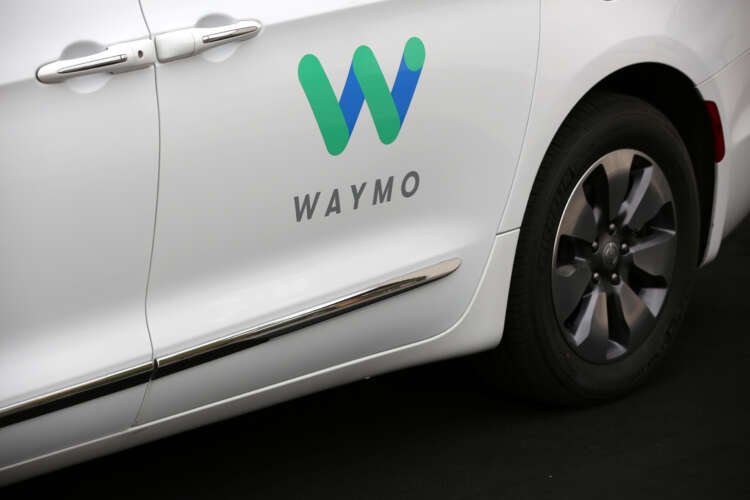
    SAN FRANCISCO (Reuters) -Alphabet Inc’s self-driving unit Waymo said on Thursday that it has ended a two-year effort to sell light detection and ranging (lidar) sensors to other companies.

    This is a reversal from its earlier strategy to sell the lidars to non-automotive customers to bring down costs of a key and expensive component of self-driving cars.

    “We’re winding down our commercial lidar business as we maintain our focus on developing and deploying our Waymo Driver across our Waymo One (ride-hailing) and Waymo Via (delivery) units,” a Waymo spokesperson said in a statement.

    The spokesperson, however, said it will continue to build its lidars in-house.

    According to a person familiar with the matter, Waymo is considering both internal technology and external suppliers for its next-generation lidars.

    The move to stop selling lidars comes after the departure of CEO John Krafcik and some other executives, which had fueled questions about whether Waymo would rethink its strategy after failing to generate significant revenue for over a decade.

    In 2019, Waymo said it was going to sell one of its three different in-house lidars to customers in robotics, farming and others, not to rival self-driving car firms.

    “We can scale our autonomous technology faster, making each sensor more affordable through economies of scale,” Simon Verghese, Head of Lidar Team, said at that time.

    It was not clear whether Waymo was able to generate enough revenue to offset development and operational costs of its lidar sales business.

    Lidars use laser pulses to measure distances and render precise images of the environment around the car. Most self-driving firms, including Waymo, say lidars are key to achieving full autonomy. Tesla CEO Elon Musk said companies that rely on the expensive sensors are “doomed.”

    Waymo in 2018 launched the first commercial self-driving taxis, retrofitting Chrysler’s minivan with its own self-driving hardware. But it has not yet expanded and scaled up the technology beyond limited areas in suburban Phoenix, and it has recently launched public testing around dense San Francisco with a Jaguar electric car and a new suite of sensors.

    In 2011, Waymo began developing its own set of sensors from the ground up, including three types of lidars, including short-range lidars dubbed Laser Bear Honeycomb.

    But Tim Willis, general manager of the company’s Laser Bear lidars, left the company in February and joined lidar company Aeva, according to his LinkedIn profile.

    Australian Droid + Robot tested prototype robots with Waymo’s Honeycomb lidars in mines in Australia.

    “Everyone knew the risks associated with that venture,” Mat Allan, manager of perception and AI at Australian Droid + Robot, told Reuters. “It’s a good product. We haven’t found anything that matches price to performance… It’s a shame though we couldn’t continue the journey,” he said.

    (Reporting by Hyunjoo Jin, Paresh Dave, Stephen Nellis in San Francisco; Editing by Himani Sarkar and Gerry Doyle)

    SAN FRANCISCO (Reuters) -Alphabet Inc’s self-driving unit Waymo said on Thursday that it has ended a two-year effort to sell light detection and ranging (lidar) sensors to other companies.

    This is a reversal from its earlier strategy to sell the lidars to non-automotive customers to bring down costs of a key and expensive component of self-driving cars.

    “We’re winding down our commercial lidar business as we maintain our focus on developing and deploying our Waymo Driver across our Waymo One (ride-hailing) and Waymo Via (delivery) units,” a Waymo spokesperson said in a statement.

    The spokesperson, however, said it will continue to build its lidars in-house.

    According to a person familiar with the matter, Waymo is considering both internal technology and external suppliers for its next-generation lidars.

    The move to stop selling lidars comes after the departure of CEO John Krafcik and some other executives, which had fueled questions about whether Waymo would rethink its strategy after failing to generate significant revenue for over a decade.

    In 2019, Waymo said it was going to sell one of its three different in-house lidars to customers in robotics, farming and others, not to rival self-driving car firms.

    “We can scale our autonomous technology faster, making each sensor more affordable through economies of scale,” Simon Verghese, Head of Lidar Team, said at that time.

    It was not clear whether Waymo was able to generate enough revenue to offset development and operational costs of its lidar sales business.

    Lidars use laser pulses to measure distances and render precise images of the environment around the car. Most self-driving firms, including Waymo, say lidars are key to achieving full autonomy. Tesla CEO Elon Musk said companies that rely on the expensive sensors are “doomed.”

    Waymo in 2018 launched the first commercial self-driving taxis, retrofitting Chrysler’s minivan with its own self-driving hardware. But it has not yet expanded and scaled up the technology beyond limited areas in suburban Phoenix, and it has recently launched public testing around dense San Francisco with a Jaguar electric car and a new suite of sensors.

    In 2011, Waymo began developing its own set of sensors from the ground up, including three types of lidars, including short-range lidars dubbed Laser Bear Honeycomb.

    But Tim Willis, general manager of the company’s Laser Bear lidars, left the company in February and joined lidar company Aeva, according to his LinkedIn profile.

    Australian Droid + Robot tested prototype robots with Waymo’s Honeycomb lidars in mines in Australia.

    “Everyone knew the risks associated with that venture,” Mat Allan, manager of perception and AI at Australian Droid + Robot, told Reuters. “It’s a good product. We haven’t found anything that matches price to performance… It’s a shame though we couldn’t continue the journey,” he said.

    (Reporting by Hyunjoo Jin, Paresh Dave, Stephen Nellis in San Francisco; Editing by Himani Sarkar and Gerry Doyle)

    Why waste money on news and opinions when you can access them for free?

    Take advantage of our newsletter subscription and stay informed on the go!

    Subscribe