Search
00
GBAF Logo
trophy
Top StoriesInterviewsBusinessFinanceBankingTechnologyInvestingTradingVideosAwardsMagazinesHeadlinesTrends

Subscribe to our newsletter

Get the latest news and updates from our team.

Global Banking & Finance Review®

Global Banking & Finance Review® - Subscribe to our newsletter

Company

    GBAF Logo
    • About Us
    • Profile
    • Privacy & Cookie Policy
    • Terms of Use
    • Contact Us
    • Advertising
    • Submit Post
    • Latest News
    • Research Reports
    • Press Release
    • Awards▾
      • About the Awards
      • Awards TimeTable
      • Submit Nominations
      • Testimonials
      • Media Room
      • Award Winners
      • FAQ
    • Magazines▾
      • Global Banking & Finance Review Magazine Issue 79
      • Global Banking & Finance Review Magazine Issue 78
      • Global Banking & Finance Review Magazine Issue 77
      • Global Banking & Finance Review Magazine Issue 76
      • Global Banking & Finance Review Magazine Issue 75
      • Global Banking & Finance Review Magazine Issue 73
      • Global Banking & Finance Review Magazine Issue 71
      • Global Banking & Finance Review Magazine Issue 70
      • Global Banking & Finance Review Magazine Issue 69
      • Global Banking & Finance Review Magazine Issue 66
    Top StoriesInterviewsBusinessFinanceBankingTechnologyInvestingTradingVideosAwardsMagazinesHeadlinesTrends

    Global Banking & Finance Review® is a leading financial portal and online magazine offering News, Analysis, Opinion, Reviews, Interviews & Videos from the world of Banking, Finance, Business, Trading, Technology, Investing, Brokerage, Foreign Exchange, Tax & Legal, Islamic Finance, Asset & Wealth Management.
    Copyright © 2010-2026 GBAF Publications Ltd - All Rights Reserved. | Sitemap | Tags | Developed By eCorpIT

    Editorial & Advertiser disclosure

    Global Banking & Finance Review® is an online platform offering news, analysis, and opinion on the latest trends, developments, and innovations in the banking and finance industry worldwide. The platform covers a diverse range of topics, including banking, insurance, investment, wealth management, fintech, and regulatory issues. The website publishes news, press releases, opinion and advertorials on various financial organizations, products and services which are commissioned from various Companies, Organizations, PR agencies, Bloggers etc. These commissioned articles are commercial in nature. This is not to be considered as financial advice and should be considered only for information purposes. It does not reflect the views or opinion of our website and is not to be considered an endorsement or a recommendation. We cannot guarantee the accuracy or applicability of any information provided with respect to your individual or personal circumstances. Please seek Professional advice from a qualified professional before making any financial decisions. We link to various third-party websites, affiliate sales networks, and to our advertising partners websites. When you view or click on certain links available on our articles, our partners may compensate us for displaying the content to you or make a purchase or fill a form. This will not incur any additional charges to you. To make things simpler for you to identity or distinguish advertised or sponsored articles or links, you may consider all articles or links hosted on our site as a commercial article placement. We will not be responsible for any loss you may suffer as a result of any omission or inaccuracy on the website.

    Home > Top Stories > Africa is paying a serious price for Russia’s war in Ukraine
    Top Stories

    Africa is paying a serious price for Russia’s war in Ukraine

    Published by Jessica Weisman-Pitts

    Posted on August 11, 2022

    4 min read

    Last updated: February 4, 2026

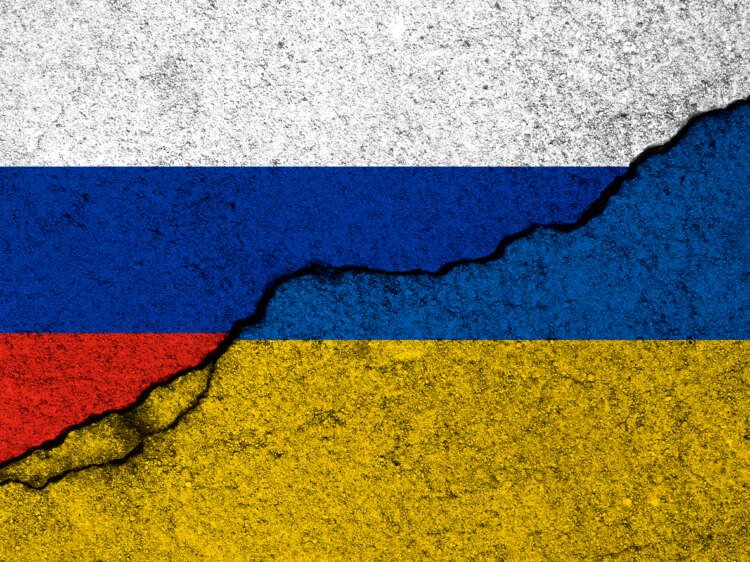
    This image features a cracked concrete wall displaying the flags of Russia and Ukraine, symbolizing the geopolitical tensions affecting global economies. It highlights the severe economic repercussions of the war on Africa, particularly in the context of rising food prices and inflation, as discussed in the article.
    Cracked concrete wall with Russia and Ukraine flags symbolizing global conflict impact - Global Banking & Finance Review
    Why waste money on news and opinion when you can access them for free?

    Take advantage of our newsletter subscription and stay informed on the go!

    Subscribe

    Tags:GDPemerging marketsfinancial crisisInvestment opportunitieseconomic growth

    By Bryan Turner, Partner, Spear Capital

    Bryan Turner, Partner, Spear Capital

    When Russia invaded Ukraine in February, escalating a conflict that began in 2014, many feared that there would be global consequences. Some felt those consequences immediately – most notably the European countries dependent on Russian gas and oil for energy. As the war dragged on through the Northern Hemisphere spring and summer, the consequences spread further.

    Before the war, Ukraine was the world’s largest exporter of sunflower oil, the seventh largest exporter of wheat, and the fourth largest exporter of corn. When the war broke out, however, those exports ground to a halt, sparking fears of a global food crisis. While a recent deal brokered by Turkey allowed exports to resume, global food inflation had already spiked, putting additional pressure on already strained wallets around the globe.

    What’s less well known is that Africa, already buffeted hard by COVID-19 and its attendant impacts, has been particularly hard-hit by the war’s impact. It’s not impossible, however, to mitigate those effects.

    Why Africa’s been hit harder

    While inflation has hit many parts of the world and has seen pressure piled on politicians, there is a distinct difference between its effects in developed world economies and in emerging market countries. This is most obvious in the differences between how much households spend on food and transport.

    In the UK, for example, the average household spent about 13.8% of its income on transport in 2019 (the last year before COVID-19 dramatically shifted commuting patterns). Food costs, meanwhile, account for just under 11% of household income. By comparison, the poorest South Africans spend up to half their household income on food. The figures for public transport can be similarly high.

    While the impacts of inflation on developed world countries are undoubtedly still high (one need only look at the 2 million UK adults who can’t afford to eat every day to see that), it’s not difficult to see why they might be worse in many African countries. In general, there is less wiggle room for households, fewer luxuries to cut back on, and fewer amenities that people can stand going without.

    So, when the cost of food and fuel goes up, more people will go hungry. That, in turn, has the potential to foment political discord and instability, especially in countries that aren’t able to provide even the limited social safety net that a country like South Africa can.

    Investing for a more resilient future

    As the United Nations notes, the war in Ukraine isn’t just a crisis in and of itself. It’s also another layer on top of multiple other crises, including the ongoing supply chain crisis that has its roots in COVID-19 and climate catastrophe. It also underlined how poor infrastructure makes it difficult for surpluses from one country to get to another or even from one part of a country to another.

    We live in an interconnected world but, in order for that system to work effectively, African countries have to be as resilient as possible. A spike in inflation, for instance, is undoubtedly less worrying when lots of people are in secure, well-paying jobs.

    Governments, of course, have a role to play in ensuring that this is the case. In particular, they should always strive to make sure that they strike the right balance between regulatory protections and an economically enabling environment. But investors have a role to play too.

    Even in countries mired in political and socio-economic uncertainty, there are good companies that can create large numbers of jobs while delivering solid returns for investors. Many of them can do so while doing good for the communities around them and the environment. But in order for that to happen, the amount of investment flowing into the continent must keep growing.

    There’s no reason that shouldn’t happen either. There are incredible opportunities to be found on the continent. Sure, there are risks, but experienced investment partners know and understand those risks and can mitigate for them. Even if you’re not interested in the feel-good or impact factor, the opportunities are too significant to ignore.

    Opportunity in crisis

    The war in Ukraine is, without a doubt, a massive humanitarian crisis with global impacts. There’s also no doubt that every effort should be made to bring it to an end as quickly as possible. But that does not mean ignoring the opportunities it presents. Governments, global organisational bodies, and investors should all be using this time to look for ways to ensure a kind of resilience that means no one is left behind the next time a crisis rolls around. Africa is no exception to that.

    Frequently Asked Questions about Africa is paying a serious price for Russia’s war in Ukraine

    1What is inflation?

    Inflation is the rate at which the general level of prices for goods and services rises, eroding purchasing power. It is measured by the Consumer Price Index (CPI) and affects economies globally.

    2What are emerging markets?

    Emerging markets are countries with developing economies that are becoming more integrated into the global economy. They often show rapid growth and investment potential but may also carry higher risks.

    3What are investment opportunities?

    Investment opportunities refer to potential avenues for investing capital to generate returns. These can include stocks, bonds, real estate, and other financial instruments.

    4What is a financial crisis?

    A financial crisis is a situation in which the value of financial institutions or assets drops significantly, leading to a loss of confidence and potential economic downturn.

    More from Top Stories

    Explore more articles in the Top Stories category

    Image for Lessons From the Ring and the Deal Table: How Boxing Shapes Steven Nigro’s Approach to Banking and Life
    Lessons From the Ring and the Deal Table: How Boxing Shapes Steven Nigro’s Approach to Banking and Life
    Image for Joe Kiani in 2025: Capital, Conviction, and a Focused Return to Innovation
    Joe Kiani in 2025: Capital, Conviction, and a Focused Return to Innovation
    Image for Marco Robinson – CLOSE THE DEAL AND SUDDENLY GROW RICH
    Marco Robinson – CLOSE THE DEAL AND SUDDENLY GROW RICH
    Image for Digital Tracing: Turning a regulatory obligation into a commercial advantage
    Digital Tracing: Turning a regulatory obligation into a commercial advantage
    Image for Exploring the Role of Blockchain and the Bitcoin Price Today in Education
    Exploring the Role of Blockchain and the Bitcoin Price Today in Education
    Image for Inside the World’s First Collection Industry Conglomerate: PCA Global’s Platform Strategy
    Inside the World’s First Collection Industry Conglomerate: PCA Global’s Platform Strategy
    Image for Chase Buchanan Private Wealth Management Highlights Key Autumn 2025 Budget Takeaways for Expats
    Chase Buchanan Private Wealth Management Highlights Key Autumn 2025 Budget Takeaways for Expats
    Image for PayLaju Strengthens Its Position as Malaysia’s Trusted Interest-Free Sharia-Compliant Loan Provider
    PayLaju Strengthens Its Position as Malaysia’s Trusted Interest-Free Sharia-Compliant Loan Provider
    Image for A Notable Update for Employee Health Benefits:
    A Notable Update for Employee Health Benefits:
    Image for Creating Equity Between Walls: How Mohak Chauhan is Using Engineering, Finance, and Community Vision to Reengineer Affordable Housing
    Creating Equity Between Walls: How Mohak Chauhan is Using Engineering, Finance, and Community Vision to Reengineer Affordable Housing
    Image for Upcoming Book on Real Estate Investing: Harvard Grace Capital Founder Stewart Heath’s Puts Lessons in Print
    Upcoming Book on Real Estate Investing: Harvard Grace Capital Founder Stewart Heath’s Puts Lessons in Print
    Image for ELECTIVA MARKS A LANDMARK FIRST YEAR WITH MAJOR SENIOR APPOINTMENTS AND EXPANSION MILESTONES
    ELECTIVA MARKS A LANDMARK FIRST YEAR WITH MAJOR SENIOR APPOINTMENTS AND EXPANSION MILESTONES
    View All Top Stories Posts
    Previous Top Stories PostA year of struggle as an Afghan family builds a new life in California
    Next Top Stories PostAnalysis: Antitrust rules, Petro-Canada profits may hinder Suncor from selling unit