
Top Stories
A Gateway for U.S. Capital: Inside Kazakhstan’s Expanding Financial Hub
Published by Wanda Rich
Posted on November 7, 2025
7 min readLast updated: January 19, 2026
Add as preferred source on Google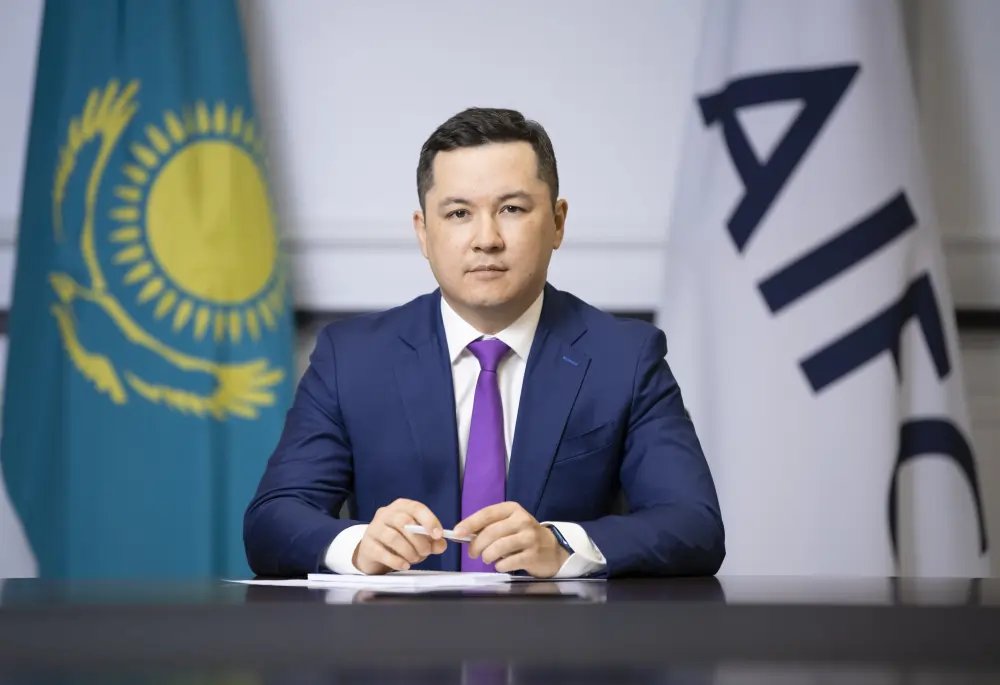
Published by Wanda Rich
Posted on November 7, 2025
7 min readLast updated: January 19, 2026
Add as preferred source on GoogleAs the United States and Central Asian leaders convene for the C5+1 Summit in Washington on November 6, relations between the U.S. and Kazakhstan are entering a new stage of strategic cooperation. Once focused mainly on energy, the partnership now extends into finance, digital innovation, and sustai...
As the United States and Central Asian leaders convene for the C5+1 Summit in Washington on November 6, relations between the U.S. and Kazakhstan are entering a new stage of strategic cooperation. Once focused mainly on energy, the partnership now extends into finance, digital innovation, and sustainable development. A growing number of U.S. investors are looking to Central Asia for new markets, secure supply chains, and access to critical resources. Supporting this broader economic partnership is the Astana International Financial Centre (AIFC), a hub that has positioned itself as Central Asia’s most advanced platform for global investment and capital market integration.
“Central Asia is fast becoming a strategic growth region for investors seeking new markets, diversified supply chains, and access to critical resources,” says Renat Bekturov, Governor of the AIFC. “The Astana International Financial Centre, launched in 2018, is the region’s key financial hub, operating under English common law with an independent court, arbitration centre, and regulator (AFSA).”
The AIFC was built to give foreign investors confidence through clear rules and institutional reliability. It provides a full financial ecosystem, ranging from capital markets and green finance to Islamic finance and digital assets, supported by the Astana International Exchange (AIX) and a regulatory framework based on English law. “Companies can register under flexible ownership and fund structures not available elsewhere in the region,” Bekturov explains. “Documentation and contracts are kept in English, which speeds up transactions and reduces legal risks.”
That clarity has paid off. According to the Global Financial Centres Index (GFCI 38), the AIFC now ranks first in Eastern Europe and Central Asia. More than 4,500 companies from 88 countries are registered at the Centre, including 64 from the United States. “American firms are drawn by its stable legal regime, competitive tax environment, and regional access,” Bekturov says. “U.S. participants are active in ICT, finance, mining, and trade.”
Kazakhstan’s economic links with the U.S. are deepening rapidly. The country already hosts more than 630 American companies, including Microsoft, HP, and Google’s first Central Asian accelerator. Nvidia powers Kazakhstan’s new supercomputer, while Amazon Kuiper and SpaceX are advancing satellite connectivity projects such as Direct2Cell Starlink. “Bilateral trade reached $1.9 billion in the first half of 2025, with U.S. investment exceeding $100 billion to date,” notes Bekturov.
Broadening Beyond Oil and Gas
Since independence, the U.S. has played a central role in Kazakhstan’s economic development, particularly in oil and gas. But Bekturov says the country is now moving beyond its traditional resource base. “Kazakhstan is diversifying toward higher value-added production, with projects like polypropylene and polyethylene manufacturing using U.S. technologies from Lummus Technology and Chevron Phillips Chemicals,” he explains.
Energy diversification is another driver. Kazakhstan is integrating renewables and nuclear power into its long-term energy mix – areas where advanced U.S. technology will be vital. At the same time, global demand for critical minerals is opening new lanes for cooperation. “A recent example is the joint venture between Cove Capital (U.S.) and Tauken-Samruk to explore the Akbulak field,” says Bekturov. “AIFC supports such ventures by offering transparent, English-law-based frameworks and tailored financial instruments, including early exploration funds and investor roadshows for junior mining.”
Emerging Frontiers for U.S. Investors
Looking ahead, infrastructure and technology are high on Bekturov’s list of priorities. “The Middle Corridor, a transcontinental route linking Asia and Europe through Central Asia and the Caspian Sea, is fast becoming a backbone of regional trade,” he says. Recent partnerships, including with U.S. firm Wabtec to boost cargo capacity, illustrate how American expertise is helping expand logistics and transportation networks.
“Kazakhstan is also advancing its technological and digital transformation,” Bekturov adds. “A young, tech-driven population is fueling innovation, with companies like Honeywell and GE working alongside local partners to improve industrial efficiency. Ties with Silicon Valley are deepening as Kazakh startups expand into the U.S. market.”
Agribusiness is another area of promise. Coca-Cola and PepsiCo have long operated in Kazakhstan, but a new wave of investment in food and beverage production is taking shape. Digital finance is growing quickly too. “The AIFC’s FinTech Lab continues to attract digital finance pioneers,” Bekturov says. “Twenty-seven licensed participants, including 12 crypto exchanges, now serve over 170,000 clients, processing $3.6 billion in transactions in the first half of 2025.”
Building Trust Through Regulation
The AIFC’s appeal also lies in its robust governance and dispute-resolution mechanisms. “Investor confidence rests on strong institutions,” Bekturov emphasizes. “The AIFC regulator, AFSA, upholds global standards and cooperates with leading financial regulators.” The Centre has been recognized by IOSCO and FATF/EAG for compliance with AML/CFT standards and by the OECD for tax transparency. “AIFC’s digital assets regulation ranks among the most advanced globally,” he adds.
Dispute resolution is handled through the AIFC Court and International Arbitration Centre, which have become trusted venues across Eurasia. “The Court has been named by investors as the preferred venue for international commercial disputes and is referenced in more than 12,000 business contracts,” says Bekturov. These mechanisms, he notes, give companies “confidence that their rights are protected under internationally recognized standards.”
A Regional Platform for Global Investors
With its legal and regulatory framework aligned to international norms, the AIFC is emerging as the financial platform of choice for U.S. institutions seeking to operate across Central Asia. “The AIFC enables U.S. companies to operate regionally through a unified legal and regulatory framework,” Bekturov explains. “It has become a hub for fund management and private capital, with vehicles such as SmartPoint Capital, WhiteHill Capital, and the Chevron Direct Investment Fund channeling investment into Kazakhstan, Central Asia, and Azerbaijan.” Total assets under management have reached $1.85 billion.
The Centre’s exchange, AIX, is also playing a vital role in expanding access to debt capital. “Through the Astana International Exchange, issuers across Central Asia are raising financing for industrial and infrastructure projects, fostering deeper financial integration,” Bekturov says.
The AIFC has also become a leader in sustainable finance through its Green Finance Centre (GFC). “The GFC has verified 70% of Kazakhstan’s total green bond and loan issuance and supports ESG instruments in neighboring states,” he notes. The Centre is accredited by the Climate Bonds Initiative and recognized by the International Capital Market Association. “It is developing Kazakhstan’s carbon market and regional sustainability standards,” Bekturov adds, highlighting its work in promoting environmentally responsible investment.
Looking Ahead
Bekturov believes the next decade will mark a new phase in U.S.–Kazakhstan cooperation, with the AIFC serving as a bridge for capital, expertise, and innovation. “The AIFC will continue serving as the institutional bridge between American capital and Central Asian opportunity,” he says. Offering more than 220 business and professional services, the Centre provides a comprehensive platform for investors to grow, connect, and create long-term value.
“In the decade ahead, we see the AIFC driving collaboration in critical minerals, clean energy, digital infrastructure, and logistics – areas where U.S. expertise aligns with Kazakhstan’s development priorities,” Bekturov concludes. “Each successful project not only builds commercial value but also reinforces mutual trust and the region’s broader economic stability.”
As the U.S.–Central Asia Summit signals a new chapter in regional engagement, Kazakhstan’s financial centre in Astana is positioning itself as the place where policy vision meets market opportunity-offering American investors a stable, transparent, and forward-looking base to participate in the region’s next growth story./
The Astana International Financial Centre (AIFC) is a financial hub in Kazakhstan that provides a platform for investment and capital market integration, operating under English common law.
Sustainable finance refers to financial activities that consider environmental, social, and governance (ESG) factors, aiming to promote sustainable economic growth and development.
Capital market integration is the process of creating a unified market for financial instruments, allowing for easier investment and capital flow across borders.
Investor confidence is the level of trust investors have in the stability and profitability of an investment, influenced by economic conditions and regulatory frameworks.
Economic diversification is the process of expanding an economy's range of products and services to reduce reliance on a single industry or sector.
Explore more articles in the Top Stories category











