
Search
00
GBAF Logo
trophy
Top StoriesInterviewsBusinessFinanceBankingTechnologyInvestingTradingVideosAwardsMagazinesHeadlinesTrends

Subscribe to our newsletter

Get the latest news and updates from our team.

Global Banking and Finance Review

Global Banking & Finance Review

Company

    GBAF Logo
    • About Us
    • Profile
    • Privacy & Cookie Policy
    • Terms of Use
    • Contact Us
    • Advertising
    • Submit Post
    • Latest News
    • Research Reports
    • Press Release
    • Awards▾
      • About the Awards
      • Awards TimeTable
      • Submit Nominations
      • Testimonials
      • Media Room
      • Award Winners
      • FAQ
    • Magazines▾
      • Global Banking & Finance Review Magazine Issue 79
      • Global Banking & Finance Review Magazine Issue 78
      • Global Banking & Finance Review Magazine Issue 77
      • Global Banking & Finance Review Magazine Issue 76
      • Global Banking & Finance Review Magazine Issue 75
      • Global Banking & Finance Review Magazine Issue 73
      • Global Banking & Finance Review Magazine Issue 71
      • Global Banking & Finance Review Magazine Issue 70
      • Global Banking & Finance Review Magazine Issue 69
      • Global Banking & Finance Review Magazine Issue 66
    Top StoriesInterviewsBusinessFinanceBankingTechnologyInvestingTradingVideosAwardsMagazinesHeadlinesTrends

    Global Banking & Finance Review® is a leading financial portal and online magazine offering News, Analysis, Opinion, Reviews, Interviews & Videos from the world of Banking, Finance, Business, Trading, Technology, Investing, Brokerage, Foreign Exchange, Tax & Legal, Islamic Finance, Asset & Wealth Management.
    Copyright © 2010-2025 GBAF Publications Ltd - All Rights Reserved.

    Editorial & Advertiser disclosure

    Global Banking and Finance Review is an online platform offering news, analysis, and opinion on the latest trends, developments, and innovations in the banking and finance industry worldwide. The platform covers a diverse range of topics, including banking, insurance, investment, wealth management, fintech, and regulatory issues. The website publishes news, press releases, opinion and advertorials on various financial organizations, products and services which are commissioned from various Companies, Organizations, PR agencies, Bloggers etc. These commissioned articles are commercial in nature. This is not to be considered as financial advice and should be considered only for information purposes. It does not reflect the views or opinion of our website and is not to be considered an endorsement or a recommendation. We cannot guarantee the accuracy or applicability of any information provided with respect to your individual or personal circumstances. Please seek Professional advice from a qualified professional before making any financial decisions. We link to various third-party websites, affiliate sales networks, and to our advertising partners websites. When you view or click on certain links available on our articles, our partners may compensate us for displaying the content to you or make a purchase or fill a form. This will not incur any additional charges to you. To make things simpler for you to identity or distinguish advertised or sponsored articles or links, you may consider all articles or links hosted on our site as a commercial article placement. We will not be responsible for any loss you may suffer as a result of any omission or inaccuracy on the website.

    Home > Banking > 2023 Predictions: Adapting to the right mix of payments in an increasingly cashless society
    Banking

    2023 Predictions: Adapting to the right mix of payments in an increasingly cashless society
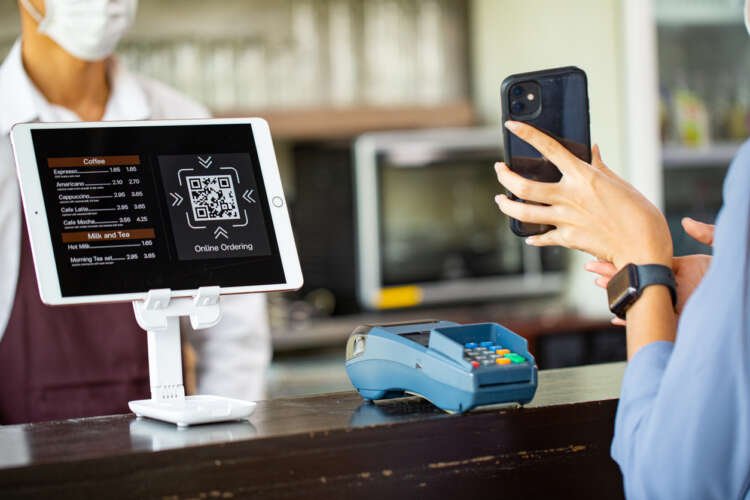
    2023 Predictions: Adapting to the right mix of payments in an increasingly cashless society

    Published by Jessica Weisman-Pitts

    Posted on January 3, 2023

    Featured image for article about Banking

    By Jon Knott, head of customer insight at Dojo.

    The 2020s have been a period of colossal changes in consumer behaviour across the board, from panic buying toilet paper and the move towards online shopping in the wake of the pandemic, to customers putting increased value on experiences as lockdowns lifted and the current financial situation has caused people to tighten spending. Just as customer habits have shifted, so too has the retail and hospitality landscape to keep up with the new expectations.

    Matching these shifts is an evolution at the heart of businesses – how they take payments. Historically the phrase ‘cash is king’ was never truer than on the high street, but currently 95% of businesses accept payments other than cash. Combining this with data from a recentreport between Dojo and YouLend which found that 44% of cash-only businesses stated that they plan to add additional forms of payment in the coming years. Cash’s crown appears to be dulling.

    The motivation behind card-accepting businesses is strongly influenced by internal practicalities, such as easier accounting or improved cash-flows, or external factors largely driven by customer requests. In fact, over half of businesses acknowledged customer preference as the main motivator to move away from cash-only and provide more payment options in a bid to boost the customer experience. The current financial climate has changed the way customers think about experience, with 24% saying that their expectations have increased according to a recent survey by Dojo. In fact, payment method choice was mentioned by 13% of customers as something they wish could be improved so there’s a clear need for businesses to provide the right mix between cash and card payments. In the end, it’s all about making them feel welcomed and providing small touches that can make a difference – payments ease being one of them.

    Those with a penchant for drama could be included to say that ‘cash is dead’, but we’re not quite there yet. Though the data shows a majority preference for cashless payments, it shows a clear advantage towards providing a mix of payments to customers. Some businesses have a preference for cash over card payments so as not to have to pay for processing fees, or the initial cost of set up, but the benefits of a good payment system greatly outweigh these negatives.

    When card payment machines became more openly available some years ago, the market began to flood with simple, single-use card machines that simply process payments. This led to a misconception as to the benefits and value of card payments, with the set-up and running costs not being offset by the value they provided. Unfortunately until recently, face-to-face payments processing remained largely unchanged, meaning bricks and mortar businesses missed out on the data and insight that digital channels offer.

    Merchants’ expectations too are developing as they are increasingly competing with not just their neighbouring stores, but also the entire digital landscape. Thankfully, the overall trends we are seeing is that these single-use machines are becoming a thing of the past, being replaced by value-add tools and technologies that enable businesses to uncover data and insights for merchants, as well as enhanced security.

    This new trove of data empowers hospitality and retailers to provide improved experiences to their customers across both on and offline channels. The ability to predict when additional staff will be needed, or tracking spending trends, coupled with better fraud detection and easier compliance have made some businesses lean towards operating in a cashless model – but this thinking is flawed. It’s crucial that businesses understand that not all customers are able, or comfortable using card and digital methods to pay.

    Some customers may prefer to use cash for a variety of reasons, such as concerns around security or a lack of access to card or digital payment options. In order to provide the best possible experience for their customers, businesses need to both understand the reasons behind their preferences and offer a mix of payment options that cater to their needs – curating a customer experience around their preferences.

    With only 5% of businesses only operating on a cash only model, and around half planning on continuing to shun other payment methods for the years to come, cash-only businesses times are numbered, especially considering just under10% of consumers tend to pay with cash. We are however very far away from a time where we will be operating as a cashless society. There are too many mitigating factors that would make it a detriment to merchants. The right mix of payments between cash, credit and debit, and alternative forms of finance will be key for businesses to succeed and grow in 2023, providing the best experience to their customers, increase loyalty and growth.

    Related Posts
    CIBC wins two Global Banking and Finance Awards for student banking
    CIBC wins two Global Banking and Finance Awards for student banking
    DeFi and banking are converging. Here’s what banks can do.
    DeFi and banking are converging. Here’s what banks can do.
    Are Neo Banks Offering Better Metal Debit Cards Than Traditional Banks?
    Are Neo Banks Offering Better Metal Debit Cards Than Traditional Banks?
    Banking at the Intersection: From Nashville to Cannes, A Strategic Call to Action
    Banking at the Intersection: From Nashville to Cannes, A Strategic Call to Action
    Driving Efficiency and Profit Through Customer-Centric Banking
    Driving Efficiency and Profit Through Customer-Centric Banking
    How Ecosystem Partnerships Are Redefining Deposit Products
    How Ecosystem Partnerships Are Redefining Deposit Products
    CIBC Private Banking wins four 2025 Global Banking & Finance Awards
    CIBC Private Banking wins four 2025 Global Banking & Finance Awards
    How Banks Can Put AI to Work Now and Prove ROI in 90 Days
    How Banks Can Put AI to Work Now and Prove ROI in 90 Days
    Top 5 AI quality assurance framework providers for Banks and Financial Services firms.
    Top 5 AI quality assurance framework providers for Banks and Financial Services firms.
    The Unbanked Paradox: How Banking Access Creates Economic Resilience
    The Unbanked Paradox: How Banking Access Creates Economic Resilience
    Hyper-Personalised Banking - Shaping the Future of Finance
    Hyper-Personalised Banking - Shaping the Future of Finance
    The End of Voice Trust: How AI Deepfakes Are Forcing Banks to Rethink Authentication
    The End of Voice Trust: How AI Deepfakes Are Forcing Banks to Rethink Authentication

    Why waste money on news and opinions when you can access them for free?

    Take advantage of our newsletter subscription and stay informed on the go!

    Subscribe

    Previous Banking PostOpen Banking and VRPs
    Next Banking PostBanking in 2023: Intuitive, agile & secure

    More from Banking

    Explore more articles in the Banking category

    Predicting and Preventing Customer Churn in Retail Banking

    Predicting and Preventing Customer Churn in Retail Banking

    Growth and Impact: Banreservas Leads Dominican Republic Economic Expansion

    Growth and Impact: Banreservas Leads Dominican Republic Economic Expansion

    Turning Insight into Impact: Making AI and Analytics Work in Retail Banking

    Turning Insight into Impact: Making AI and Analytics Work in Retail Banking

    KeyBank Embraces Next-Generation AI Platform to Transform Fraud and Financial Crime Prevention

    KeyBank Embraces Next-Generation AI Platform to Transform Fraud and Financial Crime Prevention

    Understanding Association Banking: Financial Solutions for Community Success

    Understanding Association Banking: Financial Solutions for Community Success

    Applying Symbiosis for advantage in APAC banking

    Applying Symbiosis for advantage in APAC banking

    AmBank Islamic Berhad Earns Triple Recognition for Excellence in Islamic Banking

    AmBank Islamic Berhad Earns Triple Recognition for Excellence in Islamic Banking

    FinTok Strategy: How Banks Are Reaching Gen Z Through Social Media

    FinTok Strategy: How Banks Are Reaching Gen Z Through Social Media

    Rethinking Retail Banking Sustainability: Why the ATM is an Asset in the Sustainable Transition

    Rethinking Retail Banking Sustainability: Why the ATM is an Asset in the Sustainable Transition

    How private banks can survive the neo-broker revolution

    How private banks can survive the neo-broker revolution

    Next-Gen Bank Branches: The Evolution from Transaction Hubs to Experience Centers

    Next-Gen Bank Branches: The Evolution from Transaction Hubs to Experience Centers

    The Banking Talent Crunch: How Financial Institutions Are Competing for Digital-Native Skills

    The Banking Talent Crunch: How Financial Institutions Are Competing for Digital-Native Skills

    View All Banking Posts