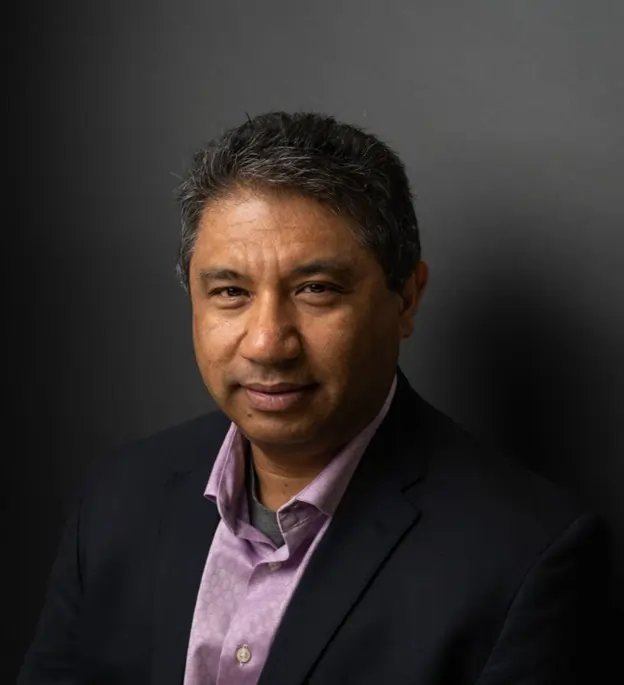
ZK Research founder, technology analyst, and researcher Zeus Kerravala has observed that most growth models and strategies have been focusing on external expansion and partnerships. The de facto standard in networking, Company A, for instance, has aligned with today’s ever-evolving artificial intelligence (AI) trends and made foundational shifts in its partnerships, security, product ownership, platform integration, and silicon architecture. Kerravala, thanks to his over 35 years of expertise and involvement in the technology landscape, takes a closer look and alludes to five key pointers that have helped in this growth. Company A, as observed by Kerravala, has experienced significant growth. “That doesn’t happen by accident. It’s a result of a well-executed series of strategic initiatives,” he states.
Company A’s partnership with full-stack computing company, the market leader in AI infrastructure, Company B, has evolved into a pivotal alliance that benefits both parties. Historically, Company B dominated the hyperscaler market, while Company A struggled to maintain relevance in that space. The partnership and new products initially helped Company A re-establish itself with that audience. However, as AI adoption expands beyond hyperscalers and into the enterprise market, the dynamics have shifted as the network has become important.
Company A brings unparalleled enterprise reach with its extensive global channel, massive salesforce, relationships with tens of thousands of customers, and a well-established network business. Company B, realizing the need for enterprise diversification, has now embedded Company A’s networking chip into its platform. Kerravala notes, “This is the first time it has ever integrated a third-party chip.” This milestone shows Company A’s growing influence in AI infrastructure, highlighting the benefits of a strategic partnership.
Kerravala further observes that traditional enforcement points, such as firewalls and perimeter defenses, have now become less relevant because of AI, as environments are highly dynamic and distributed. Maintaining a secure environment by placing firewalls as strategic points no longer works, as threats can emanate from anywhere and spread laterally quickly.
Recognizing this shift, at its recent AI Summit, Company A announced a product called AI Defence, which embeds security for AI into every product. This move has transformed its entire product line into a distributed firewall system, allowing for security to be enforced at every network touchpoint. “Instead of deploying many individual firewalls, enterprises can leverage Company A’s network infrastructure as a built-in security layer. This has given them a great competitive edge as cybersecurity threats escalate,” assures Kerravala. He adds, “Security has always been highly fragmented, but customers are now recognizing the importance of consolidating from hundreds of vendors to a few security platforms.”
One of the catalysts of this change at Company A has been the appointment of a single product owner, the first in the company’s history. When a company operates in silos, with different teams managing networking, security, and so on, it leads to disjointed roadmaps and inconsistent customer experiences. “When you have a single product owner, the product strategy becomes streamlined, which leads to better company alignment across its portfolio,” says Kerravala. “This shift further instills confidence within its customers. For instance, because Company A now has a clearer product roadmap, it can announce its product launches earlier with certainty that it will meet deadlines.”
Additionally, this unified approach gives the customers—service providers and large enterprises who operate on long technology deployment cycles—early insights into the company’s roadmap, further allowing them to plan deployments more effectively. It also significantly enhances the company’s market positioning as it shifts itself into the role of a strategic supplier.
For years, Company A’s products were best-in-class but operated independently, offering little synergy when purchased together. That is changing with a new platform approach, reminiscent of how major tech ecosystems integrate hardware and software to create seamless, almost magical, user experiences.
A prime example is the integration of AI Defense across multiple domains, combining networking and security into a single framework. Additionally, acquiring a big data platform has enabled deeper analytics and observability across Company A’s offerings. The network intelligence platform, embedded in its meeting endpoints, further exemplifies this integration, allowing IT teams to diagnose and troubleshoot connectivity issues in real-time. Kerravala further states, “This platform shift is not just about product features; it’s about simplifying sales and adoption. By creating an interconnected ecosystem, Company A has made it easier for enterprises to deploy its solutions holistically rather than piecemeal.”
Over the past decade, much of the industry shifted focus from hardware to software, assuming that general-purpose processes could handle all networking needs. However, the AI era has brought a renewed appreciation for specialized silicon, and Company A capitalized on this shift.
Unlike off-the-shelf chips from third-party semiconductor suppliers, Company A developed its own unified silicon architecture optimized specifically for networking workloads. This custom silicon ensures feature consistency across its entire product line, providing better performance, lower latency, and increased power efficiency. “More importantly, this has given better control for the company,” says Kerravala.
“Large infrastructure companies don’t often get credit for innovation, but what this Company A has done is quite impressive,” Kerravala concludes. “They’ve been accused of innovating only through acquisitions, but AI has created an inflection point. They have combined strategic acquisitions with accelerated home-grown innovation to become a leader in AI-driven software, network, and cybersecurity solutions. This will lead to sustainable accelerated growth.”