
Technology
You’re Not Going to Find New Sources of Growth Unless You Develop Some Customer Curiosity
Published by Gbaf News
Posted on October 9, 2014
7 min readLast updated: January 22, 2026
Add as preferred source on Google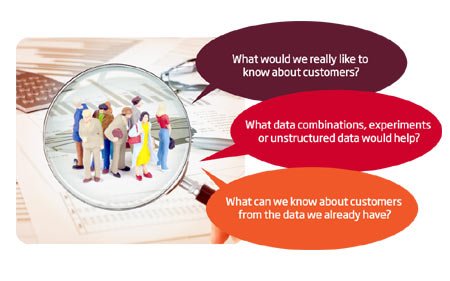
Published by Gbaf News
Posted on October 9, 2014
7 min readLast updated: January 22, 2026
Add as preferred source on GoogleElliot Howard of financial IT leader Sopra Banking Software believes the UK finance sector should embrace ‘customer curiosity’
Back in 1980 there were around 11.2m mobile users on the planet – and all the Internet users in existence could be listed in a phone directory.
We’ve come a long way since then: now, there are four and a half billion people with mobiles and 40% of the globe has access to the Web.
We are now so used to mobile, always-on broadband, buying products and services in cyberspace, that sometimes we lose sight of how far we’ve come.
The reality is, however, that it’s just the beginning. Mobile devices connected 24/7, wearable technology, always-increasing bandwidth are all giving customers access to a growing portfolio of services. Meanwhile, devices with on-board sensors that let us track and control our lives via downloadable apps – what Goldman Sachs is referring to as “the third wave in the development of the Internet,” the so called Internet of Things (IoT) – is already knocking on the door. Soon, everything from the office coffee pot to your Apple Watch to your fitness band can be and will be connected to the Web; some sober estimates put the IoT as eventually a network of 28bn people and appliances, all linked together.
Change: your only reliable feature

CustomerCuriosity
Our new digital culture is constantly evolving and morphing into new shapes, clearly. This exponential growth is mirrored by dramatically raised customer expectations about what they should expect from everyone they get services from – which absolutely includes the financial services sector.
Such changes are also reflected in the wider culture. Consumers increasingly use digital to communicate with friends, family and in the workplace. For those in their teens and twenties, social media has become the default channel for the service providing businesses they spend with. Put all these trends together and banks and financial services firms should be seeing increased opportunities for digital interactions with customers and greater convenience.
And finally, this is all taking place in the context of major structural change in the business we operate in, too. The easiest options for efficiency gains have already been seized. That means firms need to step up their game to get to the next wave of them. Meanwhile, growth in shareholder value is increasingly dependent on the revenue side of the income statement rather than the strict cost side.
Clearly, we need to find new sources of custom, revenue and profit.
The curious company: what does it look like?
The challenge is that to hit this new digital sweet spot, organisations need to cultivate a culture of curiosity.
What do I mean? Organisations need to prioritise the areas that work best for their customers to ensure they get a truly consistent, joined-up experience from start to finish by building genuinely feature-rich, highly granular portraits of their customers in the round.
We need to get more curious as to what makes customers tick – and how we can help them, every step of the way.
First, businesses need to see their organisation from the customer’s perspective – they need to ‘walk in the customer’s shoes’, so to speak. In particular, recognising that there is a need to create value through the propositions and experience provided before value can be reaped from the price we charge. Customer lifetime value and shareholder value are also closely related, but seeing the former as the real driver, not short term profit, requires a more oblique approach to shareholder value than banks and other companies have traditionally followed.
Secondly, a factor that is critical to being able to create value for customers – is the need for curiosity. Customer curiosity extends beyond the usual focus on a customer-centric approach. Instead, it means a constant, genuine, 100% focus on improving insights into customers. You need to look for the answers to why they behave as they do until it’s as well understood as the more easily identified ‘what, where, when and how’ elements of behaviour.
Up until now, the questions asked about customers were driven by the data that was easy to get. Yet all true advances in human understanding have come from structuring what was previously unstructured or unknown. Think of maps: Google is just at the forefront of the latest wave of geo-data enrichment, with thousands of years of cartography standing behind it.
Real, effective customer curiosity, then, requires a culture of experimentation – plus the recognition that some actions will sometimes be sub-optimal in strict financial terms – but that what you will learn from them will more than compensate.
Elliot Howard
That’s because experiments create new data and new insights. And as customer curiosity is about creating an increasingly rich data profile for each customer, whether that be with data that comes in structured form, or data which has to be structured before it can be properly analysed, you need to start on this journey sooner rather than later.
It’s from the insights you will gain from being curious that the next area of growth will ultimately come.
Data = the new asset class
To do all this, a culture change is required in how financial services companies view data. Banks have an unrivalled and unmined treasure trove of information about their customers’ expenditures. They have the data to tell customers whether they are spending more or less than others on utility bills, food purchases and loan repayments. This can already be contextualised with address, age and income so that comparisons can be shown as a percent of earnings (rather than just in absolute terms) and relative to people in similar locations or age brackets. And even more context (size of house, number and ages of people living there, size of mortgage, etc.) would further enhance the validity of comparisons provided. There are data sensitivity aspects to this, but if customers see genuine value in sharing this information, then they are more likely to be willing to do so.
Despite talk of data being an asset, typically there is a lack of investment in capturing it and maintaining its quality (ensuring that it is accurate, complete and up to date). High data quality requires clear governance including agreed KPIs for which a senior business executive is held accountable and a data stewardship team using appropriate tools to automate the defined data management processes and deliver control.
The problem is that data is typically viewed as a sort of digital exhaust gas: a mere by-product of IT-enabled processes transactions and interactions – not a valuable digital asset. With the development of advanced analytics and decision management tools, we are now entering the stage where that ‘digital exhaust’ is turning out to be critical for optimising business performance.
You might say that data management is exiting its catalytic converter stage and becoming an organisational turbocharger.
To sum up: businesses not thinking about the need to become customer-curious have no choice – as it affects all the elements of business as we know it, from its basic competencies to infrastructure, culture, processes and IT systems.
Billionaire computer industry figure Michael Dell once said, “It’s through curiosity and looking at opportunities in new ways that we’ve always mapped our path.”
Financial services organisations need to map out a similar path.
The author is Executive Vice President and UK Managing Director at Sopra Banking Software (http://www.soprabanking.com/), a leading provider of specialist solutions for the European financial services sector
Find out more on The New Digital Age by downloading a special Sopra whitepaper, co-authored with Jack Springman – Head of Customer Analytics at Sopra UK, ‘Transforming Business Performance with POST-Digital Capabilities’ here
Explore more articles in the Technology category









