Finance
Why Data Centres are a Critical Link in the Blockchain
Published by Gbaf News
Posted on May 3, 2018
7 min readLast updated: January 21, 2026

Published by Gbaf News
Posted on May 3, 2018
7 min readLast updated: January 21, 2026
Author: Patrick Lastennet, Director of Marketing & Business Development, Financial Services Segment at Interxion
For the financial sector, IT is no longer simply a business necessity – it is the business. In the face of unstoppable digital innovation, agile IT is essential to support new strategies, keep pace with the competition and harness emerging opportunities.

Patrick Lastennet
Today, the pace of change is faster than ever. New technologies are disrupting every aspect of the financial sector. For high-street banks, customer satisfaction now turns on 24/7 online banking, as well as seamless mobile and contactless payments. In high frequency trading, low latency connectivity is the lifeblood of profitability – with even microseconds creating competitive advantage. Meanwhile, a glut of agile FinTech companies – like PayPal, ApplePay and Oscar – are rewriting the rulebook on lending, payments, insurance and many other financial services. Nine-in-ten (88%) financial industry incumbents are now concerned they’re losing revenue to these agile innovators.
A chain reaction
The latest digital innovations are even redefining long-established concepts like money, with the emergence of Bitcoin, Ethereum and other cryptocurrencies into the mainstream. Bitcoin now boasts 12,000 transactions per hour, across 96 countries worldwide.
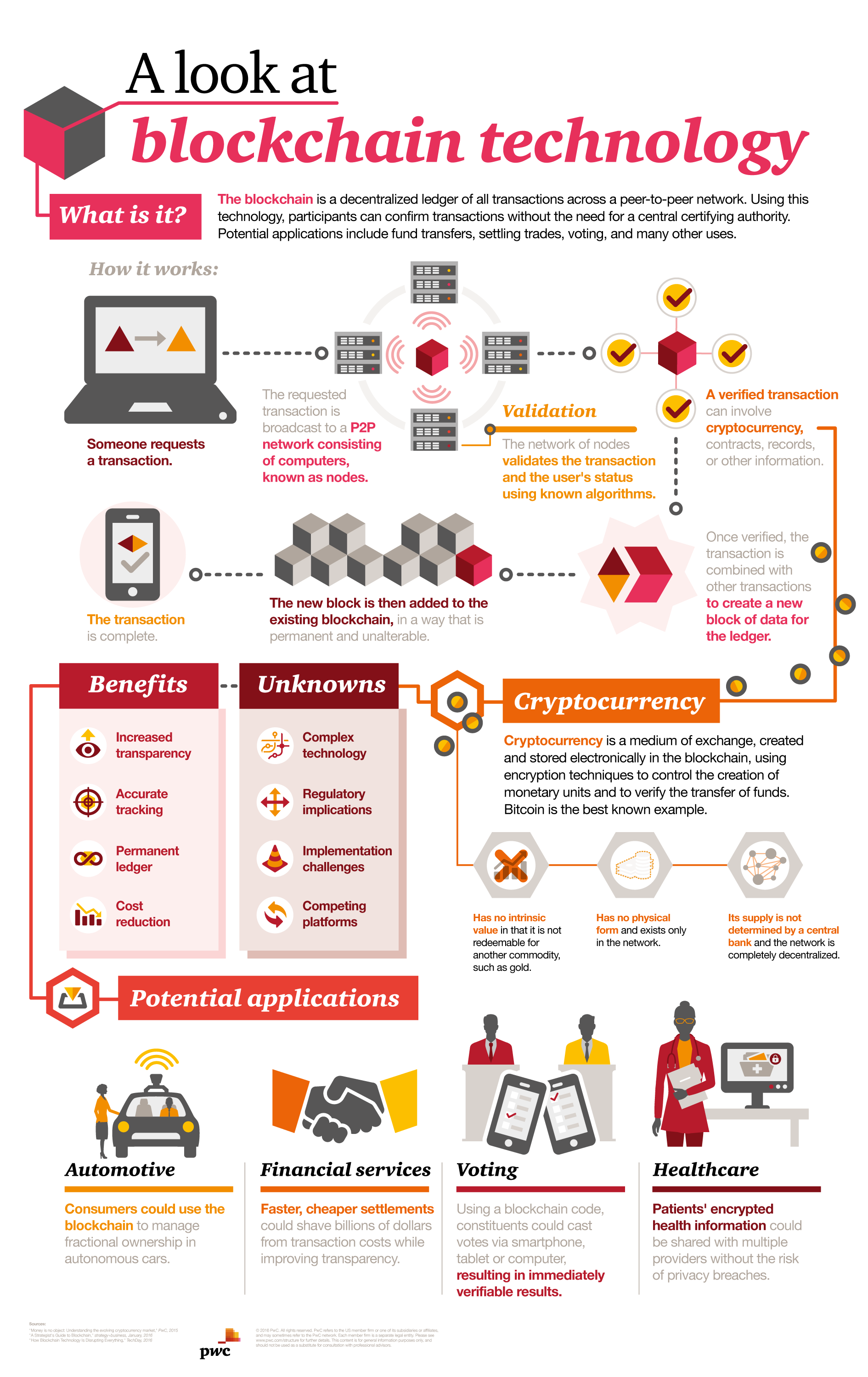
Powered by blockchain technology – essentially an incorruptible digital ledger distributed across the internet – cryptocurrencies present both substantial risks and enormous opportunities to the financial sector.
Cryptocurrencies make it possible for individuals and businesses to transact securely, independent of traditional banks. Writing for BNP Paribas, analyst Johann Palychata states that the underlying blockchain technology powering cryptocurrencies “should be considered…an invention like the steam or combustion engine” and has the potential to transform the entire financial sector and wash away established business models.
While blockchain technology is certainly a source of business uncertainty, the financial sector is also seizing its revolutionary capabilities to make clearing and settlement faster and cheaper. Financial transactions which would typically take several business days can now be completed in just seconds. Many of the world’s largest firms, including the Bank of America Merrill Lynch, the Royal Bank of Canada and Banco Santander, are already collaborating on the Global Payments Steering Group – harnessing the blockchain for interbank global payments.
According to PwC, three-quarters (77%) of financial sector incumbents will adopt blockchain as part of their systems or processes by 2020. Given blockchain’s potential to slash bank infrastructure costs by 30% and drive savings of up to $12bn per year, it’s no surprise that the race to innovate is on.
Agility is essential
Capitalising on the many potential applications of blockchain technology demands that financial firms innovate at scale and speed, with the freedom to experiment and collaborate easily. As such, the data centres supporting firms with connectivity, processing and storage must also be agile.
Colocation strategies are well-suited to supporting this kind of rapid innovation. For instance, carrier-neutral facilities enable financial firms to pick and choose the connectivity options that best suit their business needs – whether their decisions are based on cost, service performance, resilience, or a host of other factors.
By colocating, firms can also benefit from private cross-connects with other members of the financial community sharing the same facility. With a range of new services and skills within easy reach, any financial firm can dramatically boost its ability to adapt and add fresh capabilities. With more than four-fifths (82%) of financial sector incumbents expecting to increase their number of FinTech partnerships in the next three to five years to keep pace with change, colocation offers the perfect environment for collaborative innovation.
Of course, access to nimble cloud-based resources is also essential for firms embracing innovation. By colocating at a facility that brings instant access to a multi-cloud environment, organisations can reduce infrastructure costs, flexibly select the right cloud for the right workload, increase availability and reduce latency. Colocated hybrid cloud also leaves firms well-placed to embrace a fully-optimised, mixed IT setup, that combines on-premise, colocated, and cloud-based resources. More fertile ground for technology-led business innovation would be hard to imagine.
URL: www.interxion.com
Author: Patrick Lastennet, Director of Marketing & Business Development, Financial Services Segment at Interxion
For the financial sector, IT is no longer simply a business necessity – it is the business. In the face of unstoppable digital innovation, agile IT is essential to support new strategies, keep pace with the competition and harness emerging opportunities.
Patrick Lastennet
Today, the pace of change is faster than ever. New technologies are disrupting every aspect of the financial sector. For high-street banks, customer satisfaction now turns on 24/7 online banking, as well as seamless mobile and contactless payments. In high frequency trading, low latency connectivity is the lifeblood of profitability – with even microseconds creating competitive advantage. Meanwhile, a glut of agile FinTech companies – like PayPal, ApplePay and Oscar – are rewriting the rulebook on lending, payments, insurance and many other financial services. Nine-in-ten (88%) financial industry incumbents are now concerned they’re losing revenue to these agile innovators.
A chain reaction
The latest digital innovations are even redefining long-established concepts like money, with the emergence of Bitcoin, Ethereum and other cryptocurrencies into the mainstream. Bitcoin now boasts 12,000 transactions per hour, across 96 countries worldwide.
Powered by blockchain technology – essentially an incorruptible digital ledger distributed across the internet – cryptocurrencies present both substantial risks and enormous opportunities to the financial sector.
Cryptocurrencies make it possible for individuals and businesses to transact securely, independent of traditional banks. Writing for BNP Paribas, analyst Johann Palychata states that the underlying blockchain technology powering cryptocurrencies “should be considered…an invention like the steam or combustion engine” and has the potential to transform the entire financial sector and wash away established business models.
While blockchain technology is certainly a source of business uncertainty, the financial sector is also seizing its revolutionary capabilities to make clearing and settlement faster and cheaper. Financial transactions which would typically take several business days can now be completed in just seconds. Many of the world’s largest firms, including the Bank of America Merrill Lynch, the Royal Bank of Canada and Banco Santander, are already collaborating on the Global Payments Steering Group – harnessing the blockchain for interbank global payments.
According to PwC, three-quarters (77%) of financial sector incumbents will adopt blockchain as part of their systems or processes by 2020. Given blockchain’s potential to slash bank infrastructure costs by 30% and drive savings of up to $12bn per year, it’s no surprise that the race to innovate is on.
Agility is essential
Capitalising on the many potential applications of blockchain technology demands that financial firms innovate at scale and speed, with the freedom to experiment and collaborate easily. As such, the data centres supporting firms with connectivity, processing and storage must also be agile.
Colocation strategies are well-suited to supporting this kind of rapid innovation. For instance, carrier-neutral facilities enable financial firms to pick and choose the connectivity options that best suit their business needs – whether their decisions are based on cost, service performance, resilience, or a host of other factors.
By colocating, firms can also benefit from private cross-connects with other members of the financial community sharing the same facility. With a range of new services and skills within easy reach, any financial firm can dramatically boost its ability to adapt and add fresh capabilities. With more than four-fifths (82%) of financial sector incumbents expecting to increase their number of FinTech partnerships in the next three to five years to keep pace with change, colocation offers the perfect environment for collaborative innovation.
Of course, access to nimble cloud-based resources is also essential for firms embracing innovation. By colocating at a facility that brings instant access to a multi-cloud environment, organisations can reduce infrastructure costs, flexibly select the right cloud for the right workload, increase availability and reduce latency. Colocated hybrid cloud also leaves firms well-placed to embrace a fully-optimised, mixed IT setup, that combines on-premise, colocated, and cloud-based resources. More fertile ground for technology-led business innovation would be hard to imagine.
URL: www.interxion.com
Explore more articles in the Finance category