Search
00
GBAF Logo
trophy
Top StoriesInterviewsBusinessFinanceBankingTechnologyInvestingTradingVideosAwardsMagazinesHeadlinesTrends

Subscribe to our newsletter

Get the latest news and updates from our team.

Global Banking and Finance Review

Global Banking & Finance Review

Company

    GBAF Logo
    • About Us
    • Profile
    • Privacy & Cookie Policy
    • Terms of Use
    • Contact Us
    • Advertising
    • Submit Post
    • Latest News
    • Research Reports
    • Press Release
    • Awards▾
      • About the Awards
      • Awards TimeTable
      • Submit Nominations
      • Testimonials
      • Media Room
      • Award Winners
      • FAQ
    • Magazines▾
      • Global Banking & Finance Review Magazine Issue 79
      • Global Banking & Finance Review Magazine Issue 78
      • Global Banking & Finance Review Magazine Issue 77
      • Global Banking & Finance Review Magazine Issue 76
      • Global Banking & Finance Review Magazine Issue 75
      • Global Banking & Finance Review Magazine Issue 73
      • Global Banking & Finance Review Magazine Issue 71
      • Global Banking & Finance Review Magazine Issue 70
      • Global Banking & Finance Review Magazine Issue 69
      • Global Banking & Finance Review Magazine Issue 66
    Top StoriesInterviewsBusinessFinanceBankingTechnologyInvestingTradingVideosAwardsMagazinesHeadlinesTrends

    Global Banking & Finance Review® is a leading financial portal and online magazine offering News, Analysis, Opinion, Reviews, Interviews & Videos from the world of Banking, Finance, Business, Trading, Technology, Investing, Brokerage, Foreign Exchange, Tax & Legal, Islamic Finance, Asset & Wealth Management.
    Copyright © 2010-2025 GBAF Publications Ltd - All Rights Reserved.

    Editorial & Advertiser disclosure

    Global Banking and Finance Review is an online platform offering news, analysis, and opinion on the latest trends, developments, and innovations in the banking and finance industry worldwide. The platform covers a diverse range of topics, including banking, insurance, investment, wealth management, fintech, and regulatory issues. The website publishes news, press releases, opinion and advertorials on various financial organizations, products and services which are commissioned from various Companies, Organizations, PR agencies, Bloggers etc. These commissioned articles are commercial in nature. This is not to be considered as financial advice and should be considered only for information purposes. It does not reflect the views or opinion of our website and is not to be considered an endorsement or a recommendation. We cannot guarantee the accuracy or applicability of any information provided with respect to your individual or personal circumstances. Please seek Professional advice from a qualified professional before making any financial decisions. We link to various third-party websites, affiliate sales networks, and to our advertising partners websites. When you view or click on certain links available on our articles, our partners may compensate us for displaying the content to you or make a purchase or fill a form. This will not incur any additional charges to you. To make things simpler for you to identity or distinguish advertised or sponsored articles or links, you may consider all articles or links hosted on our site as a commercial article placement. We will not be responsible for any loss you may suffer as a result of any omission or inaccuracy on the website.

    Home > Technology > Weary eyes and fictitious faces: why fingerprints are best for biometric authentication
    Technology

    Weary eyes and fictitious faces: why fingerprints are best for biometric authentication

    Weary eyes and fictitious faces: why fingerprints are best for biometric authentication

    Published by Gbaf News

    Posted on August 2, 2019

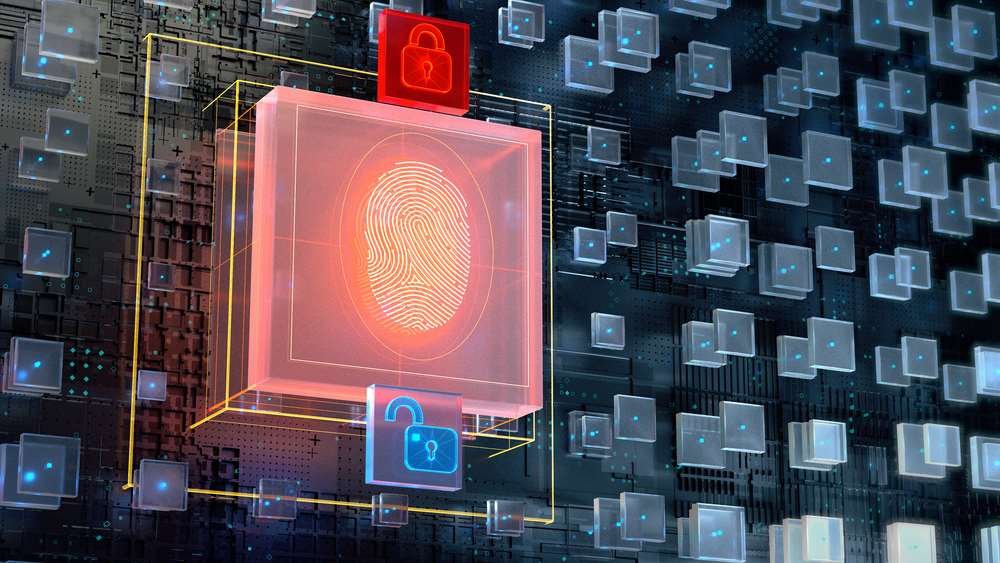
    Featured image for article about Technology

    By David Orme, Senior Vice President at IDEX Biometrics ASA

    Biometric technology is already revolutionising both physical and cyber-security in the UK. While the latest breakthroughs are impressive, we’re only just touching the tip of the iceberg. Regardless of which method we’re using – whether it is fingerprint, facial, retinal or voice recognition solutions – there is no escaping the fact that biometric developments have been incorporated into our everyday lives. From passing through airport security checkpoints and passport control to accessing systems or our place of work; we are increasingly using our physical identity as a means of authentication, negating the need to remember complicated codes and passwords.

    While some manufacturers and suppliers are encouraging users to embrace facial or voice recognition to authenticate, there are many consumers who find these methods simply don’t work effectively.  However, using fingerprints as an alternative means of biometric authentication removes these issues. Fingerprints are unique to every user, as such, it is a form of biometric authentication that ensures only the right person can access the right device or service. Unlike its counterparts, fingerprint sensors are less intrusive and more accurate. After all, whilst your voice is prone to fluctuation and your face may change over time, your fingerprint generally stays the same.

    Fingerprints for payments

    The use of fingerprint biometric technology has become commonplace to UK consumers to access their smartphones, with a scanner placed on either the front or the back of the device. Unlocking a smartphone is one thing but authenticating mobile payments with fingerprint biometrics is yet to be adopted by the masses.

    After decades of having to remember PINs, we are all becoming much more accustomed to making swift, contactless payments with our credit or debit cards. Yet, card issuers and banks are at risk of losing millions, as authentication isn’t currently required to complete small transfers on contactless terminals. However, payment cards designed with a thin biometric fingerprint sensor offer better protection because the consumer’s fingerprint cannot be replicated by a criminal. Nor can they be seized by a hacker from a central database. Introducing such technology creates a more convenient user experience, as fingerprint biometric smart payment cards remove the current £30 contactless spending limit. This means consumers can shop feeling assured that their money will be protected, regardless of how much they are spending.

    Fingerprints for access

    Another instance where many consumers are already accustomed to using fingerprint biometric technology for authentication is at their place of work. With organisations rightly focused on protecting sensitive information, they have increasingly adopted biometric authentication methods, such as facial recognition and retinal scanning, to guarantee only employees with the right privileges can gain access. Currently, the majority of options available to companies rely on touch screen interaction. However, systems using fingerprint biometric authentication smart cards – rather than touch screens – offer better protection and reduce vulnerability to cyber threats. For example, if a hacker accessed a corporate network, they could manipulate the software to grant access to people who do not work for the organisation. Instead, employee fingerprints remain independent of the software and cannot be changed.

    Fingerprints for ID

    Along with giving people access to devices and systems, and allowing users to authenticate payments, biometric technology is becoming essential to proving and authenticating personal identities. For instance, many airport and rail terminals – especially in developed countries – have installed facial recognition solutions to grant people access to different nations. While this technology reduces queuing time, it still has its flaws. Many of us often have the frustration of not being recognised. A new beard, an ageing face or even a few extra pounds, may be the difference between walking through quickly or being delayed. On the other hand, a person with an identical twin could pass through customs using their sibling’s passport. However, fingerprints are not only unique to every individual, but degradation in quality caused by ageing can be offset by using larger sensors and advanced matching algorithms.

    The same vulnerabilities also apply to national identity cards. These are not always used by their rightful owners – often leading to theft and fraud. If there is nothing to physically connect an individual to their identity card, another person could use it if they look similar to the legitimate owner. To overcome these hurdles, governments can roll out biometric smart cards, designed with a fingerprint reader, to reassure people their identity will not be put at risk.

    Fingerprints for all

    In this digital era in which we live, security is paramount to both consumers and organisations alike. Consumers want reassurance that companies will protect their data, while organisations only want trusted staff accessing corporate data. Despite the best efforts of organisations and suppliers to adopt biometric authentication, many existing biometric methods still have key flaws. Adopting fingerprints over other biometric methods is a strong step in ensuring data, finances and sensitive information, as well as an individual’s identity, remain protected from malicious threats.

    The adoption of fingerprint authentication may currently be behind other biometric methods, but banks are an example of organisations readying themselves for the technology to become the norm. With the likes of the Royal Bank of Scotland and NatWest already trialling smart payment cards designed with fingerprint sensors; it is only a matter of time until more UK organisations follow suit in embracing biometric fingerprint authentication.

    Related Posts
    Treasury transformation must be built on accountability and trust
    Treasury transformation must be built on accountability and trust
    Financial services: a human-centric approach to managing risk
    Financial services: a human-centric approach to managing risk
    LakeFusion Secures Seed Funding to Advance AI-Native Master Data Management
    LakeFusion Secures Seed Funding to Advance AI-Native Master Data Management
    Clarity, Context, Confidence: Explainable AI and the New Era of Investor Trust
    Clarity, Context, Confidence: Explainable AI and the New Era of Investor Trust
    Data Intelligence Transforms the Future of Credit Risk Strategy
    Data Intelligence Transforms the Future of Credit Risk Strategy
    Architect of Integration Ushers in a New Era for AI in Regulated Industries
    Architect of Integration Ushers in a New Era for AI in Regulated Industries
    How One Technologist is Building Self-Healing AI Systems that Could Transform Financial Regulation
    How One Technologist is Building Self-Healing AI Systems that Could Transform Financial Regulation
    SBS is Doubling Down on SaaS to Power the Next Wave of Bank Modernization
    SBS is Doubling Down on SaaS to Power the Next Wave of Bank Modernization
    Trust Embedding: Integrating Governance into Next-Generation Data Platforms
    Trust Embedding: Integrating Governance into Next-Generation Data Platforms
    The Guardian of Connectivity: How Rohith Kumar Punithavel Is Redefining Trust in Private Networks
    The Guardian of Connectivity: How Rohith Kumar Punithavel Is Redefining Trust in Private Networks
    BNY Partners With HID and SwiftConnect to Provide Mobile Access to its Offices Around the Globe With Employee Badge in Apple Wallet
    BNY Partners With HID and SwiftConnect to Provide Mobile Access to its Offices Around the Globe With Employee Badge in Apple Wallet
    How Integral’s CTO Chidambaram Bhat is helping to solve  transfer pricing problems through cutting edge AI.
    How Integral’s CTO Chidambaram Bhat is helping to solve transfer pricing problems through cutting edge AI.

    Why waste money on news and opinions when you can access them for free?

    Take advantage of our newsletter subscription and stay informed on the go!

    Subscribe

    Previous Technology PostThree Ways to Improve Your Risk Performance Through Data Technology
    Next Technology PostDesign: The Biggest Barrier to Financial Equality

    More from Technology

    Explore more articles in the Technology category

    Why Physical Infrastructure Still Matters in a Digital Economy

    Why Physical Infrastructure Still Matters in a Digital Economy

    Why Compliance Has Become an Engineering Problem

    Why Compliance Has Become an Engineering Problem

    Can AI-Powered Security Prevent $4.2 Billion in Banking Fraud?

    Can AI-Powered Security Prevent $4.2 Billion in Banking Fraud?

    Reimagining Human-Technology Interaction: Sagar Kesarpu’s Mission to Humanize Automation

    Reimagining Human-Technology Interaction: Sagar Kesarpu’s Mission to Humanize Automation

    LeapXpert: How financial institutions can turn shadow messaging from a risk into an opportunity

    LeapXpert: How financial institutions can turn shadow messaging from a risk into an opportunity

    Intelligence in Motion: Building Predictive Systems for Global Operations

    Intelligence in Motion: Building Predictive Systems for Global Operations

    Predictive Analytics and Strategic Operations: Strengthening Supply Chain Resilience

    Predictive Analytics and Strategic Operations: Strengthening Supply Chain Resilience

    How Nclude.ai   turned broken portals into completed applications

    How Nclude.ai turned broken portals into completed applications

    The Silent Shift: Rethinking Services for a Digital World?

    The Silent Shift: Rethinking Services for a Digital World?

    Culture as Capital: How Woxa Corporation Is Redefining Fintech Sustainability

    Culture as Capital: How Woxa Corporation Is Redefining Fintech Sustainability

    Securing the Future: We're Fixing Cyber Resilience by Finally Making Compliance Cool

    Securing the Future: We're Fixing Cyber Resilience by Finally Making Compliance Cool

    Supply chain security risks now innumerable and unmanageable for majority of cybersecurity leaders, IO research reveals

    Supply chain security risks now innumerable and unmanageable for majority of cybersecurity leaders, IO research reveals

    View All Technology Posts