
Top Stories
Ukraine War Hits Africa’s Most Vulnerable as Aid Costs Spike
Published by Wanda Rich
Posted on May 30, 2022
7 min readLast updated: February 6, 2026
Add as preferred source on Google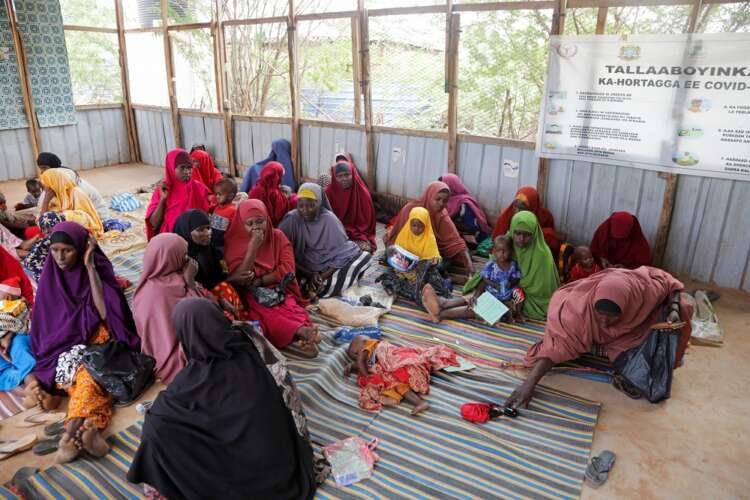
Published by Wanda Rich
Posted on May 30, 2022
7 min readLast updated: February 6, 2026
Add as preferred source on GoogleBy Edward McAllister
DAKAR (Reuters) – A small charity broke ground this year on a clinic in northern Burkina Faso to care for thousands of women and children who have fled Islamist insurgents wreaking havoc along the fringes of the Sahara.
But when Russia invaded Ukraine in February, global supply chains buckled and the cost of building materials, fuel and food spiked in West Africa. The charity’s founder, Boukary Ouedraogo, was forced to make a tough decision: he halted construction of the clinic with only the foundations laid.
Similar calls are being made across sub-Saharan Africa, where aid projects are threatened by the fallout from the war in Ukraine, potentially putting millions of lives at risk.
Humanitarian agencies already struggling with widespread price increases under the pandemic say the crisis in Europe has made things worse. Even the cost of life-saving therapeutic foods for malnourished children has spiked.
Compounding the problem, some donors have diverted state aid from Africa’s worst-hit countries to help support more than six million refugees who have fled the fighting in Ukraine.
Denmark said in March it was halving its aid to Burkina Faso this year to accommodate Ukrainian refugees. Its budget for Burkina’s neighbour Mali, also in the grips of an Islamist insurgency, has dropped 40%.
Sweden has also said it plans to divert $1 billion from its aid budget to help cover the cost of hosting Ukrainian refugees.
Ouedraogo’s clinic was desperately needed in Kaya, a town of dirt streets and squat brick buildings surrounded by arid scrubland. Its population has swelled in recent years as thousands of people from surrounding villages flee militant attacks, straining the already basic health care system.
“What happened in Ukraine happened at the same time as the crisis in this country got worse,” said Ouedraogo, who runs the BO Foundation in Burkina Faso.
“We hope all the donors can keep their attention,” he said. “We felt what we were doing was going to reduce the number of deaths and infant mortality.”
EMERGENCY LEVELS
It’s a similar story in Sudan. In a southern area faced with conflict and food shortages, a paediatric clinic run by Senegal-based medical charity Alima faces a $300,000 funding gap due to an increase in costs, including fuel for the clinic’s generator.
At this rate, Alima will have to shut the programme down, said its director of operations, Kader Issaley.
Action Against Hunger, a charity with operations across Africa, has seen the cost of foodstuffs such as rice, oil and sugar rise 20% to 30% over the past year.
This will reduce its coverage by the same amount, said Mamadou Diop, a representative from its West Africa office.
“We have to totally rethink our approach,” said Diop. “We must decide, do we reduce supply or reduce the number of beneficiaries?”
The problem is not limited to Africa. The U.N.’s World Food Programme (WFP) feeds 13 million people a month in Yemen, where the economy has been wrecked by years of war, but it has reduced rations for 8 million of them since January.
It may have to make further cuts, after raising only a quarter of the $2 billion it needs for Yemen this year from international donors.
“We’re taking food from the poor and feeding the hungry,” said WFP representative to Yemen, Richard Ragan.
“In June we will have to make some tough decisions about possibly even going down to just feeding five million, those who are really most at risk,” he said
UNIQUE IN SCOPE
Still, Africa’s problems are unique in scope.
Conflict in Ethiopia, Somalia, Democratic Republic of Congo and the Sahel region have forced millions to flee their homes. Nearly half a billion people live in extreme poverty, according to the World Bank.
West Africa alone faces an unprecedented food shortage that threatens nearly 40 million people, driven in part by drought and the impact of the war in Ukraine on food prices and supply.
The impact of higher costs on aid organisations varies, health specialists say.
Smaller non-profits reliant on institutional donors such as governments for yearly budgets may struggle more than a larger charity such as Medecins Sans Frontieres, which raises money through public campaigns.
MSF said it did not foresee cutting back its operations due to the war in Ukraine.
But few are immune. A drop in funding that preceded the Ukraine war has forced WFP to cut rations in seven countries in West and Central Africa.
In Nigeria, the continent’s most populous country, the number of people receiving emergency assistance from WFP has dropped from 1.9 million in September to 650,000.
Like Burkina Faso and Mali, northern Nigeria is also wracked by a prolonged Islamist insurgency.
Health specialists and aid workers said it was too early to assess exactly what the impact on communities will be and it could take months to see how much damage the cutbacks cause.
“Further funding shortfalls will contribute to worsening food security and nutrition in locations where food insecurity is already at emergency levels,” said WFP spokesman for Western Africa, Djaounsede Madjiangar.
PLUMPY’NUT SPIKE
In Somalia, one-year-old Hassan howled in a blue plastic bucket suspended from a scale as a medical technician noted his weight: 5.6 kg.
It was an improvement. Hassan weighed only 5.2 kg when he first began receiving treatment for severe acute malnutrition at a clinic run by aid workers in the south of the country three months ago – about half what a boy his age should weigh.
His partial recovery is thanks to a sweet peanut paste called Plumpy’Nut developed by French scientists in the 1990s that has become a crucial weapon in the fight against child malnutrition.
Three small sachets a day for six weeks can be enough to bring a starving child back to full health, according to U.N. children’s charity UNICEF.
“He used to be much worse,” said the boy’s mother, Hasan Habiba Mohammed Nur, patting his bony legs under an oversized T-shirt. “The Plumpy’Nut has really helped him.”
UNICEF says it spends $137 million a year on therapeutic food and the overall market is estimated to be worth up to $400 million.
But aid agencies say it is becoming too expensive.
Over the past year, the cost of Plumpy’Nut has risen 23%, including a 9% increase imposed since the Ukraine crisis began, Plumpy’Nut’s main producer Nutriset, told Reuters.
In a letter to customers in March warning of impending price increases, it said the cost of ingredients such as palm oil, milk powder and whey, and packaging including laminate for the sachets, had risen sharply. Shipping expenses have also rocketed. In all, costs are up 39%, Nutriset said.
“The war in Ukraine is indirectly impacting the price of raw materials, and prices will continue to increase even more in the weeks and months to come,” Nutriset said.
The increases worry UNICEF. It predicts that prices of therapeutic foods will rise 16% in the next six months because of Ukraine and pandemic disruptions. Without further funding, 600,000 more children may miss out on treatment, it said in May.
The effects are already being felt, aid workers say.
Alima’s budget to buy and ship a batch of Plumpy’Nut to a project in an impoverished area in the southeast of Democratic Republic of Congo is about 175,000 euros ($188,000).
But with a rise in fuel costs and the price of Plumpy’Nut, the shipment now costs 230,000 euros, said Hassan Bouziane, who runs logistics at Alima.
He now has to go to donors to get more cash, taking up valuable time.
“The impact on the beneficiaries will be huge,” said Bouziane. “The treatment for a child of five years old is six weeks. When you lose two weeks, that is a third of their treatment.”
($1 = 0.9333 euros)
(Reporting by Edward McAllister in Dakar and Katharine Houreld in Dollow, Somalia; Editing by Mike Collett-White and David Clarke)
Humanitarian aid refers to assistance provided for humanitarian purposes, typically in response to crises such as natural disasters or conflicts, aimed at saving lives, alleviating suffering, and maintaining human dignity.
A financial crisis is a situation in which the value of financial institutions or assets drops significantly, leading to a loss of confidence and potential economic downturn.
Explore more articles in the Top Stories category











