Search
00
GBAF Logo
trophy
Top StoriesInterviewsBusinessFinanceBankingTechnologyInvestingTradingVideosAwardsMagazinesHeadlinesTrends

Subscribe to our newsletter

Get the latest news and updates from our team.

Global Banking & Finance Review®

Global Banking & Finance Review® - Subscribe to our newsletter

Company

    GBAF Logo
    • About Us
    • Profile
    • Privacy & Cookie Policy
    • Terms of Use
    • Contact Us
    • Advertising
    • Submit Post
    • Latest News
    • Research Reports
    • Press Release
    • Awards▾
      • About the Awards
      • Awards TimeTable
      • Submit Nominations
      • Testimonials
      • Media Room
      • Award Winners
      • FAQ
    • Magazines▾
      • Global Banking & Finance Review Magazine Issue 79
      • Global Banking & Finance Review Magazine Issue 78
      • Global Banking & Finance Review Magazine Issue 77
      • Global Banking & Finance Review Magazine Issue 76
      • Global Banking & Finance Review Magazine Issue 75
      • Global Banking & Finance Review Magazine Issue 73
      • Global Banking & Finance Review Magazine Issue 71
      • Global Banking & Finance Review Magazine Issue 70
      • Global Banking & Finance Review Magazine Issue 69
      • Global Banking & Finance Review Magazine Issue 66
    Top StoriesInterviewsBusinessFinanceBankingTechnologyInvestingTradingVideosAwardsMagazinesHeadlinesTrends

    Global Banking & Finance Review® is a leading financial portal and online magazine offering News, Analysis, Opinion, Reviews, Interviews & Videos from the world of Banking, Finance, Business, Trading, Technology, Investing, Brokerage, Foreign Exchange, Tax & Legal, Islamic Finance, Asset & Wealth Management.
    Copyright © 2010-2026 GBAF Publications Ltd - All Rights Reserved. | Sitemap | Tags | Developed By eCorpIT

    Editorial & Advertiser disclosure

    Global Banking & Finance Review® is an online platform offering news, analysis, and opinion on the latest trends, developments, and innovations in the banking and finance industry worldwide. The platform covers a diverse range of topics, including banking, insurance, investment, wealth management, fintech, and regulatory issues. The website publishes news, press releases, opinion and advertorials on various financial organizations, products and services which are commissioned from various Companies, Organizations, PR agencies, Bloggers etc. These commissioned articles are commercial in nature. This is not to be considered as financial advice and should be considered only for information purposes. It does not reflect the views or opinion of our website and is not to be considered an endorsement or a recommendation. We cannot guarantee the accuracy or applicability of any information provided with respect to your individual or personal circumstances. Please seek Professional advice from a qualified professional before making any financial decisions. We link to various third-party websites, affiliate sales networks, and to our advertising partners websites. When you view or click on certain links available on our articles, our partners may compensate us for displaying the content to you or make a purchase or fill a form. This will not incur any additional charges to you. To make things simpler for you to identity or distinguish advertised or sponsored articles or links, you may consider all articles or links hosted on our site as a commercial article placement. We will not be responsible for any loss you may suffer as a result of any omission or inaccuracy on the website.

    Home > Top Stories > Ukraine looks for ways to get its grain out
    Top Stories

    Ukraine looks for ways to get its grain out

    Published by Wanda Rich

    Posted on May 25, 2022

    4 min read

    Last updated: February 6, 2026

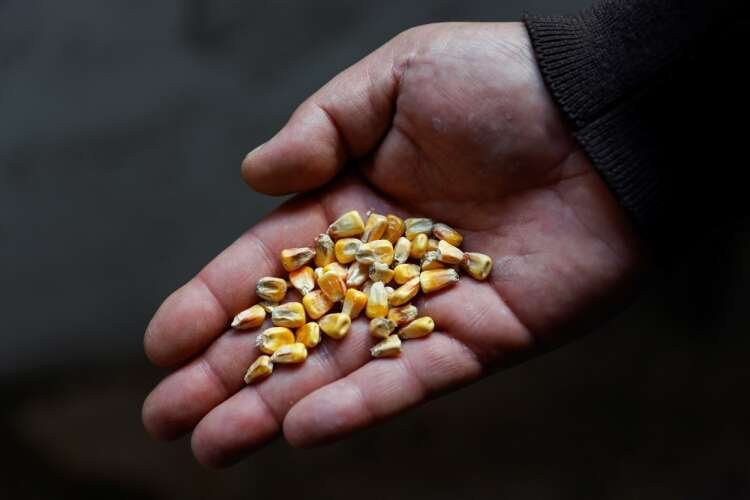
    Image depicting a flour mill in Ukraine, symbolizing the country's grain export crisis. Key to the U.N. plan for safe grain transport, this highlights the significant hurdles facing Ukraine's agricultural sector amid ongoing geopolitical tensions.
    Ukrainian grain export challenges amid Russia-Ukraine conflict - Global Banking & Finance Review
    Why waste money on news and opinion when you can access them for free?

    Take advantage of our newsletter subscription and stay informed on the go!

    Subscribe

    Tags:import and exportagricultural sectorsfinancial crisiseconomic growthinternational organizations

    By Pavel Polityuk and Silvia Aloisi

    KYIV (Reuters) -Ukraine is seeking ways to get grain and vegetable oils out of the country by breaking a months-long blockade of the Sea of Azov and the Black Sea by the Russian navy and moving more by land.

    The war, together with Western sanctions against Russia, have sent the price of grain, cooking oil, fertiliser and energy soaring.

    That in turn is threatening a global food crisis as many countries count on Russia and Ukraine for more than half of their wheat imports, including some of the poorest.

    Russia and Ukraine together account for nearly a third of the global wheat supply, and their importance has been underscored by an Indian export ban and adverse crop weather in North America and Western Europe.

    Ukraine is also a major exporter of corn, barley, sunflower oil and rapeseed oil, while Russia and Belarus – which has backed Moscow in the war and is also under sanctions – account for over 40% of global exports of the crop nutrient potash.

    HOW MUCH GRAIN IS STUCK IN UKRAINE?

    Grain is one of Ukraine’s main industries, with exports totalling $12.2 billion in 2021 and accounting for nearly a fifth of the country’s exports.

    Prior to the war, Ukraine exported 98% of its cereals and oilseed via the Black Sea, at a rate of up to 6 million tonnes per month. Typically, only a fraction of its exports went by rail, where transport costs are higher.

    But with the ports blocked and the railway system unable to cope with the extra volume, the country is currently only exporting between 1-1.5 million tonnes a month.

    U.S. Secretary of State Antony Blinken last week accused Russia of using food as a weapon in Ukraine by holding “hostage” supplies for not just Ukrainians, but also millions around the world. The Kremlin says it is the West that triggered the crisis by slapping sanctions against Moscow.

    According to a U.N. food agency official, nearly 25 million tonnes of grain were stuck in Ukraine as of early May due to infrastructure challenges and the naval blockade. As prices surge, U.N. agencies are having to cut food rations for refugees and displaced people by up to half in parts of the Sahel, for example, due to a massive funding shortfall.

    WHY CAN’T THE GRAINS GET OUT OF UKRAINE BY LAND?

    Exporting by train is a challenge because the Ukrainian rail system operates on a different gauge to European neighbours such as Poland, so the grain has to be transferred to different trains at the border where there are not many transfer or storage facilities.

    Kyiv has also been stepping up efforts to ship via the Romanian Black Sea port of Constanta. But as of mid-May, only about 240,000 tonnes of grain – or 1% of the volume stuck in Ukraine – had passed through, its manager Florin Goidea told Reuters.

    Re-routing grain to Romania involves transport by rail to ports on the Danube river and loading cargoes onto barges for sailing towards Constanta – making the process complex and costly.

    WHAT OTHER OPTIONS ARE BEING DISCUSSED?

    Western powers have been discussing the idea of setting up “safe corridors” to allow grain to be shipped out of Ukrainian ports.

    But officials have warned that any such corridor would not be possible without Russian consent.

    Ukraine says it needs “guarantees of security”, with deputy economy minister Taras Kachka telling Reuters last week that having “vessels of third countries in the area …would be an ideal situation.”

    Russia’s foreign ministry in turn said that if it were to heed a United Nations appeal to open access to Ukraine’s Black Sea ports, the removal of sanctions against Russia would also have to be considered, the Interfax news agency reported.

    Making things even more difficult are drifting mines in the Black Sea, which each side accuses the other of planting.

    Insurance costs for any vessel braving these shipping lanes would also likely be very high.

    The situation has taken on added urgency because of a shortage of grain storage space in Ukraine, where the next crop will be harvested from July.

    Up to 35% of Ukraine’s total storage capacity of 61 million tonnes could still be used up by the old 2021 crop by the time the new harvest comes in, according to research centre APK-Inform.

    (Additional reporting by Gus Trompiz in Paris; writing by Silvia Aloisi; editing by Jason Neely)

    Frequently Asked Questions about Ukraine looks for ways to get its grain out

    1What is grain export?

    Grain export refers to the process of selling and shipping grain products, such as wheat and corn, from one country to another for trade.

    More from Top Stories

    Explore more articles in the Top Stories category

    Image for Lessons From the Ring and the Deal Table: How Boxing Shapes Steven Nigro’s Approach to Banking and Life
    Lessons From the Ring and the Deal Table: How Boxing Shapes Steven Nigro’s Approach to Banking and Life
    Image for Joe Kiani in 2025: Capital, Conviction, and a Focused Return to Innovation
    Joe Kiani in 2025: Capital, Conviction, and a Focused Return to Innovation
    Image for Marco Robinson – CLOSE THE DEAL AND SUDDENLY GROW RICH
    Marco Robinson – CLOSE THE DEAL AND SUDDENLY GROW RICH
    Image for Digital Tracing: Turning a regulatory obligation into a commercial advantage
    Digital Tracing: Turning a regulatory obligation into a commercial advantage
    Image for Exploring the Role of Blockchain and the Bitcoin Price Today in Education
    Exploring the Role of Blockchain and the Bitcoin Price Today in Education
    Image for Inside the World’s First Collection Industry Conglomerate: PCA Global’s Platform Strategy
    Inside the World’s First Collection Industry Conglomerate: PCA Global’s Platform Strategy
    Image for Chase Buchanan Private Wealth Management Highlights Key Autumn 2025 Budget Takeaways for Expats
    Chase Buchanan Private Wealth Management Highlights Key Autumn 2025 Budget Takeaways for Expats
    Image for PayLaju Strengthens Its Position as Malaysia’s Trusted Interest-Free Sharia-Compliant Loan Provider
    PayLaju Strengthens Its Position as Malaysia’s Trusted Interest-Free Sharia-Compliant Loan Provider
    Image for A Notable Update for Employee Health Benefits:
    A Notable Update for Employee Health Benefits:
    Image for Creating Equity Between Walls: How Mohak Chauhan is Using Engineering, Finance, and Community Vision to Reengineer Affordable Housing
    Creating Equity Between Walls: How Mohak Chauhan is Using Engineering, Finance, and Community Vision to Reengineer Affordable Housing
    Image for Upcoming Book on Real Estate Investing: Harvard Grace Capital Founder Stewart Heath’s Puts Lessons in Print
    Upcoming Book on Real Estate Investing: Harvard Grace Capital Founder Stewart Heath’s Puts Lessons in Print
    Image for ELECTIVA MARKS A LANDMARK FIRST YEAR WITH MAJOR SENIOR APPOINTMENTS AND EXPANSION MILESTONES
    ELECTIVA MARKS A LANDMARK FIRST YEAR WITH MAJOR SENIOR APPOINTMENTS AND EXPANSION MILESTONES
    View All Top Stories Posts
    Previous Top Stories PostUkraine’s embattled farmers running on empty as world faces food crisis
    Next Top Stories PostRussian oil’s Achilles’ heel: insurance