
Top Stories
Switzerland’s New Energy Asset: Hydro Plant With Capacity to Charge 400,000 Car Batteries
Published by Jessica Weisman-Pitts
Posted on August 5, 2022
2 min readLast updated: February 5, 2026
Add as preferred source on Google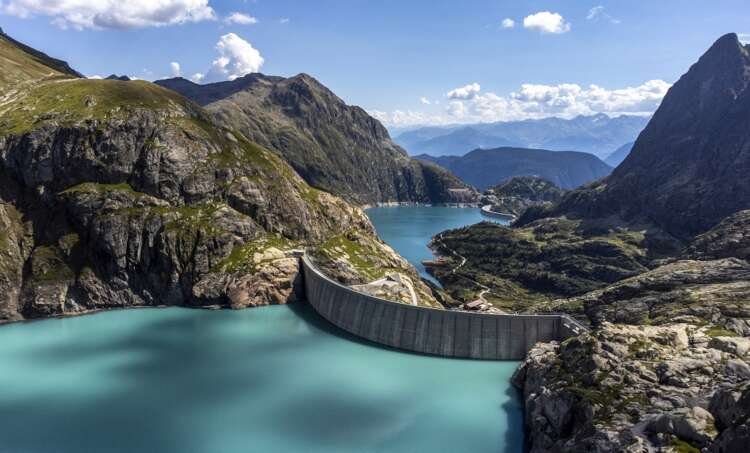
Published by Jessica Weisman-Pitts
Posted on August 5, 2022
2 min readLast updated: February 5, 2026
Add as preferred source on GoogleBy Denis Balibouse
FINHAUT, Switzerland (Reuters) – Switzerland is adding a much needed cog in the wheel to its energy supply with an underground hydropower plant that says it has capacity to store enough electricity to charge 400,000 car batteries simultaneously.
Developers of the 2.2 billion Swiss franc ($2.30 billion) Nant de Drance plant in the canton of Valais, which came online in July, say the facility operates like a giant battery.
Its six turbines tucked in a cavern 600 metres below ground between the Emosson and Vieux Emosson reservoirs have capacity of 900 MW, making it one of the most powerful pumped storage plants in Europe.
During peak demand, Nant de Drance produces electricity from hydropower. But when output from sources such as wind and solar exceeds demand, the plant stores the surplus electricity by pumping water into the higher Vieux Emosson reservoir.
“In doing so, there are losses like any storage, but the yield is very good. We have about 80% efficiency over the complete cycle,” director Alain Sauthier told Reuters on a tour this week.
The plant, which has taken 14 years to build, will be officially opened next month.
It takes less than five minutes to switch from full pumping mode to full power generation. At 360 cubic metres per second, the volume of water passing through its turbines corresponds to the summertime flow of the Rhone river through Geneva.
“The amount of energy that can actually be stored in this facility is simply gigantic, about 20 gigawatt hours,” Sauthier said. “This means that with a full tank in Vieux Emosson, you can recharge 400,000 electric car batteries simultaneously.”
Typically the plant pumps water into storage in the afternoon, at night and on weekends, then generates power in the morning and evening when prices are higher, Sauthier said.
“I would say it’s not only important for Switzerland, it’s also an important plant at European level because it will contribute to the stability of the network in Europe and to the security of supply in Europe,” he said.
That is no mean feat at a time Switzerland faces rolling four-hour regional blackouts should Europe’s energy crisis lead to winter power shortages.
($1 = 0.9570 Swiss francs)
(Writing by Michael Shields; Editing by Susan Fenton)
Hydropower is a renewable energy source that generates electricity by using the flow of water, typically from rivers or dams, to turn turbines.
Energy storage refers to technologies that capture energy produced at one time for use at a later time, enhancing the reliability of energy supply.
Efficiency in energy systems measures how effectively energy is converted from one form to another, such as from hydropower to electricity, with minimal losses.
Renewable energy is energy derived from natural sources that are replenished at a faster rate than they are consumed, such as solar, wind, and hydropower.
Peak demand refers to the highest level of electricity consumption during a specific period, often leading to increased energy production to meet this demand.
Explore more articles in the Top Stories category











