
Finance
Swiss Inflation Falls to Lowest Level in Three Years
Published by Wanda Rich
Posted on November 1, 2024
2 min readLast updated: January 29, 2026
Add as preferred source on Google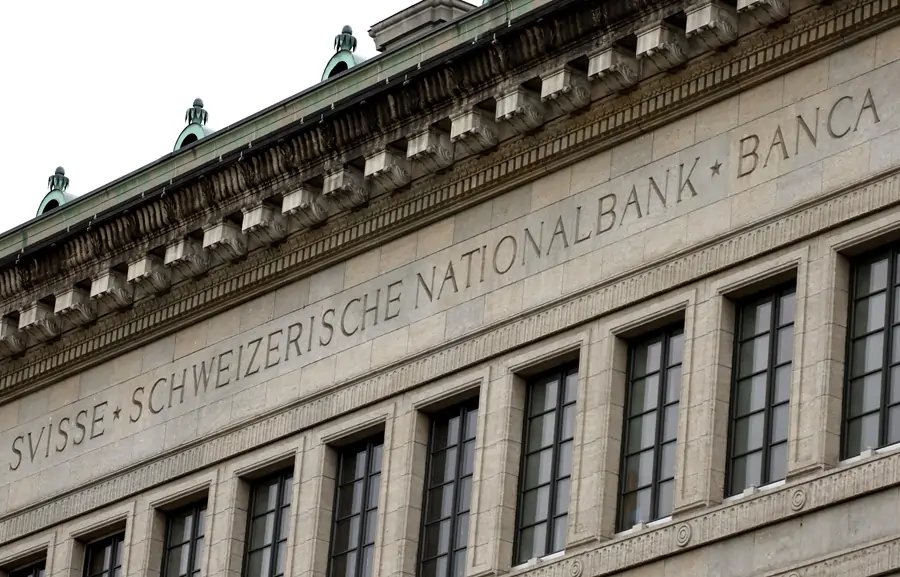
Published by Wanda Rich
Posted on November 1, 2024
2 min readLast updated: January 29, 2026
Add as preferred source on GoogleZURICH (Reuters) – Swiss inflation fell to its lowest level in more than three years in October, government data showed on Friday, pointing towards more
ZURICH (Reuters) – Swiss inflation fell to its lowest level in more than three years in October, government data showed on Friday, pointing towards more interest rate cuts by the Swiss National Bank this year and into 2025.
Swiss consumer prices rose by 0.6% in October compared with the same month a year earlier, data from the Federal Statistics Office showed, lower than the 0.8% forecast in a Reuters poll.
The increase in prices was the lowest level since July 2021, and reflected cheaper food, clothing and household goods.
Month-on-month prices fell by 0.1%, the FSO said.
The Swiss franc fell to a five-week low following the data, in anticipation the SNB will cut borrowing costs to prevent inflation undershooting its 0-2% target range.
The SNB declined to comment.
Markets currently give a 72% probability the central bank will cut rates from 1% at its next meeting on Dec. 12 to 0.75%, and a 68% probability it will cut them again next March to 0.5%.
“The situation with falling inflation is becoming uncomfortable for the SNB, which will certainly cut rates by 25 basis points in December, although I wouldn’t be surprised if they cut by 50 basis points,” said Karsten Junius, an economist at J.Safra Sarasin.
“But I think it will prefer to keep something in reserve and cut rates again by 25 basis points in March and another 25 basis points in June to get to 25 basis points,” added Junius, who anticipated the SNB would also step up currency interventions in early 2025.
GianLuigi Mandruzzato, an economist at EFG Bank, said October’s inflation was much lower than the latest SNB forecast for inflation of 1% in the fourth quarter.
The data also raises the chances that the SNB will consider a larger rate cut of 0.5% instead of the standard 0.25% cuts implemented since March as the risk of negative inflation in 2025, if only temporarily, has clearly risen,” he said.
(Reporting by John Revill; Editing by Emelia Sithole-Matarise)
Inflation is the rate at which the general level of prices for goods and services rises, leading to a decrease in purchasing power.
The Swiss National Bank (SNB) is the central bank of Switzerland, responsible for implementing monetary policy and ensuring price stability.
Interest rates are the cost of borrowing money or the return on savings, typically expressed as a percentage of the principal amount.
The consumer price index (CPI) measures changes in the price level of a basket of consumer goods and services, used to assess inflation.
Explore more articles in the Finance category
