
Top Stories
Swathes of Siberia Freeze in Temperatures Below -58 Celsius
Published by Wanda Rich
Posted on December 5, 2023
2 min readLast updated: January 31, 2026
Add as preferred source on Google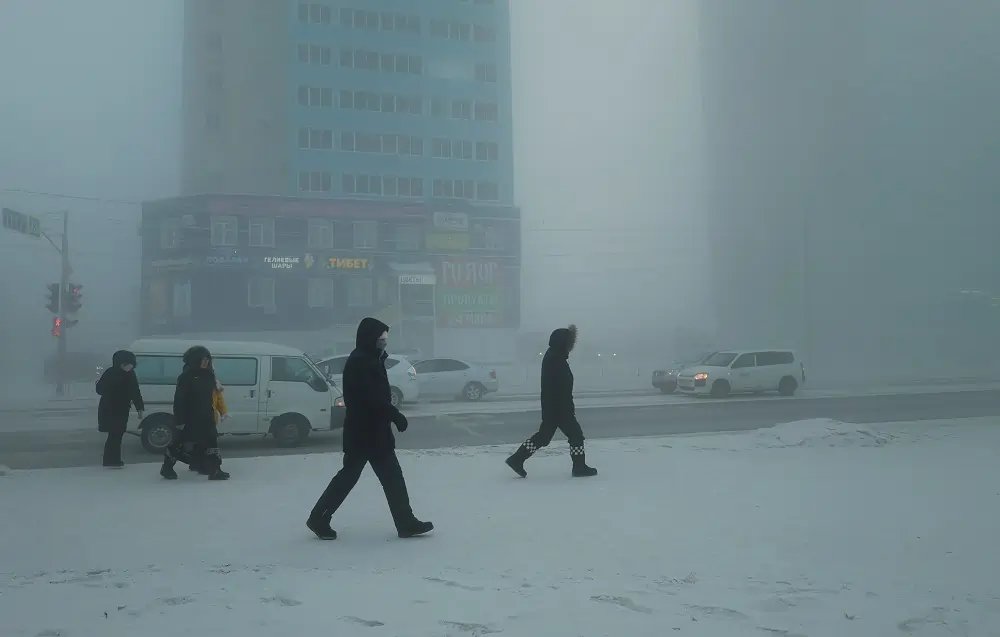
Published by Wanda Rich
Posted on December 5, 2023
2 min readLast updated: January 31, 2026
Add as preferred source on GoogleYAKUTSK, Russia (Reuters) – Arctic weather enfolded swathes of Russia on Tuesday, with temperatures in the wilds of Siberia falling to minus 58 degrees Celsius (minus 72 degrees Fahrenheit).
YAKUTSK, Russia (Reuters) – Arctic weather enfolded swathes of Russia on Tuesday, with temperatures in the wilds of Siberia falling to minus 58 degrees Celsius (minus 72 degrees Fahrenheit).
Yakutsk, one of the world’s coldest cities which lies some 5,000 km (3,100 miles) east of Moscow, was covered in freezing clouds and fog, drone footage showed.
“I specially came here to Yakutsk to experience such weather – so I am lucky as in December you don’t usually get it,” said Danila, whose beard, hat and scarf were caked in ice.
“I am actually not that cold as I prepared properly,” he said. “If I had not got the right clothes, I would be frozen in minutes.”
He said that the extreme temperatures made his coat much stiffer, while his phone lost charge within minutes. Two pairs of gloves were essential, as well as layers of clothes.
Temperatures in parts of the Sakha Republic, a vast region a little smaller than India that is located in the northeastern part of Siberia, went below minus 55 overnight.
In Oymyakon, a settlement in Sakha, the temperature was minus 58 C on Tuesday. Weather forecasters said that would feel like minus 63 C given the humidity and wind.
At the market in Yakutsk, fish were sold deep frozen, packed in dozens of boxes at the market. No freezer was needed. The saleswomen were muffled in large fur hats.
“It is cold,” said one resident, Pyotr. “You need to just have the right quality clothes and then everything will be okay. The main thing is to keep moving so your blood circulates.”
(Writing by Guy Faulconbridge; Editing by Mark Trevelyan)
Climate change refers to significant changes in global temperatures and weather patterns over time. While climate change is a natural phenomenon, human activities have been a major driver of recent changes.
Sustainability is the practice of using resources in a way that meets current needs without compromising the ability of future generations to meet their own needs. It encompasses environmental, social, and economic dimensions.
Extreme weather refers to unusual, severe, or unseasonal weather events, such as hurricanes, droughts, floods, and extreme temperatures. These events can have significant impacts on the environment and human activities.
Explore more articles in the Top Stories category











