
Top Stories
Sudanese Talks Kick Off Amid Boycott by Pro-Democracy Groups
Published by Wanda Rich
Posted on June 8, 2022
2 min readLast updated: February 6, 2026
Add as preferred source on Google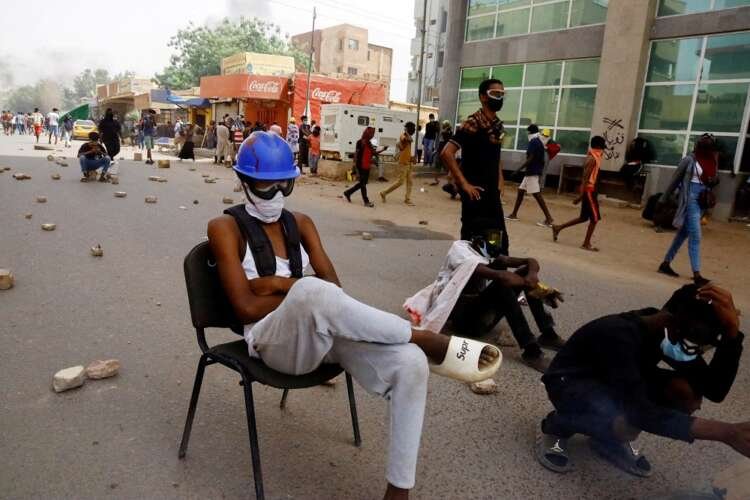
Published by Wanda Rich
Posted on June 8, 2022
2 min readLast updated: February 6, 2026
Add as preferred source on GoogleKHARTOUM (Reuters) – United Nations and African Union-sponsored talks aiming to restore political order in post-coup Sudan began on Wednesday with military leaders at the table and the main civilian groups boycotting.
KHARTOUM (Reuters) – United Nations and African Union-sponsored talks aiming to restore political order in post-coup Sudan began on Wednesday with military leaders at the table and the main civilian groups boycotting.
The talks, months in the making, seek to break the country’s political deadlock and stop an economic spiral since military leaders seized power last October.
“There are key political actors that have not attended today’s meeting,” said AU envoy Mohamed Hassan Lebatt during the opening session. “We don’t envision a political solution without the participation of those who are absent.”
The coup ended a power-sharing arrangement agreed in 2019 with key civilian political parties following the ouster of President Omar al-Bashir.
Those parties and the resistance committees that have led protests against the military, have boycotted the talks, saying that in their current form they seek to legitimise military rule.
Political parties also say that the military has not completed necessary trust-building steps, including release of all political detainees and ending the killing of protesters.
In a statement late on Tuesday, Sudan’s sovereign council head General Abdel Fattah al-Burhan described those who did not join the talks as “roadblocks to a sustainable democratic transition.”
“We commit to executing the results of the dialogue,” he added.
The Forces of Freedom and Change, the former ruling pro-democracy coalition, however, criticised the inclusion of parties it said were supportive of the coup or of the Bashir regime.
“The talks do not address the nature of the crisis, which is the October 25 coup. Any political process must result in its complete end,” it said.
While military leaders including General Mohamed Hamdan Dagalo, and armed group leaders such as finance minister Jibril Ibrahim were present, about a third of the seats were empty at Wednesday’s meeting, which seeks to set the rules and agenda for subsequent discussions.
(Reporting by Khalid Abdelaziz, writing by Nafisa Eltahir; Editing by Tomasz Janowski)
Financial stability refers to a condition where the financial system operates effectively, allowing for the smooth functioning of financial markets and institutions, minimizing the risk of financial crises.
Economic growth is the increase in the production of goods and services in an economy over a period of time, typically measured by the rise in Gross Domestic Product (GDP).
Financial markets are platforms where buyers and sellers engage in the trade of financial assets, such as stocks, bonds, currencies, and derivatives, facilitating capital allocation and liquidity.
Explore more articles in the Top Stories category











