Search
00
GBAF Logo
trophy
Top StoriesInterviewsBusinessFinanceBankingTechnologyInvestingTradingVideosAwardsMagazinesHeadlinesTrends

Subscribe to our newsletter

Get the latest news and updates from our team.

Global Banking and Finance Review

Global Banking & Finance Review

Company

    GBAF Logo
    • About Us
    • Profile
    • Privacy & Cookie Policy
    • Terms of Use
    • Contact Us
    • Advertising
    • Submit Post
    • Latest News
    • Research Reports
    • Press Release
    • Awards▾
      • About the Awards
      • Awards TimeTable
      • Submit Nominations
      • Testimonials
      • Media Room
      • Award Winners
      • FAQ
    • Magazines▾
      • Global Banking & Finance Review Magazine Issue 79
      • Global Banking & Finance Review Magazine Issue 78
      • Global Banking & Finance Review Magazine Issue 77
      • Global Banking & Finance Review Magazine Issue 76
      • Global Banking & Finance Review Magazine Issue 75
      • Global Banking & Finance Review Magazine Issue 73
      • Global Banking & Finance Review Magazine Issue 71
      • Global Banking & Finance Review Magazine Issue 70
      • Global Banking & Finance Review Magazine Issue 69
      • Global Banking & Finance Review Magazine Issue 66
    Top StoriesInterviewsBusinessFinanceBankingTechnologyInvestingTradingVideosAwardsMagazinesHeadlinesTrends

    Global Banking & Finance Review® is a leading financial portal and online magazine offering News, Analysis, Opinion, Reviews, Interviews & Videos from the world of Banking, Finance, Business, Trading, Technology, Investing, Brokerage, Foreign Exchange, Tax & Legal, Islamic Finance, Asset & Wealth Management.
    Copyright © 2010-2025 GBAF Publications Ltd - All Rights Reserved.

    ;
    Editorial & Advertiser disclosure

    Global Banking and Finance Review is an online platform offering news, analysis, and opinion on the latest trends, developments, and innovations in the banking and finance industry worldwide. The platform covers a diverse range of topics, including banking, insurance, investment, wealth management, fintech, and regulatory issues. The website publishes news, press releases, opinion and advertorials on various financial organizations, products and services which are commissioned from various Companies, Organizations, PR agencies, Bloggers etc. These commissioned articles are commercial in nature. This is not to be considered as financial advice and should be considered only for information purposes. It does not reflect the views or opinion of our website and is not to be considered an endorsement or a recommendation. We cannot guarantee the accuracy or applicability of any information provided with respect to your individual or personal circumstances. Please seek Professional advice from a qualified professional before making any financial decisions. We link to various third-party websites, affiliate sales networks, and to our advertising partners websites. When you view or click on certain links available on our articles, our partners may compensate us for displaying the content to you or make a purchase or fill a form. This will not incur any additional charges to you. To make things simpler for you to identity or distinguish advertised or sponsored articles or links, you may consider all articles or links hosted on our site as a commercial article placement. We will not be responsible for any loss you may suffer as a result of any omission or inaccuracy on the website.

    Home > Technology > Strong Customer Authentication: The Potential and Peril of Biometric Authentication
    Technology

    Strong Customer Authentication: The Potential and Peril of Biometric Authentication

    Strong Customer Authentication: The Potential and Peril of Biometric Authentication

    Published by Gbaf News

    Posted on January 14, 2020

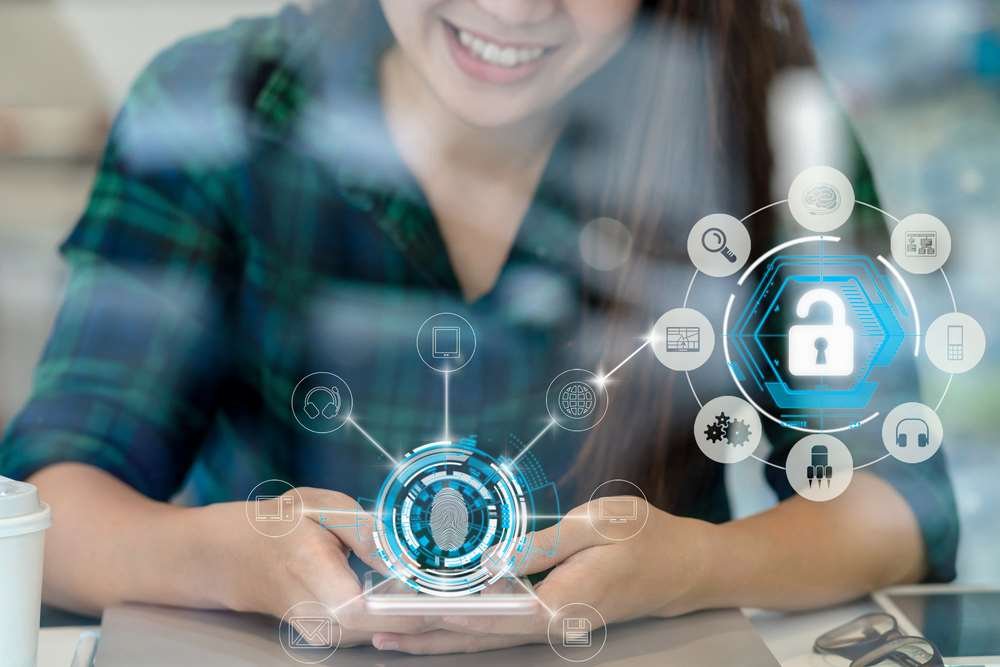
    Featured image for article about Technology

    By Mike Kiser, Security strategist and evangelist, SailPoint 

    As I strode quickly off the plane I had taken back to the US and towards customs recently after an international trip, I reached into my satchel. Like the rest of humanity, I did not want to spend any more time in the airport than necessary, so I extracted my passport and scanned for an open machine to start the scanning process.

    Instead of prompting me to submit my documentation, however, the kiosk asked for a form of biometric authentication — facial recognition. Once the system took my photo, my relevant information appeared on screen for my confirmation. No document to submit, no questions to be answered. I was home in record time, the friction of the reentry process greatly reduced thanks to this new innovation. But who was storing my biometric data, I wondered? And how was it being secured?

     With the arrival of PSD2 and its call for Strong Customer Authentication (SCA) last September, there is potential for a similar wave of innovation to sweep across the financial industry. Strong Customer Authentication seeks to enhance security for transactions by requiring two out of three forms of authentication: (1) something the customer knows, (2) something the customer has, or (3) something the customer is.

    It is this last element that is emerging with the adoption of PSD2. It is widely recognised that customers have difficulty in choosing and adequately protecting their passwords (“what the customer knows”) and asking customers to carry a second factor for authentication such as a hardware-based device likely increases the overhead for a transaction (“something the customer has”). (Mobile phones, while ubiquitous, have recently been revealed to be too easily spoofed to be a useful second factor.) Thus, the biometric authentication of customers (“something the customer is”) becomes a valuable addition to the security arsenal, and it is already being implemented by various vendors.

    Biometric authentication holds great promise for increasing security as well as reducing the friction of transactions. Being able to pay for something at a glance is a powerful tool when used responsibly. But it also elevates the responsibility to secure the data that facilitates this ease of use.

    These biometric markers are fundamentally different than passwords. Passwords may be reset and changed at a moment’s notice to reestablish security controls, but biometric markers are not easily modified. Once they are made public, they are rendered useless — and a persistent threat for the exposed individuals. The recent breach of a facial recognition database shows the dangers of not providing adequate security controls around this information, and it is more than just simple reuse of photos: the use of artificial intelligence and deep fakes to recreate voice and video increases the potential impact of a breach.

     As always, security is best applied in layers with identity at its core. Identity provides the key for ensuring that only the proper people or entities have access to this data, and only at the necessary time. Using well established identity standards such as FIDO ensures that identity-based policies are appropriately enforced to protect this most sacrosanct of customer data.

    The Strong Customer Authentication that comes with PSD2 promises to increase financial transaction security while also providing a pathway to a more frictionless customer experience. Organisations that want to serve their customers well will embrace the ease-of-use that biometrics may provide, while ensuring that they serve their customers well with security protections for those unchangeable markers. And by protecting “something that the customer is,” financial institutions can demonstrate something they are: a partner to be trusted.

    Related Posts
    LakeFusion Secures Seed Funding to Advance AI-Native Master Data Management
    LakeFusion Secures Seed Funding to Advance AI-Native Master Data Management
    Clarity, Context, Confidence: Explainable AI and the New Era of Investor Trust
    Clarity, Context, Confidence: Explainable AI and the New Era of Investor Trust
    Data Intelligence Transforms the Future of Credit Risk Strategy
    Data Intelligence Transforms the Future of Credit Risk Strategy
    Architect of Integration Ushers in a New Era for AI in Regulated Industries
    Architect of Integration Ushers in a New Era for AI in Regulated Industries
    How One Technologist is Building Self-Healing AI Systems that Could Transform Financial Regulation
    How One Technologist is Building Self-Healing AI Systems that Could Transform Financial Regulation
    SBS is Doubling Down on SaaS to Power the Next Wave of Bank Modernization
    SBS is Doubling Down on SaaS to Power the Next Wave of Bank Modernization
    Trust Embedding: Integrating Governance into Next-Generation Data Platforms
    Trust Embedding: Integrating Governance into Next-Generation Data Platforms
    The Guardian of Connectivity: How Rohith Kumar Punithavel Is Redefining Trust in Private Networks
    The Guardian of Connectivity: How Rohith Kumar Punithavel Is Redefining Trust in Private Networks
    BNY Partners With HID and SwiftConnect to Provide Mobile Access to its Offices Around the Globe With Employee Badge in Apple Wallet
    BNY Partners With HID and SwiftConnect to Provide Mobile Access to its Offices Around the Globe With Employee Badge in Apple Wallet
    How Integral’s CTO Chidambaram Bhat is helping to solve  transfer pricing problems through cutting edge AI.
    How Integral’s CTO Chidambaram Bhat is helping to solve transfer pricing problems through cutting edge AI.
    Why Physical Infrastructure Still Matters in a Digital Economy
    Why Physical Infrastructure Still Matters in a Digital Economy
    Why Compliance Has Become an Engineering Problem
    Why Compliance Has Become an Engineering Problem

    Why waste money on news and opinions when you can access them for free?

    Take advantage of our newsletter subscription and stay informed on the go!

    Subscribe

    More from Technology

    Explore more articles in the Technology category

    Can AI-Powered Security Prevent $4.2 Billion in Banking Fraud?

    Can AI-Powered Security Prevent $4.2 Billion in Banking Fraud?

    Reimagining Human-Technology Interaction: Sagar Kesarpu’s Mission to Humanize Automation

    Reimagining Human-Technology Interaction: Sagar Kesarpu’s Mission to Humanize Automation

    LeapXpert: How financial institutions can turn shadow messaging from a risk into an opportunity

    LeapXpert: How financial institutions can turn shadow messaging from a risk into an opportunity

    Intelligence in Motion: Building Predictive Systems for Global Operations

    Intelligence in Motion: Building Predictive Systems for Global Operations

    Predictive Analytics and Strategic Operations: Strengthening Supply Chain Resilience

    Predictive Analytics and Strategic Operations: Strengthening Supply Chain Resilience

    How Nclude.ai   turned broken portals into completed applications

    How Nclude.ai turned broken portals into completed applications

    The Silent Shift: Rethinking Services for a Digital World?

    The Silent Shift: Rethinking Services for a Digital World?

    Culture as Capital: How Woxa Corporation Is Redefining Fintech Sustainability

    Culture as Capital: How Woxa Corporation Is Redefining Fintech Sustainability

    Securing the Future: We're Fixing Cyber Resilience by Finally Making Compliance Cool

    Securing the Future: We're Fixing Cyber Resilience by Finally Making Compliance Cool

    Supply chain security risks now innumerable and unmanageable for majority of cybersecurity leaders, IO research reveals

    Supply chain security risks now innumerable and unmanageable for majority of cybersecurity leaders, IO research reveals

    Why AI's Promise of Efficiency May Break Tomorrow's Workforce

    Why AI's Promise of Efficiency May Break Tomorrow's Workforce

    Revolutionizing AppSec: The AI Security Crew Paradigm Shift

    Revolutionizing AppSec: The AI Security Crew Paradigm Shift

    View All Technology Posts
    Previous Technology PostCombating Insurance Fraud With Machine Learning
    Next Technology PostUsing biometrics in industrial control systems