Search
00
GBAF Logo
trophy
Top StoriesInterviewsBusinessFinanceBankingTechnologyInvestingTradingVideosAwardsMagazinesHeadlinesTrends

Subscribe to our newsletter

Get the latest news and updates from our team.

Global Banking & Finance Review®

Global Banking & Finance Review® - Subscribe to our newsletter

Company

    GBAF Logo
    • About Us
    • Advertising and Sponsorship
    • Profile & Readership
    • Contact Us
    • Latest News
    • Privacy & Cookies Policies
    • Terms of Use
    • Advertising Terms
    • Issue 81
    • Issue 80
    • Issue 79
    • Issue 78
    • Issue 77
    • Issue 76
    • Issue 75
    • Issue 74
    • Issue 73
    • Issue 72
    • Issue 71
    • Issue 70
    • View All
    • About the Awards
    • Awards Timetable
    • Awards Winners
    • Submit Nominations
    • Testimonials
    • Media Room
    • FAQ
    • Asset Management Awards
    • Brand of the Year Awards
    • Business Awards
    • Cash Management Banking Awards
    • Banking Technology Awards
    • CEO Awards
    • Customer Service Awards
    • CSR Awards
    • Deal of the Year Awards
    • Corporate Governance Awards
    • Corporate Banking Awards
    • Digital Transformation Awards
    • Fintech Awards
    • Education & Training Awards
    • ESG & Sustainability Awards
    • ESG Awards
    • Forex Banking Awards
    • Innovation Awards
    • Insurance & Takaful Awards
    • Investment Banking Awards
    • Investor Relations Awards
    • Leadership Awards
    • Islamic Banking Awards
    • Real Estate Awards
    • Project Finance Awards
    • Process & Product Awards
    • Telecommunication Awards
    • HR & Recruitment Awards
    • Trade Finance Awards
    • The Next 100 Global Awards
    • Wealth Management Awards
    • Travel Awards
    • Years of Excellence Awards
    • Publishing Principles
    • Ownership & Funding
    • Corrections Policy
    • Editorial Code of Ethics
    • Diversity & Inclusion Policy
    • Fact Checking Policy
    Original content: Global Banking and Finance Review - https://www.globalbankingandfinance.com

    A global financial intelligence and recognition platform delivering authoritative insights, data-driven analysis, and institutional benchmarking across Banking, Capital Markets, Investment, Technology, and Financial Infrastructure.

    Copyright © 2010-2026 - All Rights Reserved. | Sitemap | Tags

    Editorial & Advertiser disclosure

    Global Banking & Finance Review® is an online platform offering news, analysis, and opinion on the latest trends, developments, and innovations in the banking and finance industry worldwide. The platform covers a diverse range of topics, including banking, insurance, investment, wealth management, fintech, and regulatory issues. The website publishes news, press releases, opinion and advertorials on various financial organizations, products and services which are commissioned from various Companies, Organizations, PR agencies, Bloggers etc. These commissioned articles are commercial in nature. This is not to be considered as financial advice and should be considered only for information purposes. It does not reflect the views or opinion of our website and is not to be considered an endorsement or a recommendation. We cannot guarantee the accuracy or applicability of any information provided with respect to your individual or personal circumstances. Please seek Professional advice from a qualified professional before making any financial decisions. We link to various third-party websites, affiliate sales networks, and to our advertising partners websites. When you view or click on certain links available on our articles, our partners may compensate us for displaying the content to you or make a purchase or fill a form. This will not incur any additional charges to you. To make things simpler for you to identity or distinguish advertised or sponsored articles or links, you may consider all articles or links hosted on our site as a commercial article placement. We will not be responsible for any loss you may suffer as a result of any omission or inaccuracy on the website.

    1. Home
    2. >Finance
    3. >Spotlight on Brazil: consumer payments trends 2022
    Finance

    Spotlight on Brazil: Consumer Payments Trends 2022

    Published by Jessica Weisman-Pitts

    Posted on August 11, 2022

    5 min read

    Last updated: February 4, 2026

    Add as preferred source on Google
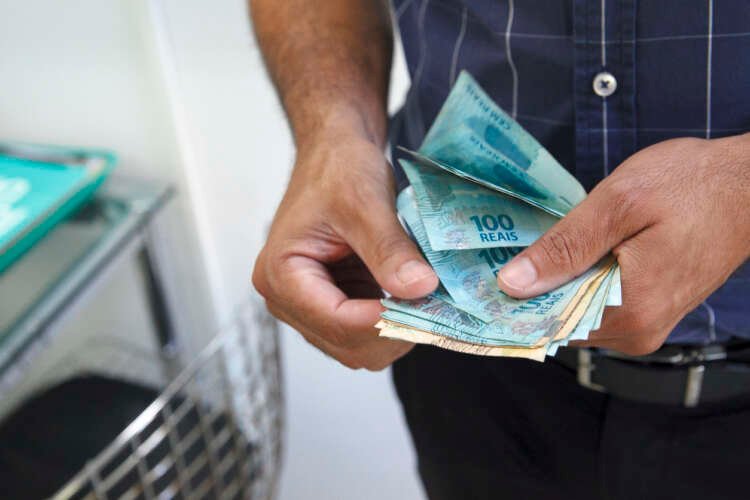
    An image of Brazilian real banknotes symbolizing the rapid growth of consumer payment methods in Brazil, including mobile commerce and bank transfers, as discussed in the article.
    Brazilian real banknotes representing consumer payment trends in Brazil - Global Banking & Finance Review
    Why waste money on news and opinion when you can access them for free?

    Take advantage of our newsletter subscription and stay informed on the go!

    Subscribe

    Tags:paymentsecommercefinancial inclusionalternative bankingconsumer perception

    Quick Summary

    With high smartphone adoption, a burgeoning eCommerce market plus a focus on financial inclusion, payment methods such as instant bank transfer are seeing huge uptake in Brazil.

    With high smartphone adoption, a burgeoning eCommerce market plus a focus on financial inclusion, payment methods such as instant bank transfer are seeing huge uptake in Brazil.

    Gustavo Ruiz Moya, CEO of eCash for Latin America and Global Head of Open Banking, Paysafe

    Brazil accounts for the largest slice of the eCommerce market in Latin America, generating 30 percent of eCommerce revenues in the region in 2021. Smartphone adoption is high too: in 2020, it was at 84 percent compared to the Latin America average of 72 percent, and it’s forecast to grow to 88 percent by 2025. Industry figures show that mobile commerce generated US$18 billion in 2020, and this is estimated to nearly double to US$34 billion by 2024.

    Brazil is also the third-most banked country in Latin America. A little over 70 percent of the 215.3 million people in Brazil have a bank account. This is perhaps in part due to the fact that alternative payments methods (APMs) are actively promoted by the Central Bank of Brazil, and have been since the 1990s when it launched Boleto Bancário, a bank ticket or barcode system which has helped to ensure that those who don’t have debit cards, credit cards and bank accounts are still able to make financial transactions with ease. Bank transfers are another increasingly attractive APM for Brazilians, offering convenience and security.

    Traditional payments remain popular…

    In April 2022, we commissioned a survey of 1,000 consumers in Brazil, in addition to Chile, Peru and respondents across North America and Europe. Our findings showed that the use of credit cards in Brazil is high and growing, with 67% of people saying they’d used a credit card for online purchases in the last month. This is significantly higher than the Latin America average of 54% in answer to the same question, as well as higher than debit card use in the past month at 57%.

    Furthermore, 47% use credit cards more frequently now than they did a year ago – also higher than the Latin America total (36%), Peru (31%), and Chile (29%). This could in part be due to lure of the loyalty schemes on offer from many credit card providers in Brazil offering points to be redeemed against flights and so on, but also the availability of instalment options through credit cards, and the long tradition of this type of payment in the country. The buy-now, pay later concept – relatively new in EMEA and North America – has been established in Brazil for decades, and has a big impact on people’s choice of payment method.

    …But APMs are on the rise

    While traditional payment methods such as credit and debit cards continue to dominate, the promotion and adoption of simpler, more inclusive options is growing, thanks to the Central Bank’s progressive approach to facilitating APMs over the years. At the end of 2020, it launched Pix – a type of instant bank transfer – which has seen exceptional uptake in a short space of time. In 2021, 58.4 million people received money and more than 53 million people sent money using Pix.

    This was echoed in the responses we got to our survey. When asked which payment methods they’d used in the past month to pay for online purchases, 42% said they’d used a bank transfer, more than Peru at 32%, Chile at 41%, and a lot more than North America at 19%.

    Further, 34% of consumers said they use bank transfers more frequently now than a year ago, and 28% use bank transfers about the same amount compared to this time last year. This makes it the most popular APM overall – coming in above digital wallets at 31%. And, again, third only to debit cards at 40% and credit cards at 47%.

    The rising cost of living has also boosted the uptake of APMs. 61% said they’d changed their choice of payment method for online purchases as a direct result of this, 46% of whom said they used bank transfers more frequently, followed by digital wallets at 43% and eCash at 29%. This may be due to the lower costs associated with using these APMs.

    The importance of security

    On the whole, Brazilians’ outlook on security is in line with responses across Latin America, with 47% citing security as the most important concern when choosing how to pay for online purchases. However, consumers’ perceptions regarding the levels of risk in transacting online is acute and growing, with 76% being more worried about online payment fraud today than they were a year ago. Sharing personal and financial information is another sticking point: 64% don’t feel comfortable entering their financial data online.

    Despite this, there’s no overwhelming call to increase security measures: 41% of respondents in Brazil would be happy to keep the current balance between security and convenience. And just 23% say they’d accept as many security measures as necessary, even if it involves additional steps

    The growth of APMs as eCommerce continues to rise

    While credit cards remain extremely popular, there’s an established and enthusiastic use of APMs in Brazil, supported by the Central Bank through the introduction of new ways to pay like Pix.

    Payments methods like bank transfers are being used more and more due to their simplicity, low cost, and convenience, but also because of their security, which our research shows is important to Brazilian consumers when it comes to online payments. With Brazil’s extensive and rapidly growing eCommerce market, providing options for payments methods that tick all these boxes should be a priority for merchants.

    Frequently Asked Questions about Spotlight on Brazil: consumer payments trends 2022

    1What is an alternative payment method?

    An alternative payment method (APM) refers to any payment method that is not a traditional credit or debit card. Examples include bank transfers, digital wallets, and mobile payments.

    2What is eCommerce?

    eCommerce refers to buying and selling goods or services over the internet. It encompasses various online transactions, including retail, banking, and digital services.

    3What is financial inclusion?

    Financial inclusion means ensuring that individuals and businesses have access to useful and affordable financial products and services, including banking, payments, and insurance.

    4What is a smartphone payment?

    Smartphone payments refer to transactions made using mobile devices, allowing users to pay for goods and services through applications or mobile wallets.

    5What is online payment security?

    Online payment security involves measures and protocols designed to protect users' financial information during online transactions, preventing fraud and unauthorized access.

    More from Finance

    Explore more articles in the Finance category

    Image for Commerzbank supervisory board committee met 11 times to discuss UniCredit in 2025
    Commerzbank Supervisory Board Committee Met 11 Times to Discuss UniCredit in 2025
    Image for Swiss air transport caterer Gategroup considers listing
    Swiss Air Transport Caterer Gategroup Considers Listing
    Image for German business sentiment fell less than expected in March, Ifo finds
    German Business Sentiment Fell Less Than Expected in March, Ifo Finds
    Image for On Holding names co-founders as CEOs
    On Holding Names Co-Founders as CEOs
    Image for ECB may need to act on even 'not-too-persistent' inflation surge, Lagarde says
    ECB May Need to Act on Even 'not-Too-Persistent' Inflation Surge, Lagarde Says
    Image for Europe's STOXX 600 gains 1% on prospect of Middle East ceasefire
    Europe's Stoxx 600 Gains 1% on Prospect of Middle East Ceasefire
    Image for Estonia says drone enters from Russia, hits power station, ERR reports
    Estonia Says Drone Enters From Russia, Hits Power Station, Err Reports
    Image for Germany's Aurelius interested in buying Carrefour's Belgian unit, L'Echo reports
    Germany's Aurelius Interested in Buying Carrefour's Belgian Unit, L'Echo Reports
    Image for Germany's EnBW expects profits to be stable at best in 2026
    Germany's EnBW Expects Profits to Be Stable at Best in 2026
    Image for UK, EU and Switzerland set out one-day settlement testing plan
    Uk, EU and Switzerland Set Out One-Day Settlement Testing Plan
    Image for Taiwan wary that China could exploit US distraction over Middle East war
    Taiwan Wary That China Could Exploit US Distraction Over Middle East War
    Image for Russian attacks knock out power for thousands in Ukraine's north
    Russian Attacks Knock Out Power for Thousands in Ukraine's North
    View All Finance Posts
    Previous Finance PostCloud Insurance Partners With Kanguro to Tap American Pet Insurance Market
    Next Finance PostWill ‘shopping for Cash’ Be the Future?