
Top Stories
SpaceX Project Clears U.S. Faa Environmental Review
Published by Jessica Weisman-Pitts
Posted on June 13, 2022
2 min readLast updated: February 6, 2026
Add as preferred source on Google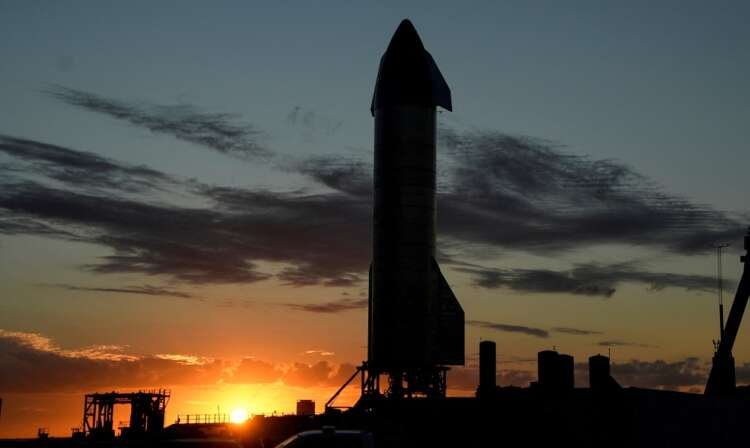
Published by Jessica Weisman-Pitts
Posted on June 13, 2022
2 min readLast updated: February 6, 2026
Add as preferred source on GoogleBy David Shepardson and Joey Roulette
WASHINGTON (Reuters) – The Federal Aviation Administration (FAA) on Monday approved a final environmental assessment of the proposed SpaceX Starship spacecraft and Super Heavy rocket program in Boca Chica, Texas after requiring more than 75 conditions.
The FAA published a finding of “No Significant Impact” but is placing some limitations on launches and requiring steps to limit environmental impacts, the agency said, clearing a hurdle to the program.
“One step closer to the first orbital flight test of Starship,” SpaceX tweeted soon after the decision.
The FAA noted completing the environmental review does not guarantee issuance of a vehicle operator license, which is contingent upon meeting FAA requirements for safety, risk and financial responsibility.
The FAA said as a result of the requirements there will be more advanced notice of launches to reduce a highway closure during launch operations.
Launches will not be allowed on 18 identified holidays, and are limited to no more than five weekends per year. The FAA is requiring ongoing monitoring of vegetation and wildlife; advance notification to surrounding communities about potential engine noise and sonic booms from launches; and adjusting launch complex lighting to minimize wildlife impact.
SpaceX founder Elon Musk said in February he was “highly confident” his new SpaceX Starship, designed for voyages to the moon and Mars, would reach Earth orbit for the first time this year.
Even in a “worst-case” scenario, in which a full environmental impact statement was required or legal wrangling over the issue threatened to drag on, Musk said SpaceX has a fallback plan.
The company would shift its entire Starship program to the Kennedy Space Center in Cape Canaveral, Florida, where SpaceX has received the environmental approval it needs, Musk said.
Reuters reported Monday that NASA wants SpaceX to ensure its plan to launch its next-generation Starship rocket from Florida would not put at risk nearby launch infrastructure critical to the International Space Station.
The rocket’s next big test, a complex task of launching to orbit for the first time, had been delayed in part by the regulatory review of the Texas compound’s environmental impact, which has precluded the FAA from granting SpaceX its orbital launch license.
(Reporting by David Shepardson and Joey Roulette; Editing by Nick Zieminski and Bill Berkrot)
An environmental assessment is a process used to evaluate the potential environmental effects of a proposed project or action before it is carried out.
A vehicle operator license is a permit issued by regulatory authorities that allows an entity to operate a specific vehicle, ensuring compliance with safety and environmental regulations.
A launch complex is a site where rockets or spacecraft are launched, equipped with the necessary infrastructure for preparation, launch, and post-launch activities.
Sonic booms are loud noises created when an object travels through the air faster than the speed of sound, often associated with supersonic aircraft.
Ongoing monitoring refers to the continuous observation and assessment of environmental conditions to ensure compliance with regulations and to mitigate potential impacts.
Explore more articles in the Top Stories category











