Technology
Shaping the employee experience through cobotics and other technology
Published by Jessica Weisman-Pitts
Posted on October 27, 2022
8 min readLast updated: February 3, 2026

Published by Jessica Weisman-Pitts
Posted on October 27, 2022
8 min readLast updated: February 3, 2026
By Stefano Bensi,General Manager, SoftBank Robotics EMEA
Emerging technologies have begun to disrupt and reshape the financial sector significantly in recent years. Digital innovation is playing a central role in enhancing the customer experience, improving operations, and driving growth.
It’s also crucial in helping banking organisations and other financial companies become agile and build resilience in an increasingly volatile landscape. In Deloitte’s latest UK CFO Survey, published in April 2022, finance leaders flagged record levels of risk driven by geopolitics and inflation. Almost all (98%) of the CFOs said they anticipate operating costs to rise in the year ahead, with nearly half expecting these rises to be significant.
Covid-19 has already shown how effective technological innovation can be in response to unique and unforeseen threats. According to Gartner research undertaken during the height of the crisis, 87% of corporate directors deemed technology as having a transformational role in addressing strategic business priorities.
From customer to employee experience
To date, the most notable digital innovation in the financial sector is in the products and services transforming the customer experience, from the development of P2P payments to the everyday use of digital wallets. Shifting customer expectations are driving much of this digital transformation. Restrictions during the Covid-19 pandemic spurred enormous demand for contactless and online-only services, a change so emphatic that a cashless society now feels like a genuine prospect.
However, forward-thinking financial organisations will have recognised the extent to which the pandemic shifted the expectations among another group critical to driving growth in their world — employees. Considering the massive increase in remote working and mass migration to video communication tools over these past 2.5 years, they will have also acknowledged the role of technology in ensuring employees are happy, productive, and engaged. Today, then, business leaders need to consider the technology that can help them drive employee experience, wellbeing, and productivity as much as the solutions shaping the customer experience at the front end of their operations. This includes internet of things (IoT) sensors, smart building controls, environmental monitoring, space booking, predictive analytics, robotics, and more.
Covid-19 triggered a massive transfer of power from employers to employees. As a result, financial organisations face fierce competition from other sectors for top talent, so what they can offer existing employees and potential recruits beyond remuneration has never been more crucial. A recent report by Barclays revealed that access to talent is the second highest priority after growth among financial firms in the short-to-medium term. Separate research by the UK’s Financial Services Skills Commission also found that 92% of its member firms had hard-to-fill vacancies in 2021.
Much of the current panic around the war for talent has focused on going hybrid. The pervading belief is that most employees are now choosing employers that can guarantee them more flexible working arrangements or the power to decide where and when they work.
However, plenty of research suggests that workers in the financial sector still depend on an office for work. A global study of nearly 80,000 employees by Advanced Workplace Associates revealed that the average daily attendance in banking offices was 47 percent – that sounds low but is comparatively high compared with pharmaceuticals and technology, where average attendance was 18 percent and 15 percent, respectively.
So, when financial sector employees go to the office, their employer must make it count. They must provide positive spaces and experiences that support employees’ health, wellbeing, and productivity.
Emerging from the pandemic, healthy and indoor environments are front of mind for most employees. Abiding fears of virus transmission mean it’s now a pre-requisite. Like all other workers, financial sector employees now expect clean offices space and decent air quality. Earlier this year, a SoftBank Robotics survey of 2,000 UK employees revealed that more than one in four would feel uncomfortable returning to a workplace that didn’t have a robust cleaning regime. At the same time, 71 percent said they would like visual reassurances of cleaning regimes in the buildings they enter. The study also offered some important lessons to business leaders who are desperate to reignite the culture within their offices – one-third said they would rather work from home than in a workplace where they questioned the approach to cleaning and hygiene.
A tech-led change
Technology can help meet these evolving employee demands in different ways. Increasingly, businesses are turning to occupancy sensors and space management systems to implement hybrid working setups. The data from these tools can inform daily and long-term space planning to ensure that employees always have what they need to do their tasks. Integrating environmental sensors with smart building controls allows organizations to set optimal conditions by adjusting different elements of the environment, including lighting, temperature, and air quality.
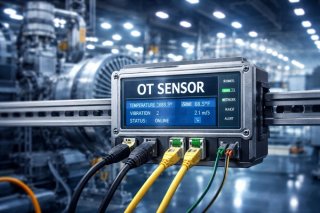
Sensors on assets and equipment throughout the building can also help organisations make decisions on maintenance and capital investments that have a direct impact on the occupier experience. Integrating these sensors with the building management system or computerised maintenance management system gives organisations insight into what’s happening in their office, minimises downtime, and helps manages space in line with shifting occupancy trends.
The rise of the cobots
Considering the growing demand for clean and frictionless offices, robotics can play a significant part too. From cleaning to the restaurant, using collaborative robots — or cobots for short — creates more efficient and effective services. Defined as robots that work alongside humans to increase their productivity, cobots can perform dull, repetitive, and time-consuming tasks, leaving facilities teams to do the more challenging or value-add tasks. A cobot vacuum sweeper, for example, can clean large areas of the floor, freeing cleaners to ensure high-touch areas are clean and flexible desks are ready for the following user.
The same goes for a cobot in the office cafeteria or for delivering packages to desks. Such cobots allow staff to focus on providing high value services in the areas with the most significant impact on employee experience.
Cleaning cobots not only provide a visual reminder that cleaning is taking place but can also demonstrate cleanliness through data when paired with other smart systems. Back in 2020, SoftBank Robotics partnered with smart sensor provider Infogrid on a study in which dozens of air quality sensors were deployed across two test sites — a corporate bank headquarters and a corporate office environment to monitor dust particulates over a four-week period — for two weeks while cleaning teams continued to service the areas in line with their normal cleaning schedules, and two weeks with vacuum sweeper cobots.
The results were conclusive. Having measured over 400,000 data points, analysing dust particulates before and after the cobots deployment, it uncovered a 50% reduction in dust particulates following the introduction of cobots. Cleaners are rarely allocated time to vacuum the full floor space of an office. The reliability and complete coverage of cobots resulted in dust being consistently removed rather than being agitated back into the air when people walked through the space. In this way, the cobot demonstrated a significant and direct impact on air quality. A 2021 study demonstrated that air quality impacts behavioural and cognitive functions, including reactivity and accuracy.
Rising inflation and the labour shortage
With inflation rising, adding cobots rather than additional workers across different facilities service lines makes financial sense. A cleaner whose primary role is to vacuum will cost around £12 an hour. A robot will usually be less – about £6 an hour – so the robot is immediately cheaper. And that’s before factoring in all the associated costs of an employee, including management, training, absenteeism, pensions, benefits, annual leave, travel, resources, and tools.
That said, bringing in robots instead of human workers is hardly a consideration right now. Anyone who oversees a facilities management department will have seen first-hand the labour shortage currently plaguing services sectors — not least the cleaners, engineers, and restaurant staff.
Last year, a British Cleaning Council (BCC) report found that firms experienced record increases in vacancies at a time when UK cleaning labour makes up 5 percent of the national workforce. According to the BCC, 11 of the UK’s biggest cleaning firms reported 1,917 vacancies in total, with one firm noting that their vacancies had increased by 252% in the six months before its publication.
Here, it’s clear that cobotics and smarter building sensors can make a real difference. Indeed, these technologies must form part of a larger digital transformation that will see financial organisations navigate almost-certain volatility and change ahead, as the world continues to experience the economic and cultural aftershocks of the global pandemic.
Digital transformation refers to the integration of digital technology into all areas of a business, fundamentally changing how it operates and delivers value to customers.
Cobots, or collaborative robots, are designed to work alongside humans in a shared workspace, enhancing productivity by taking over repetitive tasks.
Employee experience encompasses all aspects of an employee's interaction with their organization, including work environment, culture, and technology tools.
The Internet of Things (IoT) refers to the network of physical devices connected to the internet, enabling them to collect and exchange data.
Predictive analytics involves using statistical algorithms and machine learning techniques to identify the likelihood of future outcomes based on historical data.
Explore more articles in the Technology category