
Top Stories
Shanghai Braces for Direct Hit From Typhoon Bebinca
Published by Uma Rajagopal
Posted on September 16, 2024
2 min readLast updated: January 29, 2026
Add as preferred source on Google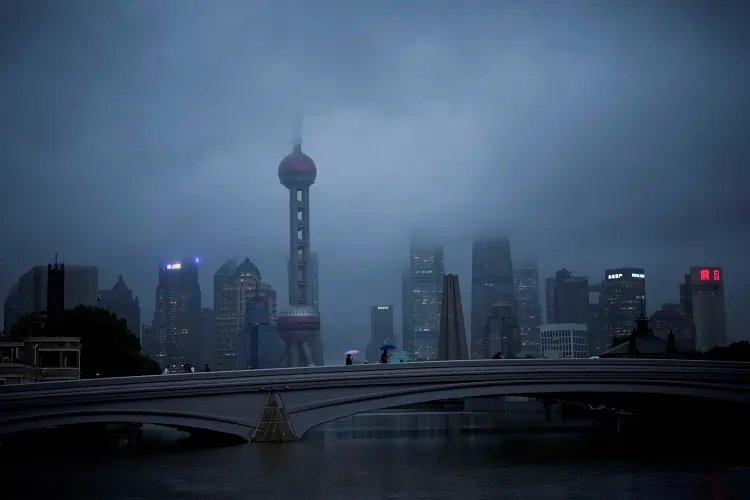
Published by Uma Rajagopal
Posted on September 16, 2024
2 min readLast updated: January 29, 2026
Add as preferred source on GoogleBy Samuel Shen and Ryan Woo
SHANGHAI/BEIJING (Reuters) -Shanghai halted transportation links, recalled ships and shut tourism spots including Shanghai Disney Resort on Sunday as it braced for Typhoon Bebinca, in what could be the strongest tropical cyclone to hit the Chinese financial hub since 1949.
The Category 1 typhoon, packing maximum sustained wind speeds near its centre of around 144 kph(89 mph), was about 400 km southeast of Shanghai as of 5:00 p.m. (0900 GMT). It is expected to make landfall along China’s eastern coast after midnight on Monday.
The China Meteorological Administration issued typhoon red alert on Sunday afternoon, warning of gales and heavy rainfalls in eastern China.
The strongest storm to make landfall in Shanghai in recent decades was Typhoon Gloria in 1949, which tore through the city with gusts of 144 kph. Shanghai was last threatened by a direct hit in 2022 by the powerful Typhoon Muifa, which instead landed 300 km away in the city of Zhoushan, in Zhejiang province.
Shanghai is typically spared the strong typhoons that hit further south in China, including Yagi, a destructive Category 4 storm that roared past southern Hainan province last week. But Shanghai and neighbouring provinces are taking no chances with Category 1 Bebinca.
All flights will be cancelled at Shanghai’s two airports from 8 p.m. local time on Sunday, and the operator, the Shanghai Airport (Group) Co said it will announce adjustments depending on typhoon’s impact.
The Shanghai railway station has also suspended some services to ensure passenger safety, and the Shenzhen government said trains to and from Shanghai will be halted.
Resorts in Shanghai, including Shanghai Disney Resort, Jinjiang Amusement Park and Shanghai Wild Animal Park, have been temporarily closed while most ferries have been halted to and from Chongming Island – China’s third-biggest island known as “the gateway to the Yangtze River”.
In Zhejiang, ships have been recalled while several parks in the provincial capital Hangzhou announced closures.
Bebinca’s arrival will coincide with the Mid-Autumn festival, a nationwide three-day holiday when many Chinese travel or engage in outdoor activities.
China’s Ministry of Water Resources on Saturday issued a Level-IV emergency response – the lowest level in China’s four-tier emergency response system – for potential flooding in Shanghai and the provinces of Jiangsu, Zhejiang and Anhui.
(Reporting by Samuel Shen in Shanghai and Ryan Woo in Beijing; Editing by Edmund Klamann and Tomasz Janowski)
A typhoon is a type of tropical cyclone that occurs in the Northwest Pacific region, characterized by strong winds and heavy rain. Typhoons can cause significant damage to infrastructure and pose risks to safety.
A red alert is a warning issued by meteorological authorities indicating severe weather conditions that pose a significant threat to life and property. It prompts immediate action and preparedness.
An emergency response refers to the organized approach to addressing urgent situations, such as natural disasters, to ensure public safety and mitigate damage. It often involves coordination among various agencies.
Landfall occurs when a storm, such as a typhoon or hurricane, makes contact with land after being over water. This can lead to increased wind speeds and heavy rainfall impacting the area.
A Category 1 typhoon is the lowest classification on the Saffir-Simpson scale, indicating wind speeds of 74-95 mph. While it can cause damage, it is less severe than higher category storms.
Explore more articles in the Top Stories category











