
Top Stories
Russia Says Can’t Do Much to Help With Nord Stream Gas Pipeline Repair
Published by Jessica Weisman-Pitts
Posted on August 1, 2022
3 min readLast updated: February 5, 2026
Add as preferred source on Google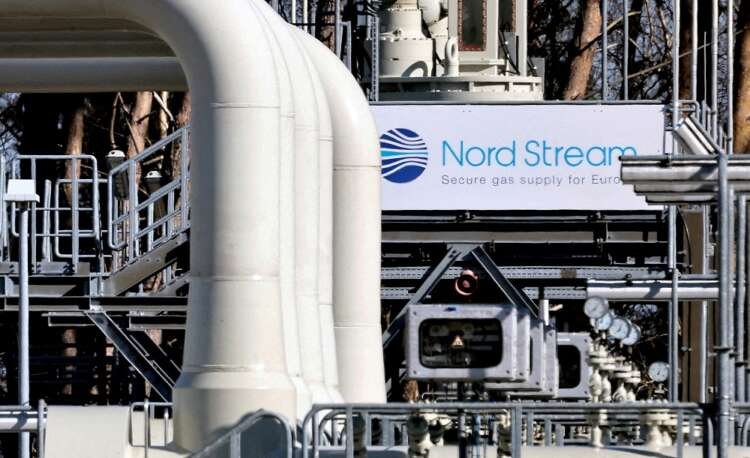
Published by Jessica Weisman-Pitts
Posted on August 1, 2022
3 min readLast updated: February 5, 2026
Add as preferred source on Google(This content was produced in Russia where the law restricts coverage of Russian military operations in Ukraine)
(This content was produced in Russia where the law restricts coverage of Russian military operations in Ukraine)
MOSCOW (Reuters) – There is little Russia can do to help with urgent repairs required to malfunctioning Nord Stream 1 gas pipeline equipment, Kremlin spokesman Dmitry Peskov said on Monday, following further falls in Gazprom production and exports.
Russia cut gas supplies via Nord Stream 1, its main gas pipeline to Europe, to just 20% of capacity last week, saying that a turbine sent to Canada for maintenance had not been returned and other equipment also needed repair.
This signalled a deepening of a row in which Moscow has cited turbine problems as its reason for cutting gas supply via the Nord Stream 1 pipeline.
“There are malfunctions which require urgent repairs and there are certain artificial difficulties which were caused by sanctions,” Peskov said.
“This situation needs a fix and Russia has a little ability to help here,” he added.
Germany’s Siemens Energy, the manufacturer, has said it had no access to the turbines on site and had not received any damage reports from Gazprom and so had to assume the turbines were operating normally.
PRODUCTION, EXPORTS DOWN
Gas from Russia covered around 40% of European needs before Russia sent troops to Ukraine in February in what it said was a “special military operation”. In line with wide-ranging Western sanctions on Moscow, the EU is seeking to reduce its reliance on Russian energy.
The Nord Stream 1 pipeline, once a symbol of energy cooperation between Europe’s largest economy Germany and Russia, is among several routes that transport Russian gas to Europe.
Another major route is the Yamal-Europe pipeline, which works in reverse mode to move gas from Germany to Poland, and exports via Ukraine are also at reduced levels after Kyiv shut one of the two crossing points from Russia amid the military conflict.
As a result, Gazprom’s gas output was down 12% to 262.4 billion cubic metres from January to July and exports to non-CIS countries fell by 35% to 75.3 bcm from the same period a year ago, the Russian state gas company said separately on Monday.
Last month, Gazprom’s output was 35.8% lower in annual terms compared with a year-on-year drop of 30.4% the month before, Evgeniy Suvorov, an economist at CentroCreditBank, said on his Telegram channel MMI, and exports were down 58.4% versus June’s drop of 49.7%.
“Russia would not be able to compensate for the loss of the European market by supplying China,” Suvorov said, adding that Gazprom shipped 10.4 bcm to China last year.
On Monday, Gazprom said that supplies to China via the Power of Siberia pipeline were up by 61%, without providing figures.
(Reporting by Reuters; Editing by Alexander Smith and Barbara Lewis)
The Nord Stream 1 pipeline is a major gas pipeline that transports natural gas from Russia to Europe, primarily Germany, and is a key component of Europe's energy supply.
Sanctions are penalties or restrictions imposed by countries or international bodies to influence or punish a nation for specific behaviors, often related to military actions or human rights violations.
Gazprom is a state-owned gas company in Russia and one of the largest producers of natural gas in the world, responsible for the extraction, production, and distribution of gas.
Energy technologies refer to the various methods and tools used to produce, distribute, and consume energy, including renewable energy sources, fossil fuels, and energy efficiency technologies.
Gas supply refers to the provision of natural gas to consumers, which can include residential, commercial, and industrial users, and is critical for heating, cooking, and electricity generation.
Explore more articles in the Top Stories category











