
Top Stories
Residents Visit Evacuated Icelandic Town for First Time Since Volcanic Eruption
Published by Wanda Rich
Posted on December 21, 2023
2 min readLast updated: January 31, 2026
Add as preferred source on Google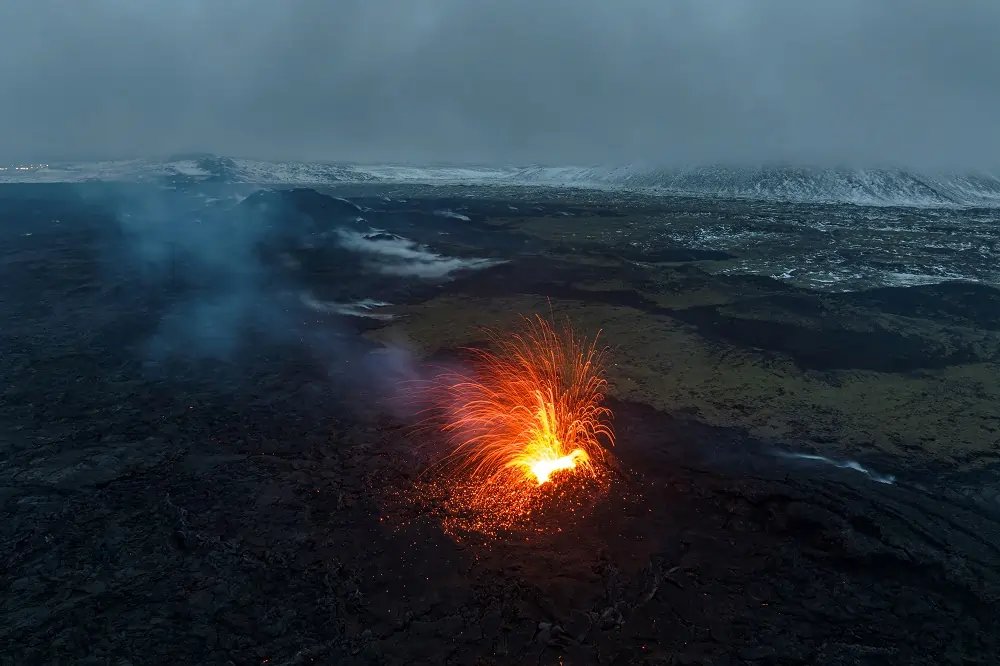
Published by Wanda Rich
Posted on December 21, 2023
2 min readLast updated: January 31, 2026
Add as preferred source on GoogleBy Marco Trujillo and Marko Djurica
GRINDAVIK, Iceland (Reuters) -Residents returned briefly to an evacuated fishing town in Iceland on Thursday for the first time since a volcanic eruption to check on their homes and collect some belongings.
Scientists who flew over the area on Thursday said lava flows had continued to diminish and no volcanic activity was visible, three days after the volcano spewed lava and smoke high into the air on the Reykjanes peninsula in southwest Iceland.
The 4,000 residents of Grindavik were evacuated in early November from the town about 40 km (26 miles) southwest of the capital Reykjavik because of intense seismic activity. They had been allowed back intermittently on brief visits since then, but not since Monday’s eruption.
Returning residents, accompanied on Thursday by media, found a big crack in the ground had been secured by fences. Cars occasionally drove through the largely empty streets, and a few Christmas decorations hung from lampposts.
The intensity of lava flows has steadily decreased since Monday, easing worries of a repeat of the international travel chaos caused by ash from another volcanic eruption on the island in 2010.
The Icelandic Metrological Office said in a statement on Thursday that the lava flows seemed to have diminished further overnight, but that it was too early to declare the eruption over.
“Scientists flying over the volcanic areas confirm that no volcanic activity is visible, and it appears to have extinguished in the craters, but glow is still visible in the lava field,” it said.
“The eruption is reduced compared to the beginning, and it’s just slowly dying down,” Armann Hoskuldsson, Research professor at the Institute of Earth Sciences at the University of Iceland told Reuters. “It will last for a few days more and then it’s finished.”
(Reporting by Marco Trujillo and Marko Djurica; Jacob Gronholt-Pedersen and Johannes Birkebaek in Copenhagen, Editing by Timothy Heritage)
Insurance is a financial arrangement that provides protection against potential financial losses or risks. It involves paying premiums to an insurer in exchange for coverage against specific risks.
Financial management refers to the strategic planning, organizing, directing, and controlling of financial activities within an organization. It involves managing funds to achieve financial goals and ensure stability.
Investment is the act of allocating resources, usually money, in order to generate income or profit. It can involve purchasing assets such as stocks, bonds, or real estate.
Economic growth is the increase in the production of goods and services in an economy over a period of time. It is typically measured by the rise in gross domestic product (GDP).
Explore more articles in the Top Stories category











