Search
00
GBAF Logo
trophy
Top StoriesInterviewsBusinessFinanceBankingTechnologyInvestingTradingVideosAwardsMagazinesHeadlinesTrends

Subscribe to our newsletter

Get the latest news and updates from our team.

Global Banking & Finance Review®

Global Banking & Finance Review® - Subscribe to our newsletter

Company

    GBAF Logo
    • About Us
    • Profile
    • Privacy & Cookie Policy
    • Terms of Use
    • Contact Us
    • Advertising
    • Submit Post
    • Latest News
    • Research Reports
    • Press Release
    • Awards▾
      • About the Awards
      • Awards TimeTable
      • Submit Nominations
      • Testimonials
      • Media Room
      • Award Winners
      • FAQ
    • Magazines▾
      • Global Banking & Finance Review Magazine Issue 79
      • Global Banking & Finance Review Magazine Issue 78
      • Global Banking & Finance Review Magazine Issue 77
      • Global Banking & Finance Review Magazine Issue 76
      • Global Banking & Finance Review Magazine Issue 75
      • Global Banking & Finance Review Magazine Issue 73
      • Global Banking & Finance Review Magazine Issue 71
      • Global Banking & Finance Review Magazine Issue 70
      • Global Banking & Finance Review Magazine Issue 69
      • Global Banking & Finance Review Magazine Issue 66
    Top StoriesInterviewsBusinessFinanceBankingTechnologyInvestingTradingVideosAwardsMagazinesHeadlinesTrends

    Global Banking & Finance Review® is a leading financial portal and online magazine offering News, Analysis, Opinion, Reviews, Interviews & Videos from the world of Banking, Finance, Business, Trading, Technology, Investing, Brokerage, Foreign Exchange, Tax & Legal, Islamic Finance, Asset & Wealth Management.
    Copyright © 2010-2026 GBAF Publications Ltd - All Rights Reserved. | Sitemap | Tags | Developed By eCorpIT

    Editorial & Advertiser disclosure

    Global Banking & Finance Review® is an online platform offering news, analysis, and opinion on the latest trends, developments, and innovations in the banking and finance industry worldwide. The platform covers a diverse range of topics, including banking, insurance, investment, wealth management, fintech, and regulatory issues. The website publishes news, press releases, opinion and advertorials on various financial organizations, products and services which are commissioned from various Companies, Organizations, PR agencies, Bloggers etc. These commissioned articles are commercial in nature. This is not to be considered as financial advice and should be considered only for information purposes. It does not reflect the views or opinion of our website and is not to be considered an endorsement or a recommendation. We cannot guarantee the accuracy or applicability of any information provided with respect to your individual or personal circumstances. Please seek Professional advice from a qualified professional before making any financial decisions. We link to various third-party websites, affiliate sales networks, and to our advertising partners websites. When you view or click on certain links available on our articles, our partners may compensate us for displaying the content to you or make a purchase or fill a form. This will not incur any additional charges to you. To make things simpler for you to identity or distinguish advertised or sponsored articles or links, you may consider all articles or links hosted on our site as a commercial article placement. We will not be responsible for any loss you may suffer as a result of any omission or inaccuracy on the website.

    Home > Technology > Public Infrastructure Spending Trends Driving Commercial Playground Growth
    Technology

    Public Infrastructure Spending Trends Driving Commercial Playground Growth

    Published by Barnali Pal Sinha

    Posted on February 10, 2026

    5 min read

    Last updated: February 10, 2026

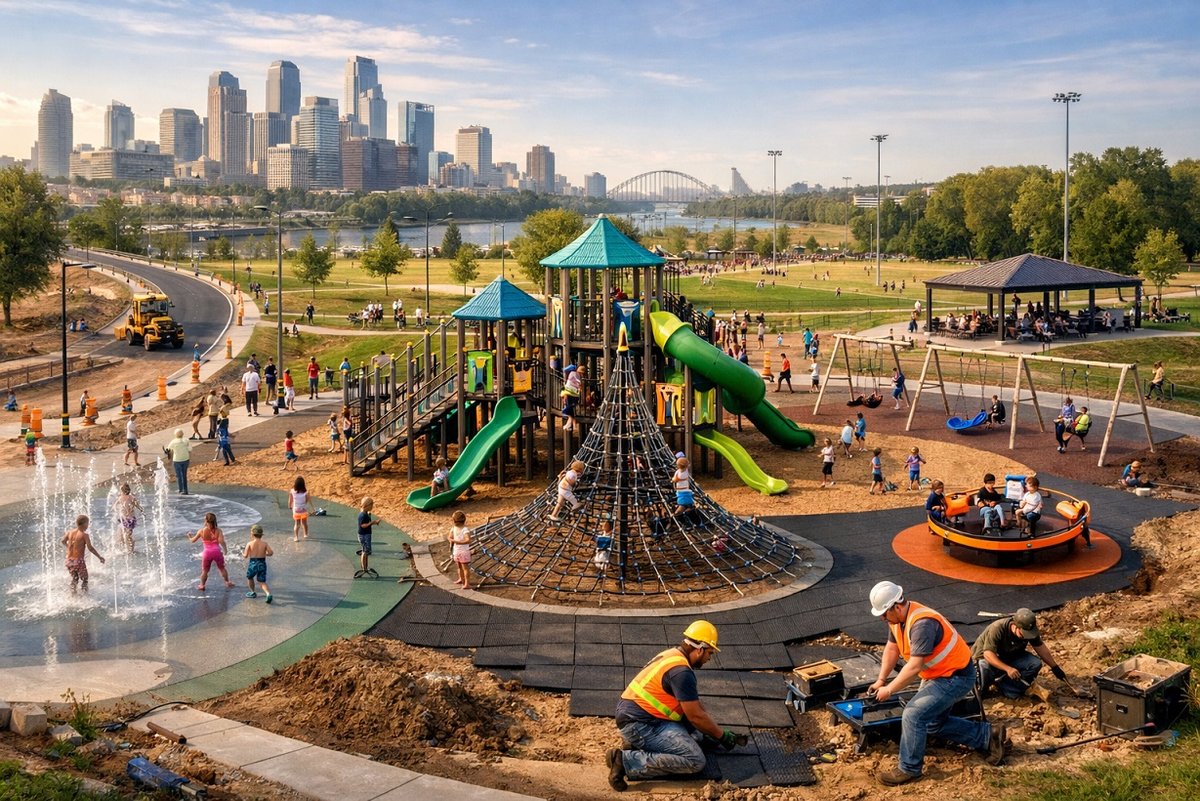
    A colorful, modern commercial playground showcasing the growing investment in public recreational infrastructure. This image highlights the importance of playgrounds in enhancing community health and engagement, as discussed in the article.
    Vibrant commercial playground illustrating public infrastructure trends - Global Banking & Finance Review
    Tags:Public Healthinfrastructure investmentssustainability

    Quick Summary

    Public infrastructure spending has always played a huge role in shaping communities. Energy flows where the money goes. So as states and cities funnel money into roads, utilities, and transit, more people are attracted to those areas. In recent decades, local governments have begun to see the value ...

    Table of Contents

    • The History of Public Infrastructure Spending
    • What’s Driving the Demand for Commercial Playgrounds
    • The Market and the Industry
    • Commercial Playground Growth in the Real World
    • The Inevitable Challenges
    • It’s Undeniable: Playground Development Is a Public Asset

    Public infrastructure spending has always played a huge role in shaping communities. Energy flows where the money goes. So as states and cities funnel money into roads, utilities, and transit, more people are attracted to those areas. In recent decades, local governments have begun to see the value in recreational infrastructure. Parks, trails, and commercial playgrounds are gaining more traction and becoming public assets rather than merely “nice to have.”

    The History of Public Infrastructure Spending

    For generations, public infrastructure in the United States focused almost exclusively on what legislators saw as necessities. Transportation networks, water systems, public safety facilities, and utilities were either well or poorly constructed and maintained based on funds and budgets. What few playgrounds, parks, and trails did exist were largely a result of an afterthought and leftovers in the budget. Of course, this meant that many such spaces went underfunded and fell into disrepair.

    However, as the 1990s drew to a close, urban planners and public health researchers around the country began to link quality of life to infrastructure. They noted that parks and playgrounds had a powerful positive impact on economic growth. They drove up property values, attracted stable residents, and improved community outcomes. Now, many funding frameworks in cities and states make room for investment in public spaces that support health, equity, and social connection.

    What’s Driving the Demand for Commercial Playgrounds

    Of course, it’s never just one factor that contributes to this kind of big society change. The demand for commercial playgrounds in public and private environments has been driven by many shifts in the American experience. First and foremost, public health initiatives have been pushing cities to create spaces that promote physical activity for children. Childhood obesity and increased screen time indoors have become national talking points. Playgrounds can offer a proactive approach to these problems.

    Second, cities are becoming increasingly populated, growing both upward and outward, so many residences don’t have private yards. Shared play spaces can serve a broad swath of the population. Third, community equity has entered the chat, with more municipalities working to correct historical underinvestment in underserved neighborhoods. Fresh parks and playgrounds are part of larger revitalization efforts. And finally, many schools are contacting their playground equipment supplier to upgrade their playspaces, so kids can enjoy the outdoors on safe structures.

    The Market and the Industry

    These changes, on a national scale, are massive. Indeed, the outdoor play structures market is expected to grow from $552.5 million in 2024 to $849.7 million by 2033. The commercial playground segment of this market is leading that expansion, and manufacturers are responding at a rapid pace. Product lines are ever-expanding to address niche interests in the public and private sectors.

    Today’s commercial playgrounds emphasize:

    • Durability and safety. Structures are in compliance with local and federal regulations for long-term public use.

    • Inclusive design. Children of all abilities now have more access to parks and playgrounds, with extra accommodations for wheelchairs, sensitivities, and special needs.

    • Sustainable materials. As the public becomes more aware of environmental concerns, playgrounds can meet municipal environmental goals.

    • Modular systems. Cities, schools, and shared communities can phase in installments as their funding allows.

    The playground industry has also begun collaborating more with local businesses and city officials. Now, city planners, architects, landscape designers, and other small business owners gather to figure out how playgrounds can integrate into larger projects. The standalone playground is quickly becoming a thing of the past.

    Commercial Playground Growth in the Real World

    This discussion has gone well beyond theoretical, wishful thinking and right into the real world. Across the United States, playground development is tied to large-scale public initiatives, with park renovations often including full renovations instead of just a replacement or two. You’ve likely noticed that modern playgrounds are often themed, and many of them have spaces that cater to all ages, toddlers, older children, and even caregivers. The through line in case studies is that playgrounds are no longer add-ons.

    In shared residential developments, you’ll see mixed-use housing complexes that include businesses on a lower floor of a building, living spaces on higher floors, and playgrounds at the center. Master-planned communities like these help developers meet community requirements while also offering tangible value to the residents who do end up moving in. And in the case of schools, many districts are now coordinating with local governments to ensure playgrounds can serve kids during the school day and the broader community after hours.

    The Inevitable Challenges

    Of course, playground development is not without its hurdles. Budget constraints, maintenance costs, and compliance requirements can create problems that can be hard to overcome. The budget, of course, is perhaps the most challenging issue. Even with an increase in infrastructure spending, cities across the country have to be able to balance playground projects against competing priorities like road repair and emergency services. This means playground projects can face delays and cuts.

    But maintenance costs have always been an issue, and they will likely continue to be. It’s the reason so many playgrounds fall into disrepair. Commercial playgrounds are designed for longevity, but they still demand inspections, repairs, and surface replacement as time wears on. If a community doesn’t have a clear plan in place, the people involved may hesitate to invest in projects. Finally, permitting issues can slow projects down. It’s important to include regulations and community input in the initial process to avoid extended timelines later.

    It’s Undeniable: Playground Development Is a Public Asset

    In the end, the growth of commercial playgrounds is more than just a trend. It’s now a clear reflection of how the country’s infrastructure priorities are shifting and evolving. Governments are recognizing the value of including parks and playgrounds as public assets. Giving kids a place to play and adults a place to rest and relax outside improves public health and makes communities more attractive. In short, playgrounds can help strengthen the fabric of public life.

    Frequently Asked Questions about Public Infrastructure Spending Trends Driving Commercial Playground Growth

    1What is public infrastructure?

    Public infrastructure refers to the basic physical systems and facilities such as roads, bridges, parks, and utilities that are essential for a community's functioning and economic development.

    2What are commercial playgrounds?

    Commercial playgrounds are play areas designed for public or private use, often featuring equipment and structures that promote physical activity and social interaction among children.

    3What is community equity?

    Community equity involves ensuring fair access to resources and opportunities for all community members, particularly in historically underserved areas, promoting inclusivity and social justice.

    4What is sustainability in infrastructure?

    Sustainability in infrastructure refers to the design and construction of facilities that meet current needs without compromising the ability of future generations to meet their own needs, often incorporating eco-friendly practices.

    Why waste money on news and opinion when you can access them for free?

    Take advantage of our newsletter subscription and stay informed on the go!

    Subscribe

    More from Technology

    Explore more articles in the Technology category

    Image for AI-Driven Finance: The CFO Who Replaced Guesswork With Machines
    AI-Driven Finance: The CFO Who Replaced Guesswork With Machines
    Image for Debtist: Digital Debt Collection for Modern Businesses
    Debtist: Digital Debt Collection for Modern Businesses
    Image for Infosecurity Europe launches new Cyber Startup Programme to champion the next generation of cybersecurity innovators
    Infosecurity Europe launches new Cyber Startup Programme to champion the next generation of cybersecurity innovators
    Image for BLOXX Launches ĀRIKI BLOXX at Web Summit Qatar
    BLOXX Launches ĀRIKI BLOXX at Web Summit Qatar
    Image for Engineering Trust in the Age of Data: A Blueprint for Global Resilience
    Engineering Trust in the Age of Data: A Blueprint for Global Resilience
    Image for Over half of organisations predict their OT environments will be targeted by cyber attacks
    Over half of organisations predict their OT environments will be targeted by cyber attacks
    Image for Engineering Financial Innovation in Renewable Energy and Climate Technology
    Engineering Financial Innovation in Renewable Energy and Climate Technology
    Image for Industry 4.0 in 2025: Trends Shaping the New Industrial Reality
    Industry 4.0 in 2025: Trends Shaping the New Industrial Reality
    Image for Engineering Tomorrow’s Cities: On a Mission to Build Smarter, Safer, and Greener Mobility
    Engineering Tomorrow’s Cities: On a Mission to Build Smarter, Safer, and Greener Mobility
    Image for In Conversation with Faiz Khan: Architecting Enterprise Solutions at Scale
    In Conversation with Faiz Khan: Architecting Enterprise Solutions at Scale
    Image for Ballerine Launches Trusted Agentic Commerce Governance Platform
    Ballerine Launches Trusted Agentic Commerce Governance Platform
    Image for Maximising Corporate Visibility in a Digitally Driven Investment Landscape
    Maximising Corporate Visibility in a Digitally Driven Investment Landscape
    View All Technology Posts
    Previous Technology PostAI-Driven Finance: The CFO Who Replaced Guesswork With Machines
    Next Technology PostDebtist: Digital Debt Collection for Modern Businesses