Search
00
GBAF Logo
trophy
Top StoriesInterviewsBusinessFinanceBankingTechnologyInvestingTradingVideosAwardsMagazinesHeadlinesTrends

Subscribe to our newsletter

Get the latest news and updates from our team.

Global Banking & Finance Review®

Global Banking & Finance Review® - Subscribe to our newsletter

Company

    GBAF Logo
    • About Us
    • Profile
    • Privacy & Cookie Policy
    • Terms of Use
    • Contact Us
    • Advertising
    • Submit Post
    • Latest News
    • Research Reports
    • Press Release
    • Awards▾
      • About the Awards
      • Awards TimeTable
      • Submit Nominations
      • Testimonials
      • Media Room
      • Award Winners
      • FAQ
    • Magazines▾
      • Global Banking & Finance Review Magazine Issue 79
      • Global Banking & Finance Review Magazine Issue 78
      • Global Banking & Finance Review Magazine Issue 77
      • Global Banking & Finance Review Magazine Issue 76
      • Global Banking & Finance Review Magazine Issue 75
      • Global Banking & Finance Review Magazine Issue 73
      • Global Banking & Finance Review Magazine Issue 71
      • Global Banking & Finance Review Magazine Issue 70
      • Global Banking & Finance Review Magazine Issue 69
      • Global Banking & Finance Review Magazine Issue 66
    Top StoriesInterviewsBusinessFinanceBankingTechnologyInvestingTradingVideosAwardsMagazinesHeadlinesTrends

    Global Banking & Finance Review® is a leading financial portal and online magazine offering News, Analysis, Opinion, Reviews, Interviews & Videos from the world of Banking, Finance, Business, Trading, Technology, Investing, Brokerage, Foreign Exchange, Tax & Legal, Islamic Finance, Asset & Wealth Management.
    Copyright © 2010-2026 GBAF Publications Ltd - All Rights Reserved. | Sitemap | Tags | Developed By eCorpIT

    Editorial & Advertiser disclosure

    Global Banking & Finance Review® is an online platform offering news, analysis, and opinion on the latest trends, developments, and innovations in the banking and finance industry worldwide. The platform covers a diverse range of topics, including banking, insurance, investment, wealth management, fintech, and regulatory issues. The website publishes news, press releases, opinion and advertorials on various financial organizations, products and services which are commissioned from various Companies, Organizations, PR agencies, Bloggers etc. These commissioned articles are commercial in nature. This is not to be considered as financial advice and should be considered only for information purposes. It does not reflect the views or opinion of our website and is not to be considered an endorsement or a recommendation. We cannot guarantee the accuracy or applicability of any information provided with respect to your individual or personal circumstances. Please seek Professional advice from a qualified professional before making any financial decisions. We link to various third-party websites, affiliate sales networks, and to our advertising partners websites. When you view or click on certain links available on our articles, our partners may compensate us for displaying the content to you or make a purchase or fill a form. This will not incur any additional charges to you. To make things simpler for you to identity or distinguish advertised or sponsored articles or links, you may consider all articles or links hosted on our site as a commercial article placement. We will not be responsible for any loss you may suffer as a result of any omission or inaccuracy on the website.

    Home > Top Stories > Protecting the caribou: Substantial costs, questionable results
    Top Stories

    Protecting the caribou: Substantial costs, questionable results

    Published by Gbaf News

    Posted on May 30, 2018

    5 min read

    Last updated: January 21, 2026

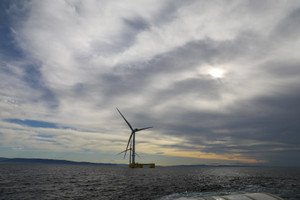
    An illustration of offshore wind farms off Portugal's Atlantic coast, reflecting the government's initiative to create a 10 gigawatt renewable energy cluster, as discussed in the article.
    Offshore wind farms off Portugal's coast, showcasing renewable energy potential - Global Banking & Finance Review
    Why waste money on news and opinion when you can access them for free?

    Take advantage of our newsletter subscription and stay informed on the go!

    Subscribe

    Environment and Climate Change Canada recently published a report criticizing the measures taken by the provinces to protect the boreal caribou. If Ottawa decides to intervene, it must take into account the economic costs of protection measures and the realities of each province.

    “A strict application of federal requirements could be very harmful for the Ontario economy,” points out Alexandre Moreau, Public Policy Analyst at the MEI. “Around half of forestry activity in Ontario takes place in boreal caribou habitat, and could therefore be affected. This represents $2.6 billion of economic activity and some 18,300 direct jobs.”

    To comply with federal standards, the provinces and territories have to limit the level of disturbance of boreal caribou habitat caused by human activity or forest fires to less than 35%.

    “It is difficult to give a precise estimate of the losses that could be incurred in Ontario, but as in Quebec, a strict application of federal requirements could lead to the disappearance of thousands of jobs and to the loss of hundreds of millions of dollars each year,” notes Mr. Moreau, adding that the regions of Kenora, Thunder Bay, and Cochrane would be the most seriously affected.

    Moreover, even putting a complete stop to all human activity would not guarantee the survival of all the caribou. They would still be threatened by other factors like disease, insects, forest fires, and wolf predation, as well as by the modification of their habitat due to climate change.

    In Quebec, the MEI has previously calculated that the cost of fully applying federal requirements could lead to the disappearance of 5,700 direct jobs and cost up to $740 million in lost economic activity, just in the forestry sector. “That’s 72 direct jobs and a total cost of over $9 million for each caribou we’re trying to save, with no guaranteed results,” says Alexandre Moreau.

    “Currently, only the Quebec government has made public an exhaustive estimate of the costs associated with Ottawa’s requirements. The governments of Ontario and the other provinces should follow suit and show transparency, both in terms of the evolving number of caribou and the economic costs of habitat recovery measures,” argues Mr. Moreau.

    Finally, Ottawa must also adopt a “flexible approach” that would allow the provinces and territories to set population protection targets that take into account the economic realities of each community. “It is clearly stated in the federal law that the socioeconomic aspects of communities should be considered in the elaboration and the implementation of protection measures,” concludes Mr. Moreau.

    The Montreal Economic Institute is an independent, non-partisan, not-for-profit research and educational organization. Through its studies and its conferences, the MEI stimulates debate on public policies in Quebec and across Canada by proposing wealth-creating reforms based on market mechanisms.

    Environment and Climate Change Canada recently published a report criticizing the measures taken by the provinces to protect the boreal caribou. If Ottawa decides to intervene, it must take into account the economic costs of protection measures and the realities of each province.

    “A strict application of federal requirements could be very harmful for the Ontario economy,” points out Alexandre Moreau, Public Policy Analyst at the MEI. “Around half of forestry activity in Ontario takes place in boreal caribou habitat, and could therefore be affected. This represents $2.6 billion of economic activity and some 18,300 direct jobs.”

    To comply with federal standards, the provinces and territories have to limit the level of disturbance of boreal caribou habitat caused by human activity or forest fires to less than 35%.

    “It is difficult to give a precise estimate of the losses that could be incurred in Ontario, but as in Quebec, a strict application of federal requirements could lead to the disappearance of thousands of jobs and to the loss of hundreds of millions of dollars each year,” notes Mr. Moreau, adding that the regions of Kenora, Thunder Bay, and Cochrane would be the most seriously affected.

    Moreover, even putting a complete stop to all human activity would not guarantee the survival of all the caribou. They would still be threatened by other factors like disease, insects, forest fires, and wolf predation, as well as by the modification of their habitat due to climate change.

    In Quebec, the MEI has previously calculated that the cost of fully applying federal requirements could lead to the disappearance of 5,700 direct jobs and cost up to $740 million in lost economic activity, just in the forestry sector. “That’s 72 direct jobs and a total cost of over $9 million for each caribou we’re trying to save, with no guaranteed results,” says Alexandre Moreau.

    “Currently, only the Quebec government has made public an exhaustive estimate of the costs associated with Ottawa’s requirements. The governments of Ontario and the other provinces should follow suit and show transparency, both in terms of the evolving number of caribou and the economic costs of habitat recovery measures,” argues Mr. Moreau.

    Finally, Ottawa must also adopt a “flexible approach” that would allow the provinces and territories to set population protection targets that take into account the economic realities of each community. “It is clearly stated in the federal law that the socioeconomic aspects of communities should be considered in the elaboration and the implementation of protection measures,” concludes Mr. Moreau.

    The Montreal Economic Institute is an independent, non-partisan, not-for-profit research and educational organization. Through its studies and its conferences, the MEI stimulates debate on public policies in Quebec and across Canada by proposing wealth-creating reforms based on market mechanisms.

    More from Top Stories

    Explore more articles in the Top Stories category

    Image for Lessons From the Ring and the Deal Table: How Boxing Shapes Steven Nigro’s Approach to Banking and Life
    Lessons From the Ring and the Deal Table: How Boxing Shapes Steven Nigro’s Approach to Banking and Life
    Image for Joe Kiani in 2025: Capital, Conviction, and a Focused Return to Innovation
    Joe Kiani in 2025: Capital, Conviction, and a Focused Return to Innovation
    Image for Marco Robinson – CLOSE THE DEAL AND SUDDENLY GROW RICH
    Marco Robinson – CLOSE THE DEAL AND SUDDENLY GROW RICH
    Image for Digital Tracing: Turning a regulatory obligation into a commercial advantage
    Digital Tracing: Turning a regulatory obligation into a commercial advantage
    Image for Exploring the Role of Blockchain and the Bitcoin Price Today in Education
    Exploring the Role of Blockchain and the Bitcoin Price Today in Education
    Image for Inside the World’s First Collection Industry Conglomerate: PCA Global’s Platform Strategy
    Inside the World’s First Collection Industry Conglomerate: PCA Global’s Platform Strategy
    Image for Chase Buchanan Private Wealth Management Highlights Key Autumn 2025 Budget Takeaways for Expats
    Chase Buchanan Private Wealth Management Highlights Key Autumn 2025 Budget Takeaways for Expats
    Image for PayLaju Strengthens Its Position as Malaysia’s Trusted Interest-Free Sharia-Compliant Loan Provider
    PayLaju Strengthens Its Position as Malaysia’s Trusted Interest-Free Sharia-Compliant Loan Provider
    Image for A Notable Update for Employee Health Benefits:
    A Notable Update for Employee Health Benefits:
    Image for Creating Equity Between Walls: How Mohak Chauhan is Using Engineering, Finance, and Community Vision to Reengineer Affordable Housing
    Creating Equity Between Walls: How Mohak Chauhan is Using Engineering, Finance, and Community Vision to Reengineer Affordable Housing
    Image for Upcoming Book on Real Estate Investing: Harvard Grace Capital Founder Stewart Heath’s Puts Lessons in Print
    Upcoming Book on Real Estate Investing: Harvard Grace Capital Founder Stewart Heath’s Puts Lessons in Print
    Image for ELECTIVA MARKS A LANDMARK FIRST YEAR WITH MAJOR SENIOR APPOINTMENTS AND EXPANSION MILESTONES
    ELECTIVA MARKS A LANDMARK FIRST YEAR WITH MAJOR SENIOR APPOINTMENTS AND EXPANSION MILESTONES
    View All Top Stories Posts
    Previous Top Stories PostPender Technology Inflection Fund makes first investment
    Next Top Stories PostLiDAR Market Worth 1,809.5 Million USD by 2023