
Top Stories
Oil up About 2% on Big US Crude Storage Draw, Middle East Tension
Published by Jessica Weisman-Pitts
Posted on October 18, 2023
3 min readLast updated: January 31, 2026
Add as preferred source on Google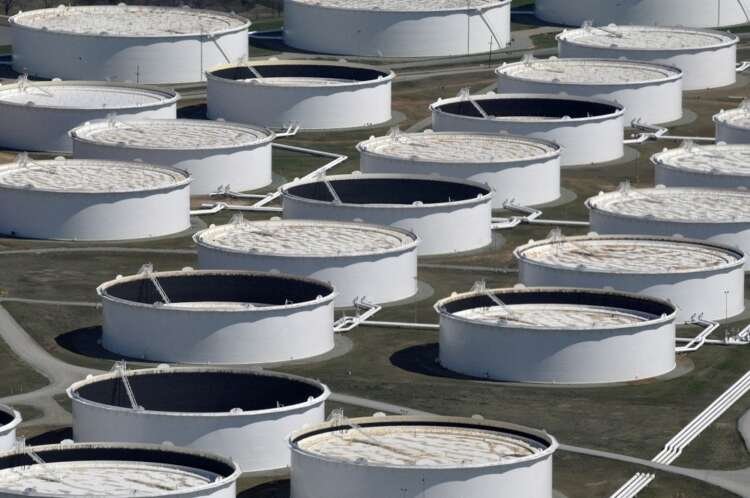
Published by Jessica Weisman-Pitts
Posted on October 18, 2023
3 min readLast updated: January 31, 2026
Add as preferred source on GoogleBy Scott DiSavino
NEW YORK (Reuters) -Oil prices climbed about 2% to a two-week high on Wednesday on a bigger-than-expected U.S. storage draw and as rising tensions in the Middle East threaten to disrupt oil supplies from the region, with Iran calling for an oil embargo on Israel.
Brent futures rose $1.46, or 1.6%, to $91.36 a barrel by 10:38 a.m. EDT (1438 GMT), while U.S. West Texas Intermediate (WTI) crude rose $1.45, or 1.7%, to $88.11.
That put Brent on track for its highest close since Sept. 29 and WTI on track for its highest close since Oct 3. Earlier in the session both benchmarks rose more than $3 a barrel.
The U.S. Energy Information Administration (EIA) said energy firms pulled 4.5 million barrels of crude from stockpiles during the week ended Oct. 13. [EIA/S]
That was much higher than the 0.3 million barrel draw analysts forecast in a Reuters poll and in line with the 4.4 million barrel drop seen in data from the American Petroleum Institute (API), an industry group. [API/S]
It was also the fourth crude storage decline in five weeks and compares with a 1.7 million barrel draw during the same week last year and a five-year (2018-2022) average build of 2.5 million barrels for this time of year.
The decline included a drop of 0.8 million barrels at the Cushing storage facility in Oklahoma to its lowest level since October 2014, prompting concerns about the quality of oil remaining in the tanks and what happens if the amount of oil falls below minimum operating levels.
Cushing is the delivery point for U.S. oil futures on the New York Mercantile Exchange.
Markets factored in risk premiums after hundreds of Palestinians were killed in a blast at a Gaza City hospital on Tuesday that Israeli and Palestinian officials blamed on each other.
Jordan then cancelled a summit it was to host with U.S. President Joe Biden and Egyptian and Palestinian leaders. Biden arrived in Israel on Wednesday pledging solidarity with Israel in its war against Hamas, and backing Israel’s account that the hospital blast had been caused by militants.
“This turn of diplomatic fortunes again garners fear of conflict spread and therefore the leap in oil,” said John Evans of oil broker PVM.
In the Saudi city of Jeddah, Iranian Foreign Minister Hossein Amirabdollahian urged members of the Organisation of Islamic Cooperation to impose an oil embargo on Israel.
The Organization of the Petroleum Exporting Countries (OPEC) is not planning to take any immediate action on Iran’s call, four sources from the producer group told Reuters. Iran is an OPEC member.
(Reporting by Scott DiSavino in New York, Natalie Grover in London, Arathy Somesekhar in Houston and Muyu Xu in Singapore; editing by Louise Heavens, Kirsten Donovan)
Crude oil is a natural, unrefined petroleum product composed of hydrocarbon deposits and other organic materials. It is extracted from the ground and refined into various fuels and other products.
The U.S. Energy Information Administration (EIA) is a federal agency that collects, analyzes, and disseminates energy information, including data on oil production, consumption, and storage.
Brent and West Texas Intermediate (WTI) are two major benchmarks for crude oil pricing. Brent is sourced from the North Sea, while WTI is produced in the U.S. and is considered lighter and sweeter.
A storage draw refers to a decrease in the amount of oil held in storage facilities, indicating that more oil is being consumed than is being produced or imported.
Explore more articles in the Top Stories category











