Search
00
GBAF Logo
trophy
Top StoriesInterviewsBusinessFinanceBankingTechnologyInvestingTradingVideosAwardsMagazinesHeadlinesTrends

Subscribe to our newsletter

Get the latest news and updates from our team.

Global Banking & Finance Review®

Global Banking & Finance Review® - Subscribe to our newsletter

Company

    GBAF Logo
    • About Us
    • Profile
    • Privacy & Cookie Policy
    • Terms of Use
    • Contact Us
    • Advertising
    • Submit Post
    • Latest News
    • Research Reports
    • Press Release
    • Awards▾
      • About the Awards
      • Awards TimeTable
      • Submit Nominations
      • Testimonials
      • Media Room
      • Award Winners
      • FAQ
    • Magazines▾
      • Global Banking & Finance Review Magazine Issue 79
      • Global Banking & Finance Review Magazine Issue 78
      • Global Banking & Finance Review Magazine Issue 77
      • Global Banking & Finance Review Magazine Issue 76
      • Global Banking & Finance Review Magazine Issue 75
      • Global Banking & Finance Review Magazine Issue 73
      • Global Banking & Finance Review Magazine Issue 71
      • Global Banking & Finance Review Magazine Issue 70
      • Global Banking & Finance Review Magazine Issue 69
      • Global Banking & Finance Review Magazine Issue 66
    Top StoriesInterviewsBusinessFinanceBankingTechnologyInvestingTradingVideosAwardsMagazinesHeadlinesTrends

    Global Banking & Finance Review® is a leading financial portal and online magazine offering News, Analysis, Opinion, Reviews, Interviews & Videos from the world of Banking, Finance, Business, Trading, Technology, Investing, Brokerage, Foreign Exchange, Tax & Legal, Islamic Finance, Asset & Wealth Management.
    Copyright © 2010-2026 GBAF Publications Ltd - All Rights Reserved. | Sitemap | Tags | Developed By eCorpIT

    Editorial & Advertiser disclosure

    Global Banking & Finance Review® is an online platform offering news, analysis, and opinion on the latest trends, developments, and innovations in the banking and finance industry worldwide. The platform covers a diverse range of topics, including banking, insurance, investment, wealth management, fintech, and regulatory issues. The website publishes news, press releases, opinion and advertorials on various financial organizations, products and services which are commissioned from various Companies, Organizations, PR agencies, Bloggers etc. These commissioned articles are commercial in nature. This is not to be considered as financial advice and should be considered only for information purposes. It does not reflect the views or opinion of our website and is not to be considered an endorsement or a recommendation. We cannot guarantee the accuracy or applicability of any information provided with respect to your individual or personal circumstances. Please seek Professional advice from a qualified professional before making any financial decisions. We link to various third-party websites, affiliate sales networks, and to our advertising partners websites. When you view or click on certain links available on our articles, our partners may compensate us for displaying the content to you or make a purchase or fill a form. This will not incur any additional charges to you. To make things simpler for you to identity or distinguish advertised or sponsored articles or links, you may consider all articles or links hosted on our site as a commercial article placement. We will not be responsible for any loss you may suffer as a result of any omission or inaccuracy on the website.

    Home > Top Stories > No money? Next UK government’s budget is hostage to economy
    Top Stories

    No money? Next UK government’s budget is hostage to economy

    Published by Jessica Weisman-Pitts

    Posted on January 8, 2024

    5 min read

    Last updated: January 31, 2026

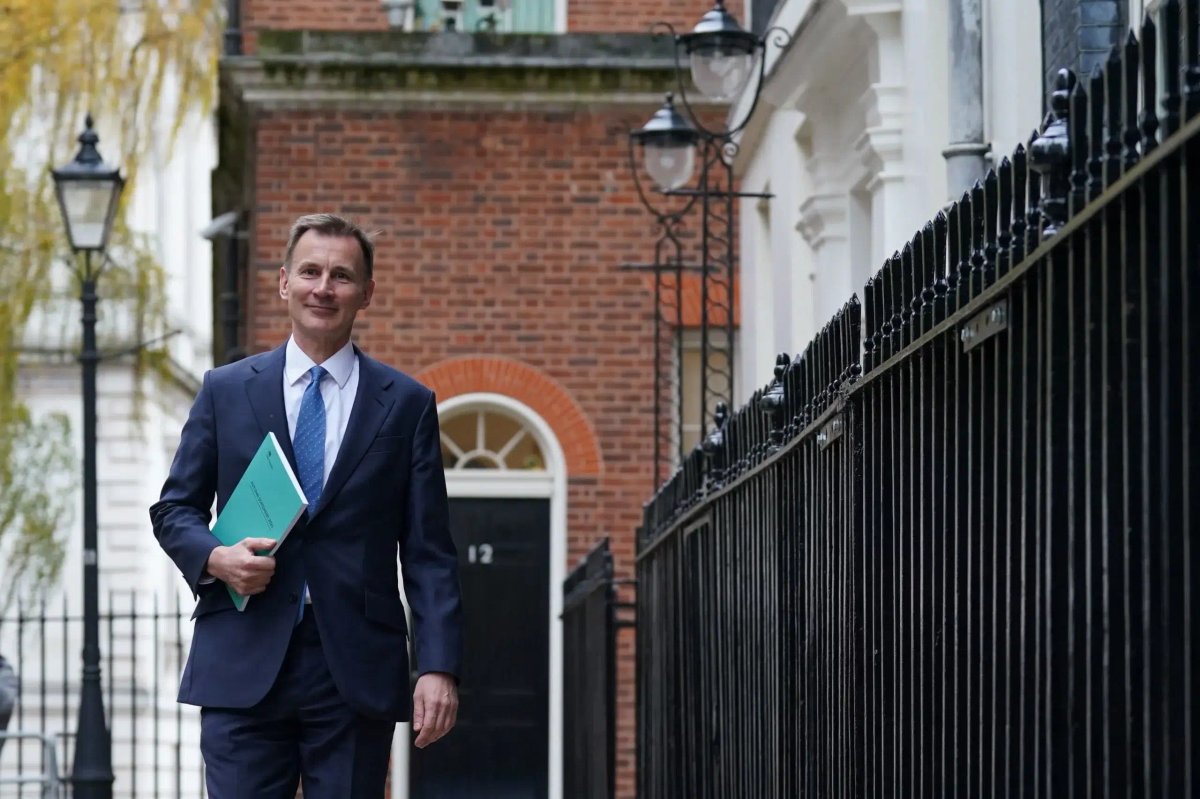
    This image depicts the financial challenges faced by the UK government in preparing the next budget amid economic uncertainty. It highlights the potential impacts on tax cuts and public spending, aligning with the article's focus on fiscal constraints and economic forecasts.
    Illustration of UK budget challenges amidst economic forecasts - Global Banking & Finance Review
    Why waste money on news and opinion when you can access them for free?

    Take advantage of our newsletter subscription and stay informed on the go!

    Subscribe

    Tags:GDPUK economytax administrationfinancial crisis

    No money? Next UK government’s budget is hostage to economy

    By William Schomberg

    LONDON (Reuters) – Britain’s next government will have little room to cut taxes or increase spending – at least according to bleak forecasts from the country’s budget office.

    But if the economy performs only a little better than expected, whoever wins an election expected later this year could have tens of billions of pounds more fiscal flexibility.

    Under that brighter scenario, Prime Minister Rishi Sunak’s Conservatives could find it easier to lower the highest tax burden since World War Two while still meeting debt promises.

    If the opposition Labour Party takes power, it would have more room to fund its annual 20 billion-pound ($25 billion) net zero investment plan.

    Of course, economic forecasting is notoriously inaccurate and the Office for Budget Responsibility (OBR) has proven too optimistic about the economy’s prospects before.

    If things go worse than it expects, the next government could face an even tighter budget squeeze.

    PARTIES PLEDGE DEBT CUT

    The Conservatives and Labour both promise to lower Britain’s public debt burden, mindful of how the huge tax cuts planned by former Prime Minister Liz Truss hammered bond markets in 2022.

    Debt is nearly 100% of economic output after massive public spending during the COVID pandemic and the 2022 energy price surge, on top of the heavy costs of the 2008-09 financial crisis.

    Tackling debt is harder with the economy stagnating, while demands for public services – such as health spending for Britain’s ageing population – continue to mount.

    Finance minister Jeremy Hunt has promised to get debt falling as a share of gross domestic product within five years.

    The current forecasts show him meeting that target only narrowly, with less room for manoeuvre than his predecessors.

    But that “fiscal headroom” is likely to change, given the range of factors that feed into the OBR’s view. The question is whether the headroom expands or gets even tighter.

    THE PRODUCTIVITY WILDCARD

    A big wild card is what happens to productivity growth which has slowed, weighing on the economy and tax revenues.

    If the government can get productivity growing closer to its pre-2008 pace – 1.5% a year rather than 1.0% as expected by the OBR – the headroom for meeting Hunt’s target would rise to 72 billion pounds in five years’ time, the OBR says.

    That would dwarf the current 13 billion-pound estimate and approach the size of Britain’s 82 billion-pound public education budget during this financial year.

    But productivity could worsen. Should it grow by only 0.5% a year – in line with the past decade – the government would miss its debt target by more than 40 billion pounds, the OBR estimates, implying tax hikes, more spending cuts or yet more debt.

    The OBR has overestimated the chances of a productivity improvement in the past. But corporate leaders say Hunt’s announcement in November that tax incentives for business investment will be made permanent is a step forwards. The rise of artificial intelligence is also raising productivity hopes.

    How inflation behaves is another important factor, and not just because of expensive payouts on Britain’s huge stock of index-linked government bonds.

    If a future jump in inflation is driven by import prices, chiefly those of oil and gas, the public finances would take a hit, the OBR says.

    But if that jump in prices comes from higher wages and company profits, tax revenues would go up, potentially helping bring down debt, although the Treasury would face calls to increase spending to match inflation.

    BETS ARE ON INTEREST RATES FALLING

    Another big assumption by the OBR is what is likely to happen to interest rates which the Bank of England has raised to a 15-year high of 5.25% to fight inflation.

    Britain spent more as a share of GDP on debt interest than any other Group of Seven country except for Italy in 2022, mainly because it sells a lot of bonds linked to inflation.

    In November, the OBR forecast net interest costs in three years’ time would be an annual 109 billion pounds, more than double its assumption less than two years earlier.

    The government’s debt interest bill looked set to settle about 2% of GDP higher than it used to be, with the difference alone equivalent to the entirety of the defence budget, the Institute for Fiscal Studies think tank said at the time.

    But since November, rate expectations have fallen fast.

    Investors now see Bank Rate dropping to 4% as soon as December, three years earlier than the OBR assumed.

    Carl Emmerson, IFS deputy director, said a fall of one percentage point in Bank Rate and on government bond yields would save the Treasury about 15 billion pounds a year, rising to 19 billion pounds in five years’ time.

    To put that into context, Britain spent 12.8 billion pounds on overseas aid in 2022.

    “They’re pretty chunky numbers,” Emmerson said.

    Hunt may be able to turn some of the fall in expected future debt costs into tax cuts as soon as March 6, when he is due to make probably his final budget statement before the election.

    THE RULES KEEP CHANGING

    Perhaps the biggest variable of all is what fiscal rules the next government adopts.

    While both main parties say they want to bring down debt as a share of GDP, Labour has not been specific about details and the Conservatives, if re-elected, could announce a new rule.

    Since 2011, successive Conservative-led governments have introduced six different fiscal rules.

    Emmerson said ministers also needed to stop using improvements in the fiscal outlook to cut taxes or raise spending while any deterioration led to more bond sales.

    “If whenever things get worse, you end up borrowing more but whenever things look better, you end up giving tax cuts, you’ll always end up borrowing more than you’re forecasting,” he said.

    ($1 = 0.7868 pounds)

    (Graphics by Sumanta Sen; Editing by Catherine Evans)

    Frequently Asked Questions about No money? Next UK government’s budget is hostage to economy

    1What is GDP?

    Gross Domestic Product (GDP) is the total value of all goods and services produced in a country over a specific period. It is a key indicator of a country's economic performance.

    2What is inflation?

    Inflation is the rate at which the general level of prices for goods and services rises, eroding purchasing power. It is typically measured by the Consumer Price Index (CPI).

    3What are interest rates?

    Interest rates are the cost of borrowing money or the return on savings, expressed as a percentage. They are influenced by central bank policies and economic conditions.

    More from Top Stories

    Explore more articles in the Top Stories category

    Image for Lessons From the Ring and the Deal Table: How Boxing Shapes Steven Nigro’s Approach to Banking and Life
    Lessons From the Ring and the Deal Table: How Boxing Shapes Steven Nigro’s Approach to Banking and Life
    Image for Joe Kiani in 2025: Capital, Conviction, and a Focused Return to Innovation
    Joe Kiani in 2025: Capital, Conviction, and a Focused Return to Innovation
    Image for Marco Robinson – CLOSE THE DEAL AND SUDDENLY GROW RICH
    Marco Robinson – CLOSE THE DEAL AND SUDDENLY GROW RICH
    Image for Digital Tracing: Turning a regulatory obligation into a commercial advantage
    Digital Tracing: Turning a regulatory obligation into a commercial advantage
    Image for Exploring the Role of Blockchain and the Bitcoin Price Today in Education
    Exploring the Role of Blockchain and the Bitcoin Price Today in Education
    Image for Inside the World’s First Collection Industry Conglomerate: PCA Global’s Platform Strategy
    Inside the World’s First Collection Industry Conglomerate: PCA Global’s Platform Strategy
    Image for Chase Buchanan Private Wealth Management Highlights Key Autumn 2025 Budget Takeaways for Expats
    Chase Buchanan Private Wealth Management Highlights Key Autumn 2025 Budget Takeaways for Expats
    Image for PayLaju Strengthens Its Position as Malaysia’s Trusted Interest-Free Sharia-Compliant Loan Provider
    PayLaju Strengthens Its Position as Malaysia’s Trusted Interest-Free Sharia-Compliant Loan Provider
    Image for A Notable Update for Employee Health Benefits:
    A Notable Update for Employee Health Benefits:
    Image for Creating Equity Between Walls: How Mohak Chauhan is Using Engineering, Finance, and Community Vision to Reengineer Affordable Housing
    Creating Equity Between Walls: How Mohak Chauhan is Using Engineering, Finance, and Community Vision to Reengineer Affordable Housing
    Image for Upcoming Book on Real Estate Investing: Harvard Grace Capital Founder Stewart Heath’s Puts Lessons in Print
    Upcoming Book on Real Estate Investing: Harvard Grace Capital Founder Stewart Heath’s Puts Lessons in Print
    Image for ELECTIVA MARKS A LANDMARK FIRST YEAR WITH MAJOR SENIOR APPOINTMENTS AND EXPANSION MILESTONES
    ELECTIVA MARKS A LANDMARK FIRST YEAR WITH MAJOR SENIOR APPOINTMENTS AND EXPANSION MILESTONES
    View All Top Stories Posts
    Previous Top Stories PostPoland orders to halt logging in 10 oldest forest areas
    Next Top Stories PostDollar edges lower, traders focus on data for Fed clues