
Top Stories
Nasa, Boeing Push Back Starliner’s Crewed Return to June 18
Published by Uma Rajagopal
Posted on June 12, 2024
2 min readLast updated: January 30, 2026
Add as preferred source on Google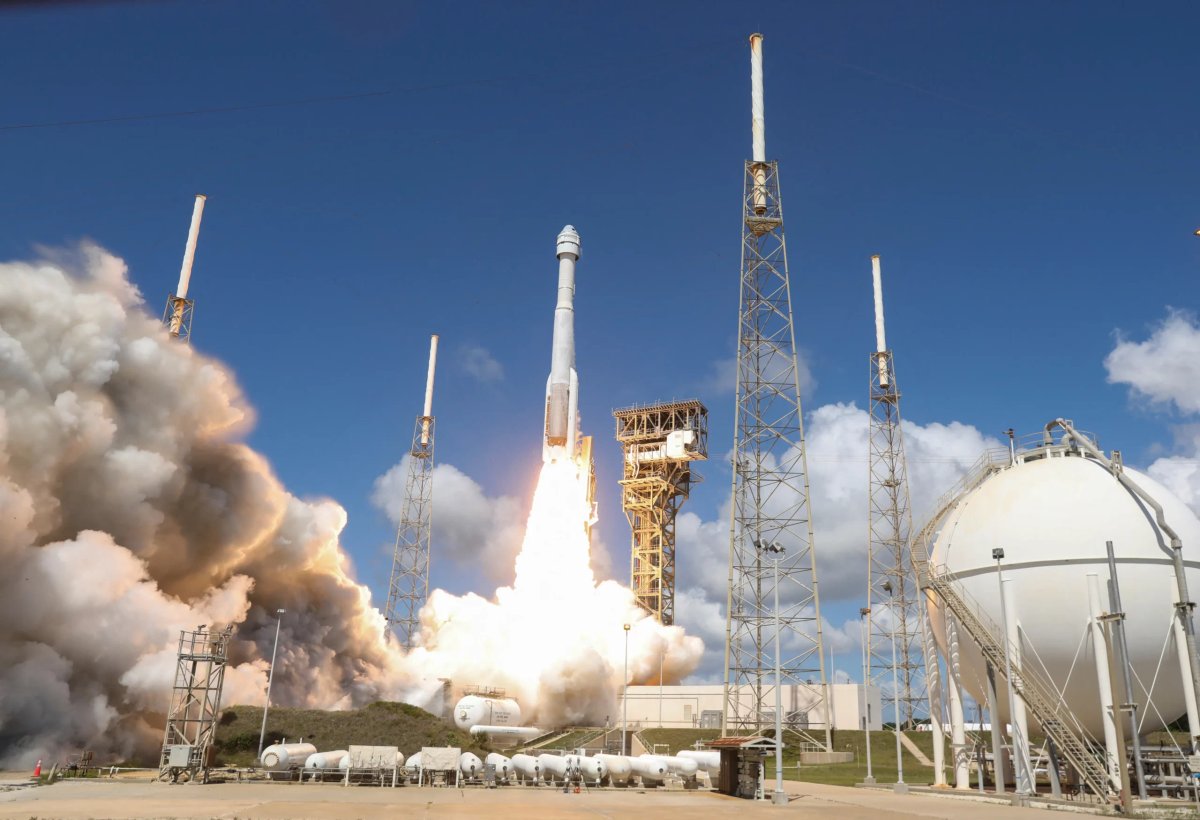
Published by Uma Rajagopal
Posted on June 12, 2024
2 min readLast updated: January 30, 2026
Add as preferred source on GoogleBy Joey Roulette
WASHINGTON (Reuters) – NASA and Boeing said they expect to bring Starliner and its first astronaut crew back to Earth from the International Space Station as soon as June 18, later than previously scheduled as mission analysts examine issues that could affect its return.
Boeing’s CST-100 Starliner spacecraft was originally expected to undock on Friday and return to Earth after launching its inaugural crew of two NASA astronauts from Florida on June 5. The mission is a crucial test before the U.S. space agency can certify Starliner for routine flights.
In scheduling Starliner’s return, NASA officials in Houston are juggling various factors: fixes to faulty components on Starliner, weather conditions, and ISS scheduling matters such as spacewalks by other astronauts aboard the station. More changes to Starliner’s return date could be announced during its mission.
But as of Tuesday, mission officials were targeting June 18 for Starliner’s undocking from the station. Roughly six hours later the spacecraft would land in the desert of White Sands Missile Range in New Mexico, Willcox Playa in Arizona or other similar pre-determined locations, pending weather conditions.
Dina Contella, NASA’s deputy program manager for the ISS, told reporters on Tuesday that NASA had detected a new issue on Starliner while it remained docked to the station – a “sticky” oxidizer valve.
A NASA blog posted on Monday mentioned an additional helium leak on Starliner’s propulsion system, on top of four already identified during its 24-hour trek to the space station last week.
During that flight, five of its 28 maneuvering thrusters went dead, but NASA and Boeing were able to regain four of them before docking to the orbital laboratory.
Starliner can stay docked to the ISS for a maximum of 45 days, NASA officials have said.
(Reporting by Joey Roulette; Editing by Stephen Coates)
A spacecraft is a vehicle designed for travel or operation in outer space, which can carry humans or instruments for scientific exploration.
The ISS is a large spacecraft in low Earth orbit that serves as a home and workplace for astronauts, facilitating scientific research and international cooperation.
An astronaut is a trained professional who travels into space to conduct research, operate spacecraft, and perform tasks related to space exploration.
An oxidizer valve is a component in rocket propulsion systems that controls the flow of oxidizer, a substance that provides oxygen for fuel combustion.
A mission in space exploration refers to a specific objective or set of objectives undertaken by a spacecraft or crew to gather data or perform experiments in space.
Explore more articles in the Top Stories category











