Search
00
GBAF Logo
trophy
Top StoriesInterviewsBusinessFinanceBankingTechnologyInvestingTradingVideosAwardsMagazinesHeadlinesTrends

Subscribe to our newsletter

Get the latest news and updates from our team.

Global Banking & Finance Review®

Global Banking & Finance Review® - Subscribe to our newsletter

Company

    GBAF Logo
    • About Us
    • Profile
    • Privacy & Cookie Policy
    • Terms of Use
    • Contact Us
    • Advertising
    • Submit Post
    • Latest News
    • Research Reports
    • Press Release
    • Awards▾
      • About the Awards
      • Awards TimeTable
      • Submit Nominations
      • Testimonials
      • Media Room
      • Award Winners
      • FAQ
    • Magazines▾
      • Global Banking & Finance Review Magazine Issue 79
      • Global Banking & Finance Review Magazine Issue 78
      • Global Banking & Finance Review Magazine Issue 77
      • Global Banking & Finance Review Magazine Issue 76
      • Global Banking & Finance Review Magazine Issue 75
      • Global Banking & Finance Review Magazine Issue 73
      • Global Banking & Finance Review Magazine Issue 71
      • Global Banking & Finance Review Magazine Issue 70
      • Global Banking & Finance Review Magazine Issue 69
      • Global Banking & Finance Review Magazine Issue 66
    Top StoriesInterviewsBusinessFinanceBankingTechnologyInvestingTradingVideosAwardsMagazinesHeadlinesTrends

    Global Banking & Finance Review® is a leading financial portal and online magazine offering News, Analysis, Opinion, Reviews, Interviews & Videos from the world of Banking, Finance, Business, Trading, Technology, Investing, Brokerage, Foreign Exchange, Tax & Legal, Islamic Finance, Asset & Wealth Management.
    Copyright © 2010-2026 GBAF Publications Ltd - All Rights Reserved. | Sitemap | Tags | Developed By eCorpIT

    Editorial & Advertiser disclosure

    Global Banking & Finance Review® is an online platform offering news, analysis, and opinion on the latest trends, developments, and innovations in the banking and finance industry worldwide. The platform covers a diverse range of topics, including banking, insurance, investment, wealth management, fintech, and regulatory issues. The website publishes news, press releases, opinion and advertorials on various financial organizations, products and services which are commissioned from various Companies, Organizations, PR agencies, Bloggers etc. These commissioned articles are commercial in nature. This is not to be considered as financial advice and should be considered only for information purposes. It does not reflect the views or opinion of our website and is not to be considered an endorsement or a recommendation. We cannot guarantee the accuracy or applicability of any information provided with respect to your individual or personal circumstances. Please seek Professional advice from a qualified professional before making any financial decisions. We link to various third-party websites, affiliate sales networks, and to our advertising partners websites. When you view or click on certain links available on our articles, our partners may compensate us for displaying the content to you or make a purchase or fill a form. This will not incur any additional charges to you. To make things simpler for you to identity or distinguish advertised or sponsored articles or links, you may consider all articles or links hosted on our site as a commercial article placement. We will not be responsible for any loss you may suffer as a result of any omission or inaccuracy on the website.

    Home > Top Stories > Methane from tropical wetlands is surging, threatening climate plans
    Top Stories

    Methane from tropical wetlands is surging, threatening climate plans

    Published by Uma Rajagopal

    Posted on November 18, 2024

    5 min read

    Last updated: January 28, 2026

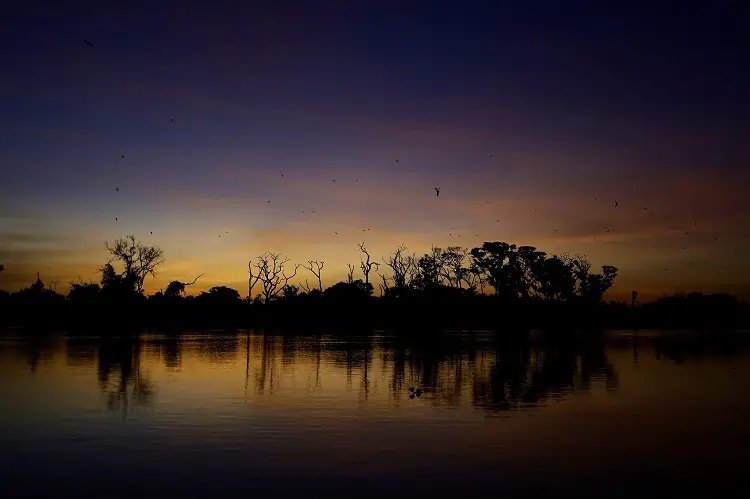
    This image captures the expansive tropical wetlands in Brazil, crucial areas contributing to the recent surge in methane emissions. The increased release of methane threatens global climate goals, as highlighted in the article.
    Aerial view of tropical wetlands in Brazil, highlighting methane emissions surge - Global Banking & Finance Review
    Why waste money on news and opinion when you can access them for free?

    Take advantage of our newsletter subscription and stay informed on the go!

    Subscribe

    Tags:Climate Changesustainabilityenvironmental issuesrenewable energyresearch

    By Gloria Dickie

    BAKU (Reuters) -The world’s warming tropical wetlands are releasing more methane than ever before, research shows — an alarming sign that the world’s climate goals are slipping further out of reach.

    A massive surge in wetlands methane — unaccounted for by national emissions plans and undercounted in scientific models — could raise the pressure on governments to make deeper cuts from their fossil fuel and agriculture industries, according to researchers.

    Wetlands hold huge stores of carbon in the form of dead plant matter that is slowly broken down by soil microbes. Rising temperatures are like hitting the accelerator on that process, speeding up the biological interactions that produce methane. Heavy rains, meanwhile, trigger flooding that causes wetlands to expand.

    Scientists had long projected wetland methane emissions would rise as the climate warmed, but from 2020 to 2022, air samples showed the highest methane concentrations in the atmosphere since reliable measurements began in the 1980s.

    Four studies published in recent months say that tropical wetlands are the likeliest culprit for the spike, with tropical regions contributing more than 7 million tonnes to the methane surge over the last few years.

    Methane concentrations are not just rising, but rising faster in the last five years than any time in the instrument record,” said Stanford University environmental scientist Rob Jackson, who chairs the group that publishes the five-year Global Methane Budget, last released in September.

    Satellite instruments revealed the tropics as the source of a large increase. Scientists further analyzed distinct chemical signatures in the methane to determine whether it came from fossil fuels or a natural source — in this case, wetlands.

    The Congo, Southeast Asia and the Amazon and southern Brazil contributed the most to the spike in the tropics, researchers found.

    Data published in March 2023 in Nature Climate Change shows that annual wetland emissions over the past two decades were about 500,000 tonnes per year higher than what scientists had projected under worst-case climate scenarios.

    Capturing emissions from wetlands is challenging with current technologies.

    “We should probably be a bit more worried than we are,” said climate scientist Drew Shindell at Duke University.

    The La Nina climate pattern that delivers heavier rains to parts of the tropics appeared somewhat to blame for the surge, according to one study published in September in the journal Proceedings of the National Academy of Sciences.

    But La Nina alone, which last ended in 2023, cannot explain record-high emissions, Shindell said.

    For countries trying to tackle climate change, “this has major implications when planning for methane and carbon dioxide emissions cuts,” said Zhen Qu, an atmospheric chemist at North Carolina State University who led the study on La Nina impacts.

    If wetland methane emissions continue to rise, scientists say governments will need to take stronger action to hold warming at 1.5 C (2.7 F), as agreed in the United Nations Paris climate accord.

    WATER WORLD

    Methane is 80 times more powerful than carbon dioxide (CO2) at trapping heat over a timespan of 20 years, and accounts for about one-third of the 1.3 degrees Celsius (2.3 F) in warming that the world has registered since 1850. Unlike CO2, however, methane washes out of the atmosphere after about a decade, so it has less of a long-term impact.

    More than 150 countries have pledged to deliver 30% cuts from 2020 levels by 2030, tackling leaky oil and gas infrastructure.

    But scientists have not yet observed a slowdown, even as technologies to detect methane leaks have improved. Methane emissions from fossil fuels have remained around a record high of 120 million tonnes since 2019, according to the International Energy Agency’s 2024 Global Methane Tracker report.

    Satellites have also picked up more than 1,000 large methane plumes from oil and gas operations over the past two years, according to a U.N. Environment Programme report published on Friday, but the countries notified responded to just 12 leaks.

    Some countries have announced ambitious plans for cutting methane.

    China last year said it would strive to curb flaring, or burning off emissions at oil and gas wells.

    President Joe Biden’s administration finalized a methane fee for big oil and gas producers last week, but it is likely to be scrapped by the incoming presidency of Donald Trump.

    The Democratic Republic of Congo’s environment minister Eve Bazaiba told Reuters on the sidelines of the U.N. climate summit COP29 that the country was working to assess the methane surging from the Congo Basin’s swampy forests and wetlands. Congo was the largest hotspot of methane emissions in the tropics in the 2024 methane budget report.

    “We don’t know how much [methane is coming off our wetlands],” she said. “That’s why we bring in those who can invest in this way, also to do the monitoring to do the inventory, how much we have, how we can also exploit them.”

    (Reporting by Gloria Dickie in Baku; Additional reporting by Virginia Furness in Baku; Editing by Katy Daigle and Suzanne Goldenberg)

    Frequently Asked Questions about Methane from tropical wetlands is surging, threatening climate plans

    1What is methane?

    Methane is a potent greenhouse gas that is produced during the decomposition of organic matter and is significantly more effective at trapping heat in the atmosphere than carbon dioxide.

    2What are wetlands?

    Wetlands are areas where water covers the soil, either permanently or seasonally, and they play a crucial role in carbon storage and biodiversity.

    3What is climate change?

    Climate change refers to long-term alterations in temperature, precipitation, and other atmospheric conditions on Earth, largely driven by human activities such as fossil fuel burning.

    4What is the Paris Agreement?

    The Paris Agreement is an international treaty aimed at combating climate change by limiting global warming to well below 2 degrees Celsius compared to pre-industrial levels.

    5What is La Nina?

    La Nina is a climate pattern characterized by cooler ocean temperatures in the Pacific, which can influence weather patterns globally, including increased rainfall in tropical regions.

    More from Top Stories

    Explore more articles in the Top Stories category

    Image for Lessons From the Ring and the Deal Table: How Boxing Shapes Steven Nigro’s Approach to Banking and Life
    Lessons From the Ring and the Deal Table: How Boxing Shapes Steven Nigro’s Approach to Banking and Life
    Image for Joe Kiani in 2025: Capital, Conviction, and a Focused Return to Innovation
    Joe Kiani in 2025: Capital, Conviction, and a Focused Return to Innovation
    Image for Marco Robinson – CLOSE THE DEAL AND SUDDENLY GROW RICH
    Marco Robinson – CLOSE THE DEAL AND SUDDENLY GROW RICH
    Image for Digital Tracing: Turning a regulatory obligation into a commercial advantage
    Digital Tracing: Turning a regulatory obligation into a commercial advantage
    Image for Exploring the Role of Blockchain and the Bitcoin Price Today in Education
    Exploring the Role of Blockchain and the Bitcoin Price Today in Education
    Image for Inside the World’s First Collection Industry Conglomerate: PCA Global’s Platform Strategy
    Inside the World’s First Collection Industry Conglomerate: PCA Global’s Platform Strategy
    Image for Chase Buchanan Private Wealth Management Highlights Key Autumn 2025 Budget Takeaways for Expats
    Chase Buchanan Private Wealth Management Highlights Key Autumn 2025 Budget Takeaways for Expats
    Image for PayLaju Strengthens Its Position as Malaysia’s Trusted Interest-Free Sharia-Compliant Loan Provider
    PayLaju Strengthens Its Position as Malaysia’s Trusted Interest-Free Sharia-Compliant Loan Provider
    Image for A Notable Update for Employee Health Benefits:
    A Notable Update for Employee Health Benefits:
    Image for Creating Equity Between Walls: How Mohak Chauhan is Using Engineering, Finance, and Community Vision to Reengineer Affordable Housing
    Creating Equity Between Walls: How Mohak Chauhan is Using Engineering, Finance, and Community Vision to Reengineer Affordable Housing
    Image for Upcoming Book on Real Estate Investing: Harvard Grace Capital Founder Stewart Heath’s Puts Lessons in Print
    Upcoming Book on Real Estate Investing: Harvard Grace Capital Founder Stewart Heath’s Puts Lessons in Print
    Image for ELECTIVA MARKS A LANDMARK FIRST YEAR WITH MAJOR SENIOR APPOINTMENTS AND EXPANSION MILESTONES
    ELECTIVA MARKS A LANDMARK FIRST YEAR WITH MAJOR SENIOR APPOINTMENTS AND EXPANSION MILESTONES
    View All Top Stories Posts
    Previous Top Stories PostEuropean oil giants step back from renewables path
    Next Top Stories PostG20 summit confronts a global order unsettled by Trump’s return