
Top Stories
Lme Imposes Price Limits for the First Time After Nickel Crisis
Published by Jessica Weisman-Pitts
Posted on March 15, 2022
3 min readLast updated: February 8, 2026
Add as preferred source on Google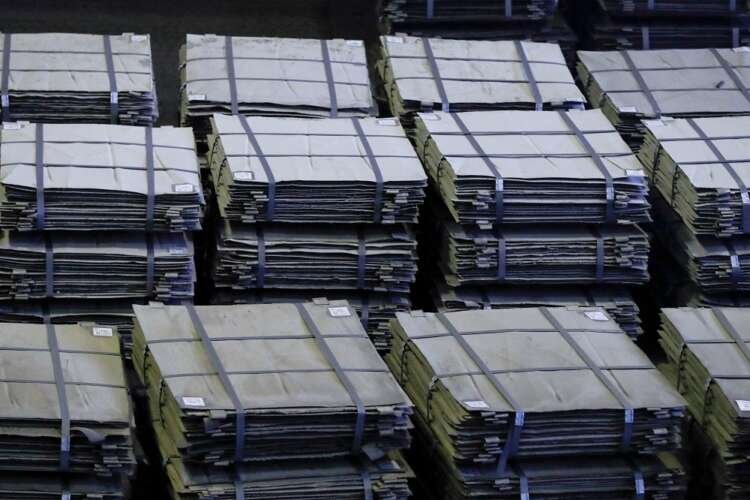
Published by Jessica Weisman-Pitts
Posted on March 15, 2022
3 min readLast updated: February 8, 2026
Add as preferred source on GoogleBy Eric Onstad
LONDON (Reuters) – Nickel will resume trading on the London Metal Exchange (LME) in a fixed price range for the first time on Wednesday after extreme volatility in prices triggered a rare market shutdown last week.
The LME halted nickel trading and cancelled trades after prices doubled on March 8 to more than $100,000 per tonne in a matter of hours in a surge sources have blamed on short covering by one of the world’s top producers.
When trading resumes at 0800 GMT on Wednesday, price moves for nickel will be constrained to 5% above or below the last closing price before the suspension, the LME said.
The exchange also imposed 15% limits from Tuesday on other base metals including aluminium, copper, lead, tin and zinc – the first time in its 145-year history the LME has ever placed limits on outright contracts.
The conflict in Ukraine has driven the price of some metals to record highs amid concerns about constraints on supply from Russia – a major producer of aluminium, copper and nickel – following sweeping Western sanctions.
The LME decided that price limits on nickel were needed to maintain stability after wild swings last week, when the price jumped more than $18,000 on Monday and then over $50,000 a day later, triggering the suspension in trade.
While three-month nickel was at about $80,000 a tonne when trading was suspended on Tuesday, Monday’s closing price was $48,078. That means the band on Wednesday will be $45,674 to $50,482, or 5% either side of that closing price.
If a price limit is hit, trading will not be suspended, but any bids above the higher limit and offers below the lower limit will be rejected, an LME notice said.
An LME spokesperson confirmed that it was the first time it had ever placed price limits on outright contracts.
Trading sources said the nickel market should be calmer on Wednesday as China’s Tsingshan Holding Group has reached a standstill agreement with banks under which they won’t make margin calls on, or close out, its nickel positions.
Price limits are common on other exchanges and have been discussed periodically during volatile periods on the LME, but most members have preferred to stick with modest regulation.
China’s Shanghai Futures Exchange uses price limits and imposed a 17% limit on its nickel contracts on March 11.
The CME also has price limits, using what it calls a dynamic circuit breaker for its main industrial metal contract in copper.
The LME, the world’s oldest and largest market for industrial metals, is owned by Hong Kong Exchanges and Clearing Ltd.
(Additional reporting by Pratima Desai; Editing by David Clarke)
The London Metal Exchange (LME) is the world's largest market for trading industrial metals, providing a platform for price discovery and risk management.
A price limit in trading refers to the maximum or minimum price at which a security can be traded during a specific period, aimed at preventing excessive volatility.
Nickel trading involves buying and selling nickel contracts on exchanges like the LME, where prices fluctuate based on supply and demand dynamics.
Short covering is the process of buying back shares that were previously sold short to close out a position, often occurring when prices rise.
Base metals are non-ferrous metals that are not precious, including aluminum, copper, nickel, and zinc, commonly used in various industrial applications.
Explore more articles in the Top Stories category











