
Top Stories
Jaguar Develops Energy-Storage Unit Using Range Rover Batteries
Published by Uma Rajagopal
Posted on April 16, 2024
2 min readLast updated: January 30, 2026
Add as preferred source on Google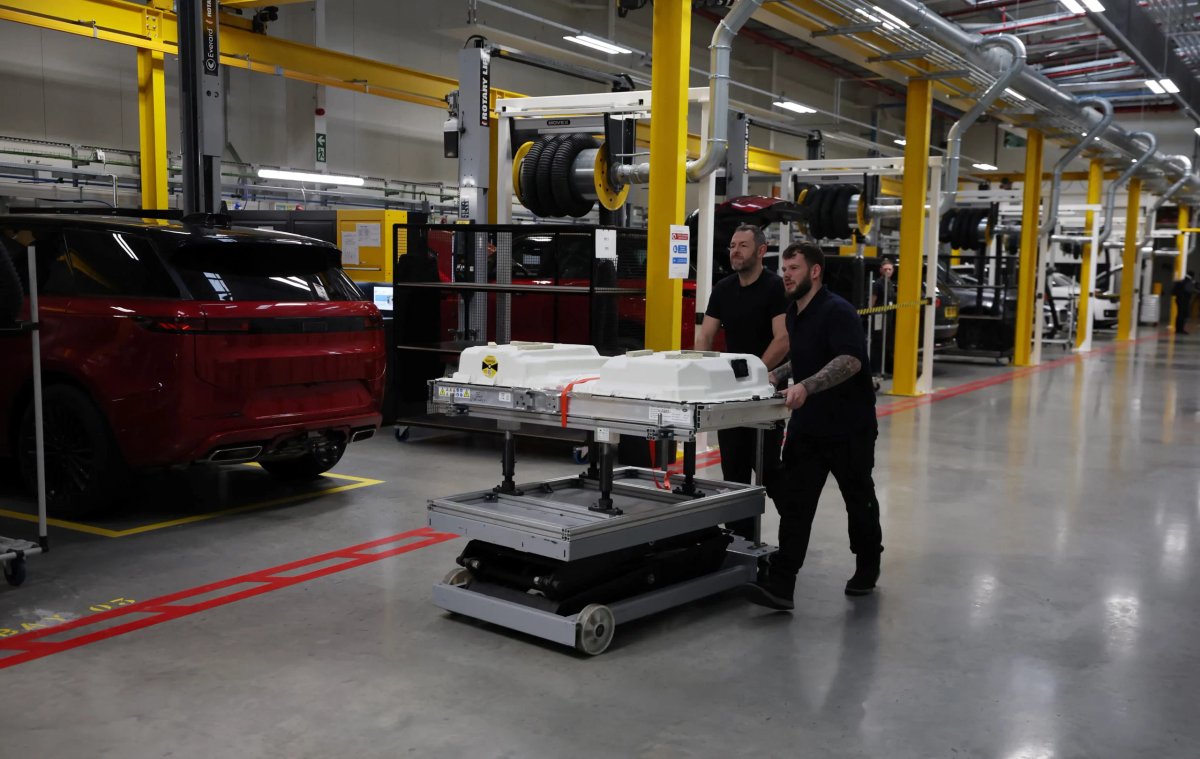
Published by Uma Rajagopal
Posted on April 16, 2024
2 min readLast updated: January 30, 2026
Add as preferred source on GoogleBy Nick Carey
LONDON (Reuters) – Jaguar Land Rover has developed a mobile energy storage unit for sale in partnership with UK startup Allye Energy using used batteries from plug-in hybrid Range Rover models, the two companies said on Tuesday.
The companies said a single Allye MAX Battery Energy Storage System (BESS) uses second-life batteries from seven Range Rover and Range Rover Sport plug-in hybrid vehicles (PHEV) and can store 270 kilowatt hours (kWh) of energy, or enough to power a British home for close to a month.
The European Union has mandated that over the next decade a growing proportion of materials in EV batteries must be recycled and that automakers focus on second-life uses for batteries – such as energy storage that uses healthy batteries that no longer have sufficient power to move EVs a long distance.
The MAX BESS can charge up to nine Range Rover PHEVs at a time and can be recharged using a standard EV charger.
JLR said the storage unit can replace a diesel generator and the first one will be used by the automaker’s engineering team for tests of the new Range Rover Electric that is due to launch later this year.
“Developing second-life battery projects like this is crucial if we want to make sustainability real in JLR,” Reuben Chorley, JLR’s director for sustainable industrial operations, said in a statement.
In January Synetiq, the UK’s largest vehicle salvage company, said it would provide salvaged EV battery packs for Allye to use in energy storage units.
(Reporting by Nick Carey; Editing by Susan Fenton)
Energy storage refers to capturing energy produced at one time for use at a later time. This technology is crucial for balancing supply and demand in energy systems.
Second-life batteries are used batteries that no longer meet the performance requirements for electric vehicles but can still store energy for other applications, such as energy storage systems.
A plug-in hybrid vehicle (PHEV) is a type of hybrid vehicle that can be recharged from an external power source, combining a traditional internal combustion engine with an electric motor.
Battery recycling is the process of collecting and processing used batteries to recover valuable materials and reduce environmental impact, ensuring that harmful substances are disposed of properly.
Sustainability in the automotive industry involves practices that reduce environmental impact, such as using renewable energy sources, recycling materials, and developing electric and hybrid vehicles.
Explore more articles in the Top Stories category











