
Top Stories
Italy’s Draghi Thanks Japan for Redirecting Gas Cargoes to Europe
Published by Wanda Rich
Posted on May 4, 2022
2 min readLast updated: February 7, 2026
Add as preferred source on Google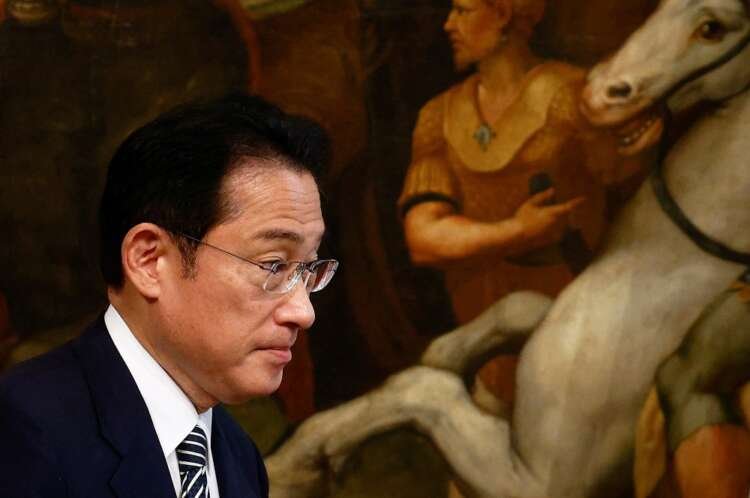
Published by Wanda Rich
Posted on May 4, 2022
2 min readLast updated: February 7, 2026
Add as preferred source on GoogleROME (Reuters) – Italian Prime Minister Mario Draghi thanked Japan on Wednesday for swiftly agreeing to redirect liquefied natural gas (LNG) cargoes destined for third countries to Europe.
ROME (Reuters) – Italian Prime Minister Mario Draghi thanked Japan on Wednesday for swiftly agreeing to redirect liquefied natural gas (LNG) cargoes destined for third countries to Europe.
Europe, which sources about 40% of its gas imports from Russia, has been scrambling to diversify its energy supply mix as the conflict in Ukraine escalates.
The European Commission this month is expected to unveil plans to help try to end Europe’s reliance on Russian energy, expanding renewable energy faster and replacing Russian gas with alternative supplies.
Speaking after a bilateral meeting with Japanese Prime Minister Fumio Kishida in Rome, Draghi said the two countries condemned Russia’s invasion of Ukraine and were committed to reaching a truce — even local ones to evacuate citizens — and favouring peace negotiations with Russia.
“We continue to help Ukraine and put pressure on Russia to cease hostilities immediately,” Draghi said.
Kishida said he had agreed with Draghi it was important “for the international community including the G7 to respond resolutely to this invasion” and that it was the duty of both Japan and Italy “to do our utmost to support the Ukrainian government and its people”.
The leaders also expressed concern for the missile tests by North Korea.
“As shown by today’s missile launch by North Korea, the degree of tension in East Asia is rising,” Kishida said.
(Reporting by Giulia Segreti in Rome and Kiyoshi Takenaka in Tokyo; Editing by Keith Weir)
Liquefied natural gas (LNG) is natural gas that has been cooled to a liquid state, making it easier to store and transport. It is primarily used for heating, electricity generation, and as a fuel for vehicles.
The European Commission is the executive branch of the European Union responsible for proposing legislation, implementing decisions, and managing the day-to-day operations of the EU.
Energy supply diversification refers to the strategy of sourcing energy from multiple suppliers or types of energy to reduce dependence on a single source, enhancing security and stability.
International cooperation involves countries working together to address global challenges, share resources, and promote peace and stability through agreements and partnerships.
Renewable energy is crucial for reducing greenhouse gas emissions, combating climate change, and providing sustainable energy solutions. It includes sources like solar, wind, and hydroelectric power.
Explore more articles in the Top Stories category











