
Top Stories
Hungary Looks to Boost Domestic Ownership in More Key Sectors -Minister
Published by Jessica Weisman-Pitts
Posted on May 18, 2022
2 min readLast updated: February 23, 2026
Add as preferred source on Google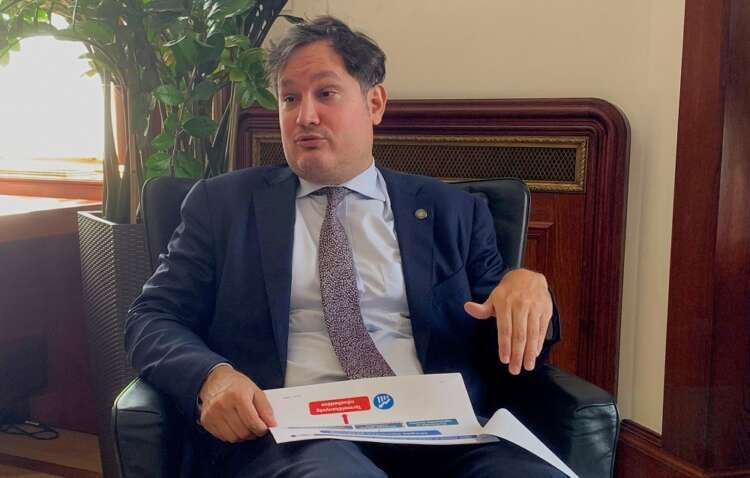
Published by Jessica Weisman-Pitts
Posted on May 18, 2022
2 min readLast updated: February 23, 2026
Add as preferred source on GoogleHungary aims to broaden domestic ownership into construction, food retail and insurance beyond banking, media and energy. Minister-designate Marton Nagy says price caps on fuel, energy, foods and mortgages will stay while inflation is high.
BUDAPEST (Reuters) – Hungary should boost domestic ownership in more key sectors in addition to banking, media and energy, a cabinet minister-designate said on Wednesday, signalling more pressure on foreign companies to scale back their presence in the country.
Prime Minister Viktor Orban, re-elected for a fourth successive term last month, has led more than a decade-long campaign to bring Hungarian ownership in banking, media and the energy sectors above 50%, with businessmen close to his ruling Fidesz party acquiring large chunks of these strategic sectors.
“A sustainable (economic) convergence (with the European Union) is a key priority, and that requires an autonomous and self-sustaining economy,” Marton Nagy, a former central bank deputy governor and Orban’s pick for economic development minister, told a parliamentary confirmation hearing.
Nagy, who looks certain to secure lawmakers’ approval, said further steps were needed to increase domestic ownership in the building sector, where local players were “nearly invisible,” as well as in the food retail and insurance.
“The banking system represented the first step, but we also need to deal with insurers,” Nagy said, without elaborating.
Over the past decade several foreign banks have sold their Hungarian businesses to local players, but Nagy said foreign firms still dominated the insurance sector.
to Vienna Insurance Group (VIG) for 620 million euros ($682 million), as part of a broader divestment of regional businesses announced in 2020.
The Hungarian government initially blocked the deal, but subsequently approved it while taking a 45% stake in the local units of Aegon and VIG.
Nagy also said Orban’s government aimed to keep price caps on fuel, energy, some basic foods and mortgages in place as long as inflation was unusually high to shield Hungarians from price shocks.
Sustainability refers to the ability to maintain or improve certain essential processes without compromising the ability of future generations to meet their needs. In finance, it often relates to investments that consider environmental, social, and governance (ESG) factors.
Innovation in finance involves the introduction of new ideas, products, or methods that improve financial services. This can include advancements in technology, such as blockchain, or new financial products that meet changing consumer needs.
A financial community is a network of individuals, organizations, and institutions that interact and collaborate within the finance sector. This includes banks, investors, regulatory bodies, and financial technology firms.
Investment is the act of allocating resources, usually money, in order to generate income or profit. It can take various forms, including stocks, bonds, real estate, and more.
Explore more articles in the Top Stories category











