
Top Stories
Germany’s Struggle to Clean up Its Supply Chains Has Lessons for Europe
Published by Jessica Weisman-Pitts
Posted on April 30, 2024
6 min readLast updated: January 30, 2026
Add as preferred source on Google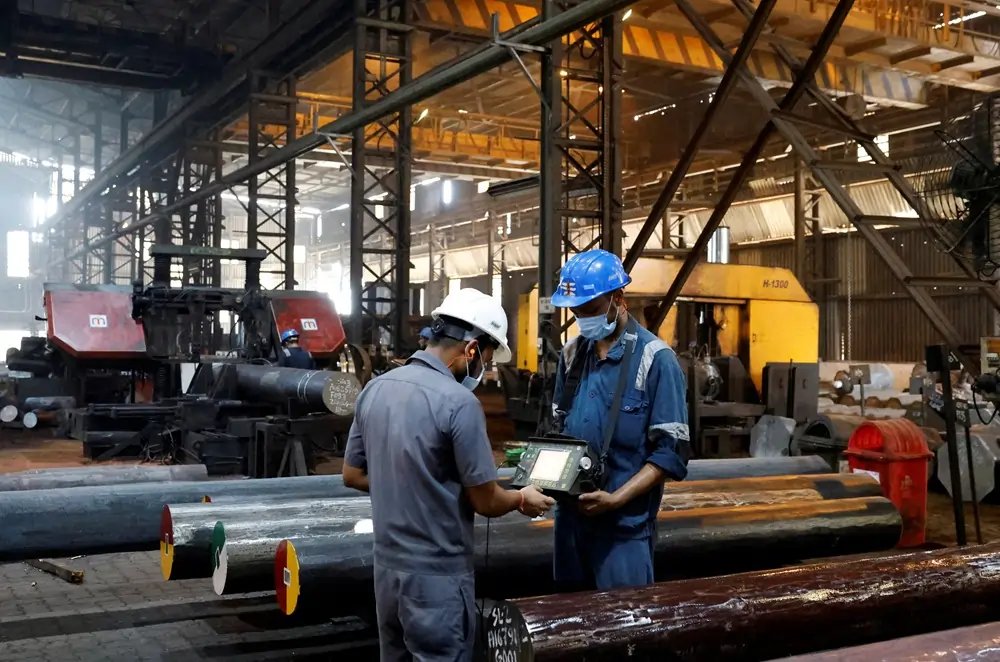
Published by Jessica Weisman-Pitts
Posted on April 30, 2024
6 min readLast updated: January 30, 2026
Add as preferred source on GoogleBy Maria Martinez and Riham Alkousaa
BERLIN (Reuters) – German engineering company BAUCH makes machines and engine components out of materials mined in China, Africa or South America that pass through multiple hands and processes before they reach its factories in southern Germany and China.
To comply with Germany’s new Supply Chain Act, BAUCH, like other firms with more than 1,000 staff, must take due diligence procedures to monitor suppliers’ human rights and environmental protection standards – a task which CEO Manfred Bauch says is almost impossible and threatens to rip apart his supply chain.
Many German small and medium enterprises say they have been struggling to meet the cost and bureaucratic burden of the law that took effect in January 2023, adding this harms their global competitiveness.
Their experience signals what industries throughout the European Union may soon face, after the European Parliament last week passed the Corporate Sustainability Due Diligence Directive (CSDDD) that will require larger companies operating in the bloc to check if their supply chains use forced labour or cause environmental damage and take action if they do.
Supporters say the legislation will foster responsible corporate behaviour and anchor human rights and environmental considerations in their operations. Some also point out the law will support companies as investors and consumers demand more sustainability.
Rights group Amnesty International has called the EU directive – which EU countries will have to incorporate as a law in their own legislations – an opportunity to close a gap which allowed companies operating in the EU “to escape accountability for widespread rights abuses around the world.”
But some German companies with global supply chains, and long lists of input materials say it is a struggle to obtain accurate information, and issues such as workers’ rights are regulated by foreign laws outside of their control.
Strikingly, Germany failed to support the new EU law, as the pro-business Free Democrats (FDP), the smallest party in Germany’s three-way coalition, said it would burden business with excessive bureaucracy.
“It is almost impossible to access a mine in Asia or Africa from Europe,” Manfred Bauch told Reuters.
Whether a foreign mine has any ESG information available depends on its owner, with London-listed mining companies for example providing more information than privately-owned mines in China.
BAUCH’s suppliers that deal with the mines directly don’t always have the information to pass on or the clout to demand it from the mines themselves, Bauch added.
More than 5,000 German companies now submit a due-diligence report addressing issues such as workers’ rights, child labour, and environmental protections. They must identify problems and devise a policy to mitigate risk through the supply chain.
“Nothing unreasonable is expected of companies,” said a spokesperson for the German labour ministry in response.
“They do not have to guarantee that their supply chains are free from violations of human rights or environmental damage.” Rather, they must be able to show they have made checks.
“If this is not legally or actually possible – despite reasonable endeavours – a company has nevertheless fulfilled its due diligence obligations,” the ministry added.
INDUSTRY IN CRISIS
As de-industrialisation fears grow, German manufacturers say the Supply Chain Act further weakens the position of Europe’s industrial powerhouse.
Industrial machinery manufacturer SMS group has 14,000 suppliers and has been preparing for the law for three years. Matthias Hedergott, Vice President Supply Chain Management, said the law leads to increased costs and a competitive disadvantage.
“Our non-European, Chinese or Indian competitors do not have these requirements” said Hedergott.
The logistics sector has protested that applying the law to companies that merely transport imported goods from ports within Germany was unreasonable.
“At the moment the economic situation is very tense … Everyone is fighting for survival, and we have to do nonsense like this,” said Harry Seifert, chairman of Seifert Logistics GmbH, of the law.
Berlin estimated the compliance costs at 43.5 million euros ($47.05 million) per year, plus a one-off cost of 109.7 million euros, but business groups say they are much higher.
A company violating the law could be fined up to 8 million euros or 2% of the company’s annual revenue.
German gearbox manufacturer Flender, has 9,000 employees worldwide. Its suppliers include the ArcVac ForgeCast factory, in Hooghly district, in India’s eastern state of West Bengal.
Hemant Sharma, sales head at ArcVac ForgeCast, said German customers are requesting sustainability compliances and they visit and audit the company. On challenging issues like reducing CO2 emissions, Flender guides them on how to act.
“Overall, it is our responsibility as a global citizen to comply with the new laws,” he said.
‘CASCADE EFFECT’
Some smaller German enterprises say they are indirectly affected by the law because bigger companies lean on them to meet the reporting requirements.
“There is a cascade effect,” said Achim Dercks, Deputy Chief Executive of the German Chamber of Commerce DIHK.
VIBRA MASCHINENFABRIK SCHULTHEIS, a mechanical engineering company of 190 workers that supplies the chemical and food industries, is one of those indirectly affected. Its manager Manfred Schultheis said if 200 customers pass on due diligence questionnaires and they realistically need 3 hours for each, they face 600 hours of labour a year.
“It is a job for politics to monitor human rights and not an economic job for companies,” he said.
Some 82% of companies in Germany with more than 250 employees said they were indirectly affected by the law, a survey by the German economic institute IW Koeln showed. Among mid-sized enterprises of 50 to 249 employees, it was 72%.
Germany’s Federal Office of Economics and Export Control (BAFA) has warned, “the law does not allow companies to pass on their obligations to small and medium suppliers.” But some SMEs say they feel forced to cooperate as they fear being replaced.
“SMEs cannot cope with the flood of different information requests,” said Dercks, adding they usually do not have the capacity or market power to enforce standards among their own suppliers.
“This law came about because the Germans wanted to do something good for the employees in other countries,” Bauch said. “But this law is pure bureaucracy, completely pointless.”
(Reporting by Riham Alkousaa and Maria Martinez; Additional reporting by Sahiba Chawdhary in West Bengal; Editing by Alexandra Hudson)
The Supply Chain Act is a German law requiring companies to ensure their supply chains meet human rights and environmental standards, aimed at promoting ethical business practices.
Corporate sustainability refers to a company's commitment to conducting business in an environmentally and socially responsible manner, balancing profit with the welfare of society and the environment.
Due diligence is the process of investigating and evaluating a company's operations, practices, and compliance with legal and ethical standards, often required in business transactions.
Human rights in business refer to the responsibility of companies to respect and uphold the rights of individuals affected by their operations, including fair labor practices and non-discrimination.
Environmental protection in business involves practices aimed at minimizing harm to the environment, including reducing waste, conserving resources, and adhering to regulations.
Explore more articles in the Top Stories category











