
Top Stories
Germany Plans to Extend Lifespan of Two Nuclear Power Plants -Minister
Published by Jessica Weisman-Pitts
Posted on September 27, 2022
2 min readLast updated: February 4, 2026
Add as preferred source on Google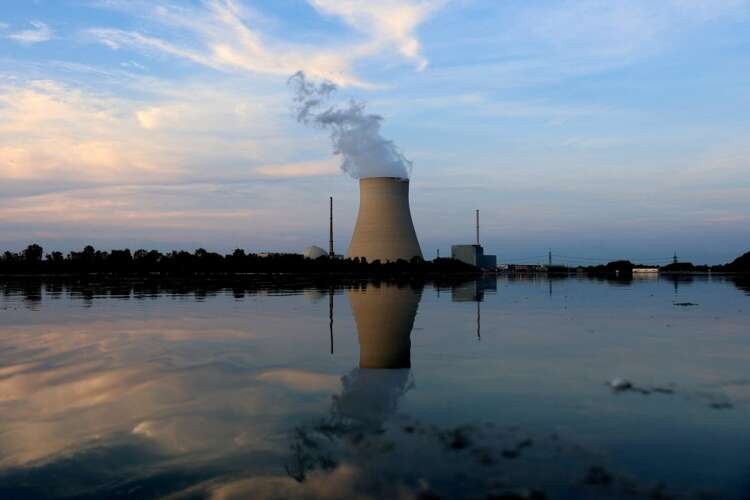
Published by Jessica Weisman-Pitts
Posted on September 27, 2022
2 min readLast updated: February 4, 2026
Add as preferred source on GoogleBERLIN (Reuters) -Germany expects to extend the lifespan of two of its last nuclear power plants Isar 2 and Neckarwestheim beyond their planned phase-out as declines in France’s nuclear power supply have worsened, Economy Minister Robert Habeck said on Tuesday.
BERLIN (Reuters) -Germany expects to extend the lifespan of two of its last nuclear power plants Isar 2 and Neckarwestheim beyond their planned phase-out as declines in France’s nuclear power supply have worsened, Economy Minister Robert Habeck said on Tuesday.
Germany had planned to complete a phase-out of nuclear power by the end of this year but a collapse in energy supplies from Russia because of the war in Ukraine has prompted the government to keep two plants on standby until April.
Earlier this month, French President Emmanuel Macron said Paris will send gas to Germany if needed while Germany stands ready to provide it with electricity.
The status of France’s nuclear power supply would be a big factor in Germany’s final decision on whether to extend the lifespan of the plants and should be made this year, Habeck said at a news conference.
“Today, I have to say that the data from France suggests that we will then call up and use the reserve,” Habeck said.
The German energy market is well positioned, but the gap in France is comparatively large, he said, adding that the use of two nuclear power plants can close the French gap to a certain extent.
“The situation in France is not good and has already developed much worse than expected in the last few weeks,” he said, adding that the forecast of the French had been too optimistic in recent years.
France’s nuclear fleet has come under scrutiny, with a wave of repairs at power stations forcing a record number of reactors offline and sending nuclear power production to a 30-year low.
“The operators will now make all the preparations needed for the southern German nuclear power plants to produce electricity in winter and beyond the end of the year, naturally in compliance with safety regulations,” Habeck said.
Operators E.ON and EnBW welcomed the agreement on the possible temporary prolonged operation of their plants.
(Reporting by Riham Alkousaa and Madeline Chambers; Editing by Jonathan Oatis and Grant McCool)
Nuclear power is energy produced from nuclear reactions, typically through the fission of uranium or plutonium atoms. It is used to generate electricity in nuclear power plants.
Energy supply refers to the availability and provision of energy resources, including electricity, gas, and renewable sources, to meet the demands of consumers and industries.
A phase-out is a planned gradual discontinuation of a product or service, often implemented to transition to more sustainable or safer alternatives.
Energy technologies encompass a range of methods and tools used to produce, store, and utilize energy efficiently, including renewable energy systems, smart grids, and energy storage solutions.
Explore more articles in the Top Stories category











