Search
00
GBAF Logo
trophy
Top StoriesInterviewsBusinessFinanceBankingTechnologyInvestingTradingVideosAwardsMagazinesHeadlinesTrends

Subscribe to our newsletter

Get the latest news and updates from our team.

Global Banking & Finance Review®

Global Banking & Finance Review® - Subscribe to our newsletter

Company

    GBAF Logo
    • About Us
    • Profile
    • Privacy & Cookie Policy
    • Terms of Use
    • Contact Us
    • Advertising
    • Submit Post
    • Latest News
    • Research Reports
    • Press Release
    • Awards▾
      • About the Awards
      • Awards TimeTable
      • Submit Nominations
      • Testimonials
      • Media Room
      • Award Winners
      • FAQ
    • Magazines▾
      • Global Banking & Finance Review Magazine Issue 79
      • Global Banking & Finance Review Magazine Issue 78
      • Global Banking & Finance Review Magazine Issue 77
      • Global Banking & Finance Review Magazine Issue 76
      • Global Banking & Finance Review Magazine Issue 75
      • Global Banking & Finance Review Magazine Issue 73
      • Global Banking & Finance Review Magazine Issue 71
      • Global Banking & Finance Review Magazine Issue 70
      • Global Banking & Finance Review Magazine Issue 69
      • Global Banking & Finance Review Magazine Issue 66
    Top StoriesInterviewsBusinessFinanceBankingTechnologyInvestingTradingVideosAwardsMagazinesHeadlinesTrends

    Global Banking & Finance Review® is a leading financial portal and online magazine offering News, Analysis, Opinion, Reviews, Interviews & Videos from the world of Banking, Finance, Business, Trading, Technology, Investing, Brokerage, Foreign Exchange, Tax & Legal, Islamic Finance, Asset & Wealth Management.
    Copyright © 2010-2026 GBAF Publications Ltd - All Rights Reserved. | Sitemap | Tags | Developed By eCorpIT

    Editorial & Advertiser disclosure

    Global Banking & Finance Review® is an online platform offering news, analysis, and opinion on the latest trends, developments, and innovations in the banking and finance industry worldwide. The platform covers a diverse range of topics, including banking, insurance, investment, wealth management, fintech, and regulatory issues. The website publishes news, press releases, opinion and advertorials on various financial organizations, products and services which are commissioned from various Companies, Organizations, PR agencies, Bloggers etc. These commissioned articles are commercial in nature. This is not to be considered as financial advice and should be considered only for information purposes. It does not reflect the views or opinion of our website and is not to be considered an endorsement or a recommendation. We cannot guarantee the accuracy or applicability of any information provided with respect to your individual or personal circumstances. Please seek Professional advice from a qualified professional before making any financial decisions. We link to various third-party websites, affiliate sales networks, and to our advertising partners websites. When you view or click on certain links available on our articles, our partners may compensate us for displaying the content to you or make a purchase or fill a form. This will not incur any additional charges to you. To make things simpler for you to identity or distinguish advertised or sponsored articles or links, you may consider all articles or links hosted on our site as a commercial article placement. We will not be responsible for any loss you may suffer as a result of any omission or inaccuracy on the website.

    Home > Top Stories > German car industry baulks at supplier demands over energy hikes
    Top Stories

    German car industry baulks at supplier demands over energy hikes

    Published by Uma Rajagopal

    Posted on October 14, 2022

    4 min read

    Last updated: February 3, 2026

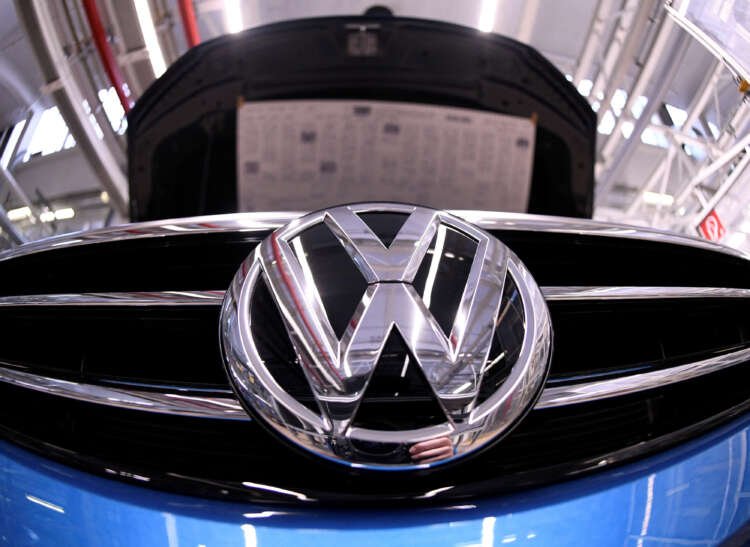
    This image captures the Volkswagen production line in Wolfsburg, reflecting the current energy cost challenges faced by the German car industry and its suppliers. Amid rising energy bills, negotiations for contract adjustments are critical for maintaining production continuity.
    Volkswagen production line showcasing energy challenges in the German car industry - Global Banking & Finance Review
    Tags:Automotive industryenergy marketsupply-chainfinancial managementbusiness investment

    By Victoria Waldersee

    WOLFSBURG, Germany (Reuters) – Germany’s giant carmakers may have secured their own energy supplies but thousands of small suppliers faced with a squeeze from soaring bills risk upsetting production through the winter.

    More and more suppliers are calling on the industry to renegotiate contracts to include energy clauses so they can cover the cost of rising bills.

    Top carmakers BMW, Volkswagen and Mercedes-Benz have all said their own energy supplies are secured – but if their supplier network fails, their production lines could screech to a halt.

    “If we can’t build a car because of one missing part, that hits all of us,” Geng Wu, head of group purchasing at Volkswagen said at a supplier conference in Wolfsburg this week.

    Facing a tenfold increase in energy costs and two weeks to commit to an energy contract that comes into effect on Jan. 1, Kron Solingen, a moulding metals and plastics manufacturer and supplier to the auto and electronics industries, is trying to renegotiate contracts and is running out of time.

    “We’re asking for help with raw material costs, for clauses incorporating inflation – but the red line is energy costs. If customers don’t contribute to those, we can’t go on … we’ll cancel the contracts ourselves,” sales manager Christian Hofmann told Reuters.

    The 112-year-old company, whose customers are mostly larger suppliers in the chain like Bosch, is busy calculating precisely how much electricity goes into each of its products to help in customer negotiations and establish what it could produce with less power, Hofmann said.

    Bosch declined to comment on any contract negotiations as did BMW. Mercedes-Benz did not respond to a request for comment.

    Volkswagen said it was in close talks with its suppliers over shared solutions, but could not share specifics.

    “Our primary goal is to maintain production and avoid negative impacts on business operations,” a spokesperson said.

    Germany’s government has yet to implement its planned relief package for small businesses’ energy bills which would give a one-off payment worth one month’s gas bill this year and implement a mechanism to limit prices from March.

    ‘NO GOOD OPTIONS’

    While contracts in the automotive supply chain in Germany often include clauses that adapt prices according to the cost of raw materials, energy clauses are much less common. They can be problematic because they are complicated to calculate and require suppliers to share details on their margins, the production process and their energy contracts.

    Even then, many smaller suppliers do not have enough liquidity to be able to pay energy bills for the 4-5 months it can take for invoices to be paid, said Max Schumacher, head of the Association for German Foundries.

    “There are no good options,” Schumacher said.

    Carmakers and their main suppliers are themselves battling with higher costs and ongoing semiconductor shortages, but have been able to largely stick with financial goals by passing on costs to customers via price hikes.

    Some have said in recent weeks they could source from suppliers in other countries with more stable energy supply to keep their production secure.

    Soplast, a Portuguese autos supplier, said it was receiving higher than usual requests for quotes from German carmakers, who were increasingly interested in knowing their energy mix.

    Still, in the automotive industry, establishing a new supplier can take at least six months, said Mauricio Morales, senior purchasing director at Wuerth Industrie Service – among the world’s largest providers of screws, nuts and bolts to carmakers.

    Even for an item as small as a screw, carmakers may need to run new crash tests on cars to ensure the component’s quality.

    “At a car manufacturer it’s a lot of effort,” he said, adding that his company only had energy clauses with a few important suppliers.

    Suppliers who already have factories in multiple locations are expecting to move more energy-intensive production abroad in the long-term, said Christian Hennerkes, chief executive of a producer of thermal protection for batteries with factories in Asia, Europe and the United States.

    Hennerkes’ company Von Roll, which supplies battery joint venture ACC – a joint venture between Mercedes-Benz, Stellantis and TotalEnergies – has managed to negotiate energy costs into some of its contracts.

    “Carmakers weren’t willing to do this in the past, but they are now, if only for a limited period of time… it’s not in their interests for their supplier network to collapse,” Hennerkes said.

    Von Roll is now negotiating with its workers’ council to add extra shifts and produce as much as possible before a new energy contract kicks in next year, the chief executive added.

    “These energy price increases are long-term,” he said. “Short-term assistance from the government is only buying us time … this isn’t a wildfire, it’s a drought.”

    ($1 = 1.0320 euros)

    (Reporting by Victoria Waldersee;Editing by Elaine Hardcastle)

    Frequently Asked Questions about German car industry baulks at supplier demands over energy hikes

    1What is energy cost management?

    Energy cost management refers to strategies and practices that businesses implement to monitor, control, and reduce energy expenses, ensuring efficiency and sustainability.

    2What is a supply chain?

    A supply chain is the entire system of production, processing, and distribution of goods, from raw materials to the final product delivered to consumers.

    3What is inflation?

    Inflation is the rate at which the general level of prices for goods and services rises, eroding purchasing power and affecting economic stability.

    4What is a contract negotiation?

    Contract negotiation is the process where parties discuss and agree on the terms and conditions of a contract, aiming for a mutually beneficial agreement.

    Why waste money on news and opinion when you can access them for free?

    Take advantage of our newsletter subscription and stay informed on the go!

    Subscribe

    More from Top Stories

    Explore more articles in the Top Stories category

    Image for Lessons From the Ring and the Deal Table: How Boxing Shapes Steven Nigro’s Approach to Banking and Life
    Lessons From the Ring and the Deal Table: How Boxing Shapes Steven Nigro’s Approach to Banking and Life
    Image for Joe Kiani in 2025: Capital, Conviction, and a Focused Return to Innovation
    Joe Kiani in 2025: Capital, Conviction, and a Focused Return to Innovation
    Image for Marco Robinson – CLOSE THE DEAL AND SUDDENLY GROW RICH
    Marco Robinson – CLOSE THE DEAL AND SUDDENLY GROW RICH
    Image for Digital Tracing: Turning a regulatory obligation into a commercial advantage
    Digital Tracing: Turning a regulatory obligation into a commercial advantage
    Image for Exploring the Role of Blockchain and the Bitcoin Price Today in Education
    Exploring the Role of Blockchain and the Bitcoin Price Today in Education
    Image for Inside the World’s First Collection Industry Conglomerate: PCA Global’s Platform Strategy
    Inside the World’s First Collection Industry Conglomerate: PCA Global’s Platform Strategy
    Image for Chase Buchanan Private Wealth Management Highlights Key Autumn 2025 Budget Takeaways for Expats
    Chase Buchanan Private Wealth Management Highlights Key Autumn 2025 Budget Takeaways for Expats
    Image for PayLaju Strengthens Its Position as Malaysia’s Trusted Interest-Free Sharia-Compliant Loan Provider
    PayLaju Strengthens Its Position as Malaysia’s Trusted Interest-Free Sharia-Compliant Loan Provider
    Image for A Notable Update for Employee Health Benefits:
    A Notable Update for Employee Health Benefits:
    Image for Creating Equity Between Walls: How Mohak Chauhan is Using Engineering, Finance, and Community Vision to Reengineer Affordable Housing
    Creating Equity Between Walls: How Mohak Chauhan is Using Engineering, Finance, and Community Vision to Reengineer Affordable Housing
    Image for Upcoming Book on Real Estate Investing: Harvard Grace Capital Founder Stewart Heath’s Puts Lessons in Print
    Upcoming Book on Real Estate Investing: Harvard Grace Capital Founder Stewart Heath’s Puts Lessons in Print
    Image for ELECTIVA MARKS A LANDMARK FIRST YEAR WITH MAJOR SENIOR APPOINTMENTS AND EXPANSION MILESTONES
    ELECTIVA MARKS A LANDMARK FIRST YEAR WITH MAJOR SENIOR APPOINTMENTS AND EXPANSION MILESTONES
    View All Top Stories Posts
    Previous Top Stories PostTomTom shares fall as 2023 uncertainties outweigh Q3 beat
    Next Top Stories PostPolish c. banker Kotecki says rates should be several percentage points higher