
Top Stories
France Inaugurates First of Four Gigafactories in the North
Published by Uma Rajagopal
Posted on May 30, 2023
2 min readLast updated: February 1, 2026
Add as preferred source on Google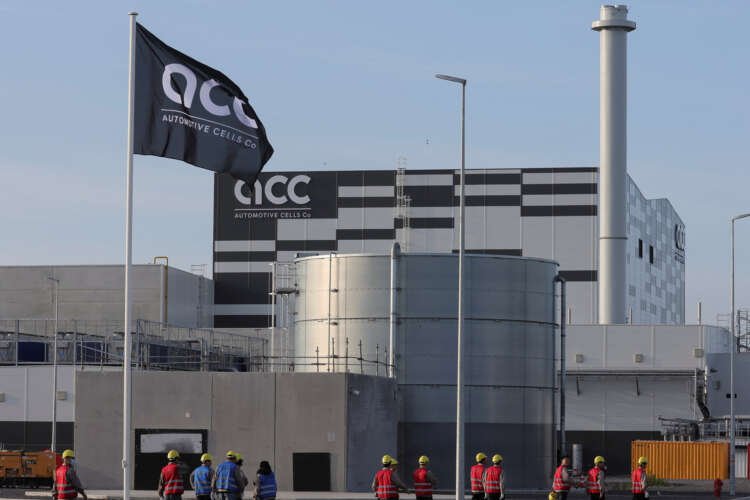
Published by Uma Rajagopal
Posted on May 30, 2023
2 min readLast updated: February 1, 2026
Add as preferred source on GoogleBILLY-BERCLAU, France (Reuters) – France will inaugurate on Tuesday a battery-making gigafactory, the first of four such plants European and Asian companies plan to build in the north of the country.
BILLY-BERCLAU, France (Reuters) – France will inaugurate on Tuesday a battery-making gigafactory, the first of four such plants European and Asian companies plan to build in the north of the country.
The development by Automotive Cells Company, a joint-venture between Stellantis, Mercedes and TotalEnergies, involves total investment of 2 billion euros ($2.20 billion) – with the French state and local authorities providing nearly half.
It highlights the race between European governments to attract global car makers as they seek to bring the supply of components for electric vehicles closer to their main markets.
“ACC’s new plant marks a key milestone in Europe’s transformation to make its auto industry more resilient, competitive, and sustainable, also in the electric era,” Ola Källenius, Chief Executive Officer of Mercedes-Benz, said ahead of the inauguration.
The plant will start production of lithium-ion batteries later this year with an initial capacity of 13 gigawatt hours (GWh), to be ramped up to around 40 GWh, enough to fit some 500,000 cars a year. It is expected to help create up to 2,000 jobs by 2030, the companies and regional authorities have said.
Taiwan’s ProLogium and China’s Envision AESC have also announced plans to build gigafactories in France’s northern region around the port of Dunkirk, while Renault has set up a partnership with local start-up Verkor in the same area to produce batteries for its premium and Alpine electric models.
Europe largely depends on batteries made in Asia for electric cars, and national leaders are offering various incentives to kickstart the industry.
That has become more urgent since the United States last year passed its $430 billion Inflation Reduction Act, which includes major tax subsidies to cut carbon emissions while boosting domestic production and manufacturing.
French President Emmanuel Macron, who personally lobbied to secure at least one the gigafactories in the Dunkirk region, has set a production target of 2 million electric vehicles made in France by 2030.
($1 = 0.9084 euros)
(Reporting by Gilles Guillaume, writing by Silvia Aloisi; editing by Barbara Lewis)
A gigafactory is a large-scale facility designed for the mass production of batteries, particularly lithium-ion batteries for electric vehicles, aimed at reducing costs and increasing supply.
Lithium-ion batteries are rechargeable batteries commonly used in electric vehicles and portable electronics, known for their high energy density and efficiency.
Electric vehicle production refers to the manufacturing of vehicles powered by electric motors, which use energy stored in batteries instead of traditional internal combustion engines.
A joint venture is a business arrangement where two or more parties agree to collaborate on a specific project, sharing resources, risks, and profits.
Job creation refers to the process of generating new employment opportunities within an economy, often as a result of business expansion or new investments.
Explore more articles in the Top Stories category











