
Top Stories
France Confirms Bird Flu Vaccination After Favourable Tests
Published by Uma Rajagopal
Posted on May 26, 2023
2 min readLast updated: February 1, 2026
Add as preferred source on Google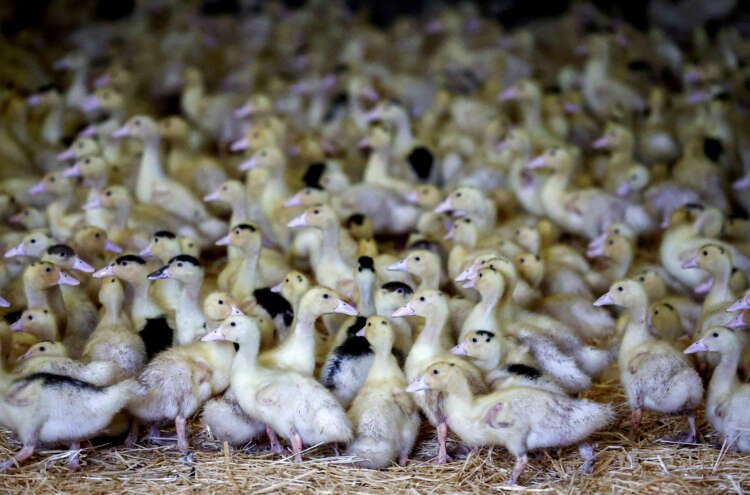
Published by Uma Rajagopal
Posted on May 26, 2023
2 min readLast updated: February 1, 2026
Add as preferred source on GooglePARIS (Reuters) – France confirmed its aim to launch a vaccination programme against bird flu in the autumn after results from a series of tests on the vaccination of ducks showed “satisfactory effectiveness”, the farm ministry said.
PARIS (Reuters) – France confirmed its aim to launch a vaccination programme against bird flu in the autumn after results from a series of tests on the vaccination of ducks showed “satisfactory effectiveness”, the farm ministry said.
A severe strain of highly pathogenic avian influenza, commonly called bird flu, has ravaged poultry production around the world, leading to the culling of over 200 million birds in the past 18 months.
France has been the worst hit country in the European Union and is facing a strong resurgence of outbreaks since early this month in the southwestern part of the country, mainly among ducks.
It had already launched a pre-order of 80 million vaccines last month, which needed to be confirmed based on final tests carried out by French health safety agency ANSES.
“These favourable results provided sufficient guarantees to launch a vaccination campaign as early as autumn 2023,” the farm ministry wrote on its website.
Governments, often shy to use vaccination due to the trade restrictions it can entail, have increasingly considered adopting them to stem the spread of the virus and avoid interhuman transmission.
The results of the tests demonstrated a good control of virus transmission in vaccinated mule ducks, a differentiation between infected and vaccinated animals, known as the DIVA principle, and a reduction in virus excretion by vaccinated birds, the test conclusions said.
France has mandated two companies, France’s Ceva Animal Health and Germany’s Boehringher Ingelheim, to develop bird flu vaccines for ducks.
Several other EU countries have been carrying out tests, including the Netherlands on laying hens and Italy on turkeys.
First results in the Netherlands showed the vaccines tested were efficient.
(Reporting by Sybille de La Hamaide; Editing by Christian Schmollinger)
Highly pathogenic avian influenza (HPAI) viruses are strains of the influenza virus that can cause severe disease and high mortality rates in birds, particularly poultry.
The European Union plays a significant role in coordinating responses to animal diseases, including implementing regulations, funding research, and supporting vaccination campaigns among member states.
Explore more articles in the Top Stories category











