
Top Stories
Factbox-The Challenges Automakers, and Now Tesla, Face With Humanoid Robots
Published by Jessica Weisman-Pitts
Posted on September 26, 2022
3 min readLast updated: February 4, 2026
Add as preferred source on Google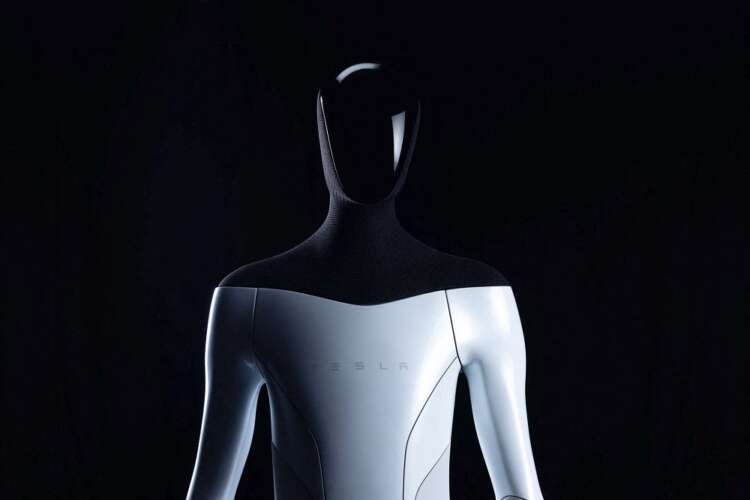
Published by Jessica Weisman-Pitts
Posted on September 26, 2022
3 min readLast updated: February 4, 2026
Add as preferred source on GoogleBy Hyunjoo Jin
SAN FRANCISCO (Reuters) – Tesla’s CEO Elon Musk is set to unveil its prototype humanoid robots at an event on Sept. 30, hoping to expand beyond self-driving cars that have not yet become reality despite his repeated promises.
While robots are widely used for specialist tasks at factories, other companies have struggled to create commercially viable human-like robots, despite decades-long development efforts.
“This market is very, very challenging market because you buy this big expensive robot, but it actually cannot do much,” Heni Ben Amor, a robotics professor at Arizona State University, said.
TESLA
Tesla’s humanoid robots, Optimus, will be initially used in manufacturing and logistics for boring and repetitive work, thus addressing a labor shortage.
For the longer term, Musk said the robot could be used in homes, even becoming a “buddy” or a “catgirl” sex partner.
HONDA
Japanese automaker Honda Motor Co’s Asimo bipedal robot had served as a face for the company but was not commercialized after more than two decades of development. Honda is now focusing on disaster relief robots and “Avatar” robots for tasks like remote surgery.
Honda aims to demonstrate the Avatar robot before early 2024 and deploy the machines in the 2030s.
GM-NASA
From 2007 to 2012, General Motors and NASA joined hands to develop humanoid robots, R2, for assembly and space exploration.
NASA said that they are not under development anymore. NASA said its current focus is the development of next-generation humanoid robots that can be used on the lunar surface and eventually on Mars.
HYUNDAI MOTOR-BOSTON DYNAMICS
Boston Dynamics created internet buzz with videos of its humanoid robots running, jumping, backflipping and dancing. But the loss-making U.S. company changed hands several times, with Alphabet Inc’s Google, SoftBank and then Hyundai Motor Co becoming the company’s owner.
Hyundai and Boston Dynamics said in August that they will initially invest more than $400 million in a “research-first organization” on AI and robotics.
FORD-AGILITY ROBOTICS
In 2020, Ford bought two humanoid robots, Digit, from Agility Robotics, to test the delivery of a package to doorstop from a delivery vehicle.
Oregon-based startup Agility Robotics is also working to deploy human-like robots that can pick up and move items at warehouses.
SOFTBANK, OTHERS
SoftBank’s wide-eyed Pepper robot, which helped burnish Chief Executive Masayoshi Son’s image as a forward-looking tech entrepreneur, saw production halted.
Several robot startups like Rethink Robotics also went out of business, as they failed to commercialize their products.
(Reporting by Hyunjoo Jin; Addidtional reporting by Sam Nussey in Tokyo; Editing by Lisa Shumaker)
A humanoid robot is a robot designed to resemble the human body in appearance and behavior. These robots can perform tasks that mimic human actions, often used in manufacturing and logistics.
Automation in manufacturing refers to the use of technology to perform tasks without human intervention. This can include robotics and software systems that enhance efficiency and reduce labor costs.
Tesla is developing humanoid robots, specifically named Optimus, aimed at performing repetitive tasks in manufacturing and logistics to address labor shortages.
Artificial Intelligence (AI) enhances robotics by enabling machines to learn from data, make decisions, and improve their performance over time, making them more efficient and versatile.
Creating humanoid robots poses challenges such as high costs, limited functionality, and the difficulty of achieving human-like dexterity and decision-making capabilities.
Explore more articles in the Top Stories category











