
Top Stories
Exodus of Ukrainian Workers Hits Europe’s Emerging Economies
Published by Wanda Rich
Posted on July 25, 2022
7 min readLast updated: February 5, 2026
Add as preferred source on Google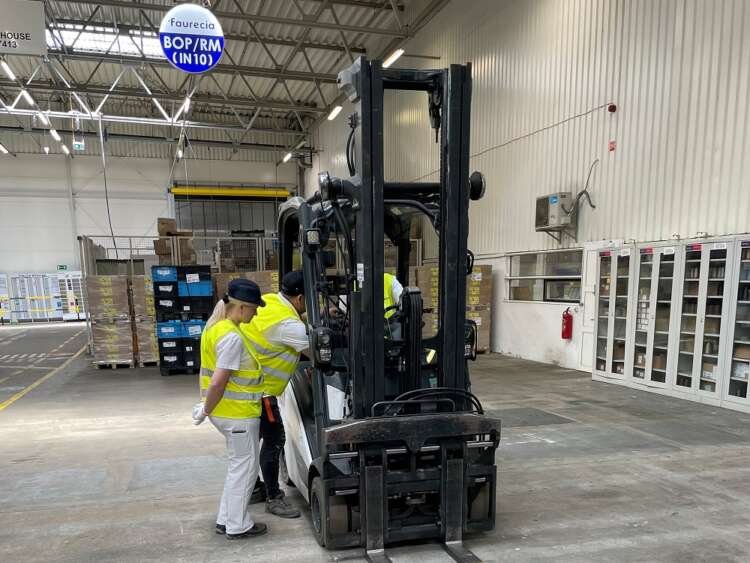
Published by Wanda Rich
Posted on July 25, 2022
7 min readLast updated: February 5, 2026
Add as preferred source on GoogleBy Fanny Brodersen, Anna Koper and Michael Kahn
GORZOW WIELKOPOLSKI, Poland (Reuters) – Construction sites, factory assembly lines and warehouses across central Europe are scrambling to fill vacancies after tens of thousands of Ukrainian men left their blue-collar jobs to return home after Russia invaded their country.
Ukrainian workers had flocked to central Europe in the past decade – drawn by higher wages and aided by an easing of visa requirements – filling jobs that weren’t highly paid enough for local workers in construction, the automotive sector, and heavy industry.
Many of these workers have returned home to help the war effort since Russia invaded on February 24, abruptly worsening labour shortages in some of Europe’s most industrialized economies.
Reuters spoke to 14 company executives, recruiters, industry bodies and economists in Poland and the Czech Republic who said the departure of Ukrainian workers was leading to rising costs and delays in manufacturing orders and construction work.
Before the Russian invasion, Ukrainians were the largest group of foreign workers in central Europe. Poland and the Czech Republic hosted Ukrainian workforces of around 600,000 and more than 200,000 respectively, according to industry trade groups.
The Employers of Poland trade group, which represents 19,000 companies, estimates that around 150,000 Ukrainian workers, mainly men, have left Poland since the start of the war.
Wieslaw Nowak, chief executive of Polish tram and railway line builder ZUE Group, said one of its sub-contractors recently failed to complete work related to laying tracks because nearly all of its 30 Ukrainian workers had left.
“Many companies are looking for employees on a massive scale at various construction sites due to large outflows,” he told Reuters.
“It certainly affects the cost and pace of work because if someone loses several dozen employees at the same time rebuilding a team takes far more than a matter of a few days.”
While the European Central Bank said in June an influx of Ukrainian refugees was expected to ease a euro zone labour shortage, the opposite seems to be happening in Europe’s industrialised economies outside the currency bloc.
Hundreds of thousands of Ukrainian refugees, mainly women and children, who arrived in the region are not an easy fit for many of the vacant positions. Often the jobs are in physically demanding sectors such as construction, manufacturing or foundries where legal limits apply on how much female workers are allowed to lift.
From training female refugees to operate forklift trucks to recruiting new workers in Asia, companies are scrambling to find innovative ways to plug the gaps in their workforces, the company executives told Reuters.
But for many firms struggling to recover from the economic impact of the COVID pandemic, and now facing sharp rises in energy costs and inflation following the war, the sudden scarcity of labour poses a severe challenge.
“The loss of Ukrainian workers has deepened the problems companies are facing,” Radek Spicar, vice president of the Czech Federation of Industry, told Reuters. “Companies say they can’t cover all the demand from business partners: they deliver with delays and pay penalties.”
VACANCIES
With industrial production contributing to 30% of GDP, the Czech Republic ranks as the EU’s most industrialised nation. Poland follows closely behind at 25%.
Before the Russian invasion, Germany-based recruiter Hofmann Personal had more than 1,000 Ukrainian candidates due to arrive in the Czech Republic between March and June, mostly for jobs in the automotive, logistics and manufacturing sectors.
The companies expecting those workers are now struggling to fill those openings, said Gabriela Hrbackova, Hofmann Personal’s managing director in the Czech Republic. The country has the lowest unemployment rate in the European Union of just 3.1%.
“If this cannot be resolved quickly and opportunities for recruiting foreign candidates are not strengthened, it will have major implications, especially for manufacturing companies,” Hrbackova told Reuters.
“Companies lack hundreds of employees for positions of production operators, qualified manufacturing positions such as welders, (machine) operators, metal workers and forklift drivers.”
Executives and trade groups said the impact of Ukrainian workers’ departures is being felt particularly hard in emerging Europe because the region is less automated than more developed European Union economies, such as regional heavyweight Germany.
For Scanfil — a Finnish company specialised in electronics manufacturing, assembly and production outsourcing — the swift loss of workers from the labour market in Poland, where it has operations, reinforced plans to boost automation.
“Automation is possible in some positions but not everywhere,” said Magdalena Szweda, human resources manager of Scanfil Poland in Myslowice. “We still have a need in many workplaces for human hands so it doesn’t resolve the problem.”
ECONOMIC IMPACT
The chief economist at BNP Paribas Bank Polska, Michal Dybula, said it was clear the loss of Ukrainian workers would harm the Polish economy – the sixth-largest in the European Union – at least in the short term, based on both economic data and conversations with local businesses.
However, it was too soon to quantify the scale of the impact, he said.
Petr Skocek, director of German automotive supplier Brose Group’s facility in the Czech city Ostrava, near the Polish border, said the past inflow of Ukrainian workers had been a boon to businesses because of their qualifications, work ethic and similar culture.
“This channel has now stopped,” he said.
The staffing issue comes on top of supply chain problems for manufacturers, who face soaring costs for energy and materials due to the war and lingering disruptions to supply chains from the pandemic.
The producer price index – a measure of inflation for businesses – hit nearly 25.6% in June in Poland and 28.5% in June in the Czech Republic.
Some companies are bumping up salary offers to attract replacement workers, seeking to lure local workers and stave off competing firms for the limited number of Ukrainians.
“We’re searching for Ukrainian workers on the market, offering more money,” said Maciej Jeczmyk, chief executive of Poland-based manufacturer InBet, which makes prefabricated materials for construction. “We are adapting almost every week.”
DRAFTING IN WOMEN, OTHER FOREIGN WORKERS
To cope with shortages, Polish staffing firm Gremi Personal said their client companies had shifted men to more physically demanding jobs and hired Ukrainian refugee women to replace them.
“So, for example, a man would move from the production line to the logistics department where they have to carry heavy things that have a legal limit for women,” the firm’s deputy director Damian Guzman told Reuters.
The shortage has also forced companies to rethink how they work and look further afield to countries like Mongolia and the Philippines where language, travel and visa issues makes it difficult to quickly fill vacancies.
“The problem is that the number of workers brought from these other countries is not high enough to fill vacancies,” said Marcos Segador Arrebola, the chief executive of recruiter GI Group Poland.
He said the number of Ukrainian workers in emerging Europe’s largest economy increased 38-fold over the past 13 years.
Companies such as construction firm Inpro in Poland are also turning to pre-fabricated elements to keep construction projects on time. Others are extending working hours and training women for positions traditionally occupied by men, such as operating fork lifts.
Wojciech Ratajczyk, chief executive of staffing firm Trenkwalder Poland, said the company had open vacancies for 50,000 logistics workers, most of them forklift drivers.
He said that more than 600 women answered an advert sent to 2,000 refugees about learning how to operate forklifts. A few dozen recently started a 4-week course organised in conjunction with companies.
One participant is Olha Voroviy, a former sales manager who found work in automotive supplier Faurecia’s Polish warehouse after fleeing her home in Ukraine.
“It is a hard work … but I need to work and make money and there was no other job in Gorzow,” Voroviy told Reuters during a break in a certification course that will pave the way to a higher paying job in the warehouse.
“In Ukraine, I was working with my mind and here in Poland I’m working physically.”
(Writing by Michael Kahn, Reporting by Michael Kahn in Prague and Anna Koper in Warsaw, Additional reporting by Andrey Sychev, Hedy Beloucif, Malgorzata Wojtunik in Gdansk; Editing by Alison Williams)
A labor shortage occurs when there are not enough qualified workers available to fill job vacancies in a specific industry or region.
Economic growth refers to an increase in the production of goods and services in an economy over a period, typically measured by GDP.
Employment opportunities are job openings available in the market for individuals seeking work, often influenced by economic conditions.
Inflation is the rate at which the general level of prices for goods and services rises, eroding purchasing power.
Explore more articles in the Top Stories category











