
The Challenge of Cross-Department Coordination
Within an organization, each department has a different function and a different agenda. These departments may have different ways of getting their job done and their goals may even be at odds with one another. Add a disaster to this equation and it is a recipe for chaos. However, it is the job of an emergency manager to make all these departments function as a coherent whole during a time of crisis.
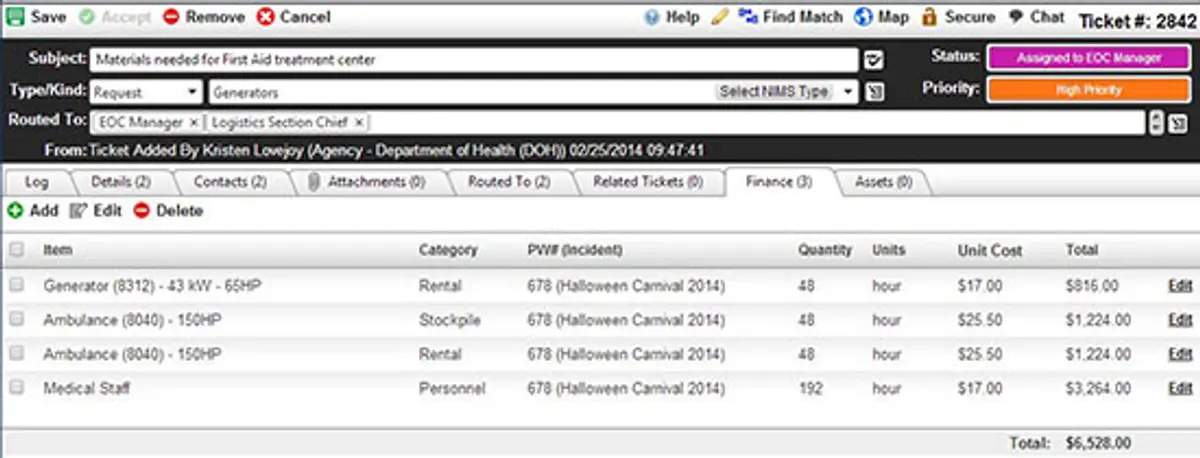
Emergency Operations Centers Benefit From A Common Platform For Financial Tracking And Other Cross Departmental Tasks
Role of Technology in Unifying Operations
Technology helps organizations reach this goal by giving departments a common platform for performing tasks and allowing employees to see how each department’s work fits into the bigger organizational picture. Technology also gives organizations the proper tracking tools to maintain a high level of accountability. This allows departments to work together to meet both departmental and organizational goals.
Resource Management in Emergency Operations Centers
For example, In an Emergency Operations Center (EOC), resources need to be collected, deployed, and retrieved. All of these resources need be accounted for both physically and financially. Although it may seem to those in operations that getting the resources where they need to go and worrying about the rest later is the fastest way to do their jobs, those working in finances will have a much different point of view. Using the right technology allows for fast deployment along with thorough accountability. Once the disaster has been handled, all the financial information needed to apply for reimbursement from FEMA will already be in the system, along with all the information needed to properly audit the event and create an after action or incident action report. This allows all members of an EOC to do their jobs more effectively.
Limitations of Traditional Software Approaches
Traditional software allows individual departments to input and track their data, however with each department working independently, there is no common operational picture. Newer generation technologies, such as DisasterLAN (DLAN), allow for tighter integration and better situational awareness. Departmental integration is the key to keeping track of financial information in the midst of an emergency situation. As Emergency Managers have to sign off on financial items as a situation unfolds, it is easy to lose track of overall expenditures, leading to sticker shock at the end of an activation. DLAN’s Finance Module helps avoid this problem. The Finance Module includes exact copies of FEMA’s project worksheets and current resource cost codes for easy submission of reimbursable damage expenses. DLAN allows different departments to fully integrate with one another in order to quickly and efficiently respond to an emergency, as well as account for all activities and finances afterwards.
Advances in Communication and Collaboration Tools
In today’s complex world organizations can no longer depend on whiteboards, memos, and in person briefings to handle emergency situations. Newer technologies allow organizations to communicate more efficiently and create accountability across departments. Any technology that creates a common platform for performing the various tasks of multiple departments will improve an organizations performance both day-to-day and in crisis situations.