Search
00
GBAF Logo
trophy
Top StoriesInterviewsBusinessFinanceBankingTechnologyInvestingTradingVideosAwardsMagazinesHeadlinesTrends

Subscribe to our newsletter

Get the latest news and updates from our team.

Global Banking and Finance Review

Global Banking & Finance Review

Company

    GBAF Logo
    • About Us
    • Profile
    • Privacy & Cookie Policy
    • Terms of Use
    • Contact Us
    • Advertising
    • Submit Post
    • Latest News
    • Research Reports
    • Press Release
    • Awards▾
      • About the Awards
      • Awards TimeTable
      • Submit Nominations
      • Testimonials
      • Media Room
      • Award Winners
      • FAQ
    • Magazines▾
      • Global Banking & Finance Review Magazine Issue 79
      • Global Banking & Finance Review Magazine Issue 78
      • Global Banking & Finance Review Magazine Issue 77
      • Global Banking & Finance Review Magazine Issue 76
      • Global Banking & Finance Review Magazine Issue 75
      • Global Banking & Finance Review Magazine Issue 73
      • Global Banking & Finance Review Magazine Issue 71
      • Global Banking & Finance Review Magazine Issue 70
      • Global Banking & Finance Review Magazine Issue 69
      • Global Banking & Finance Review Magazine Issue 66
    Top StoriesInterviewsBusinessFinanceBankingTechnologyInvestingTradingVideosAwardsMagazinesHeadlinesTrends

    Global Banking & Finance Review® is a leading financial portal and online magazine offering News, Analysis, Opinion, Reviews, Interviews & Videos from the world of Banking, Finance, Business, Trading, Technology, Investing, Brokerage, Foreign Exchange, Tax & Legal, Islamic Finance, Asset & Wealth Management.
    Copyright © 2010-2025 GBAF Publications Ltd - All Rights Reserved.

    ;
    Editorial & Advertiser disclosure

    Global Banking and Finance Review is an online platform offering news, analysis, and opinion on the latest trends, developments, and innovations in the banking and finance industry worldwide. The platform covers a diverse range of topics, including banking, insurance, investment, wealth management, fintech, and regulatory issues. The website publishes news, press releases, opinion and advertorials on various financial organizations, products and services which are commissioned from various Companies, Organizations, PR agencies, Bloggers etc. These commissioned articles are commercial in nature. This is not to be considered as financial advice and should be considered only for information purposes. It does not reflect the views or opinion of our website and is not to be considered an endorsement or a recommendation. We cannot guarantee the accuracy or applicability of any information provided with respect to your individual or personal circumstances. Please seek Professional advice from a qualified professional before making any financial decisions. We link to various third-party websites, affiliate sales networks, and to our advertising partners websites. When you view or click on certain links available on our articles, our partners may compensate us for displaying the content to you or make a purchase or fill a form. This will not incur any additional charges to you. To make things simpler for you to identity or distinguish advertised or sponsored articles or links, you may consider all articles or links hosted on our site as a commercial article placement. We will not be responsible for any loss you may suffer as a result of any omission or inaccuracy on the website.

    Home > Technology > Electric vehicle makers burning cash, slammed by sky-high costs
    Technology

    Electric vehicle makers burning cash, slammed by sky-high costs

    Electric vehicle makers burning cash, slammed by sky-high costs

    Published by Jessica Weisman-Pitts

    Posted on November 14, 2022

    Featured image for article about Technology

    By Akash Sriram

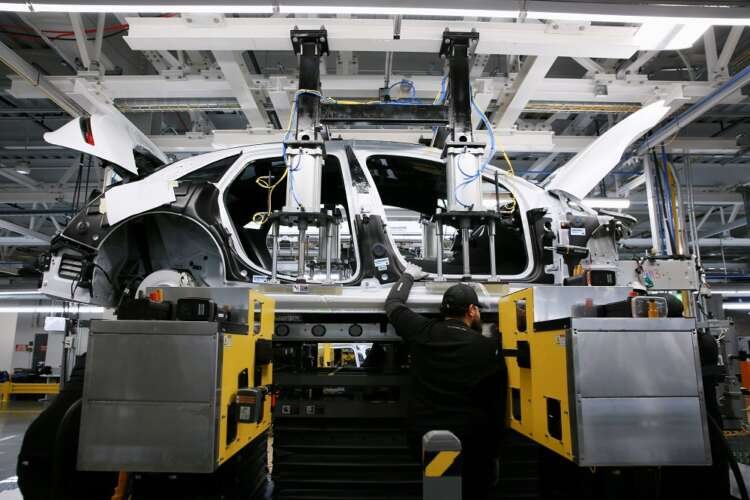
    (Reuters) – Every time Lucid Group Inc or Rivian Automotive Inc sells an electric car, they are losing hundreds of thousands of dollars due to staggering raw material and production costs, their latest earnings statements showed.

    Quarterly reports from electric vehicle (EV) makers from the past two weeks show them struggling to hit delivery targets and rapidly burning through cash.

    Lucid’s cost of revenue surged to $492.5 million in the July-September quarter from $3.3 million a year earlier, and its losses widened as customers canceled orders fearing long wait times.

    The company, which went public a little over a year ago and is backed by Saudi Arabia’s Public Investment Fund, saw its market value shrivel by two-thirds this year to about $20 billion from $95 billion at its peak in November 2021.

    The company said it had enough cash to sustain itself at least into the fourth quarter of next year and is looking to raise about $1.5 billion through a stock sale. Its stock price slumped 17% after results, and clawed back some losses in the next two sessions to finish on Friday down 4.4% from before it reported.

    Graphic: EV stocks slump on production pushouts, deep losses, cash bur https://graphics.reuters.com/ELECTRICVEHICLES-STOCKS/gkplwgmdzvb/Pasted%20image%201668198479064.png

    U.S.-listed British firm Arrival SA warned last week it may not have enough cash to keep its business going toward the end of next year, and would have to cut jobs. It has yet to start mass production.

    “I’m not going to sit here and tell you it’s not a difficult time,” Avinash Rugoobur, president of Britain’s Arrival SA told Reuters on Friday.

    “It’s tough, we are there every day, every night, working on technologies, the vehicles and also the capital raising.”

    Canoo Inc said in May it had “substantial doubt” about remaining a going concern. At the end of September, it had $6.8 million in cash and equivalents, down sharply from $415 million a year earlier.

    CASH IS KING

    Many EV startups recorded huge losses in the September quarter and warned that high costs were here to stay due to surging inflation and a global supply chain crisis. Just a year earlier, several listed their stocks at heady valuations, lured by the success of Tesla, now the world’s most valuable automaker.

    Tesla survived what its boss Elon Musk then called “production hell”, overcoming supply bottlenecks with battery deals with key suppliers, and ramping production for the smash hit Model 3.

    The company, however, faced those challenges in a different time when it was nearly the only pure play EV maker and competition from legacy automakers including General Motors and Volkswagen was nascent.

    In the latest quarter, Tesla reported earnings of $3.3 billion.

    “In the EV business … being early stage is a money-burning exercise, it’s difficult to get over the hump,” said Canaccord Genuity analyst George Gianarikas.

    Analysts said these companies must find ways to save money if they want to outlast a bad economy. Firms have taken different approaches.

    Rivian is shifting more car deliveries across the United States to rail freight, while Lucid is considering it as an option.

    Lordstown Motors, which issued a going-concern notice last year that led to the exits of its top bosses, has curtailed output.

    The truck maker sold a fifth of itself to tech giant Foxconn this month. Last year, it sold its Ohio plant to the Taiwanese firm, a deal forced by the need for funds to start production of its Endurance pickups.

    Still, higher output would ultimately reduce the cost per car and limiting production can threaten the path to profitability, analysts said.

    Some among these companies are better positioned to survive.

    Rivian, backed by Amazon.com and Ford Motor, had $13.8 billion cash on hand at the end of September. It also has a contract to supply 100,000 electric delivery vans to Amazon. But its cost of goods sold was about $220,000 per car versus an average selling price of $81,000 in the quarter, CFRA estimated.

    Canaccord’s Gianarikas said there could be lessons here from the ’90s dotcom bubble: “It wasn’t always the company with the best business plan that made it. It was the company with the best balance sheet.”

    (Reporting by Akash Sriram in Bengaluru; Writing by Aditya Soni; Editing by Sayantani Ghosh and David Gregorio)

    Related Posts
    Financial services: a human-centric approach to managing risk
    Financial services: a human-centric approach to managing risk
    LakeFusion Secures Seed Funding to Advance AI-Native Master Data Management
    LakeFusion Secures Seed Funding to Advance AI-Native Master Data Management
    Clarity, Context, Confidence: Explainable AI and the New Era of Investor Trust
    Clarity, Context, Confidence: Explainable AI and the New Era of Investor Trust
    Data Intelligence Transforms the Future of Credit Risk Strategy
    Data Intelligence Transforms the Future of Credit Risk Strategy
    Architect of Integration Ushers in a New Era for AI in Regulated Industries
    Architect of Integration Ushers in a New Era for AI in Regulated Industries
    How One Technologist is Building Self-Healing AI Systems that Could Transform Financial Regulation
    How One Technologist is Building Self-Healing AI Systems that Could Transform Financial Regulation
    SBS is Doubling Down on SaaS to Power the Next Wave of Bank Modernization
    SBS is Doubling Down on SaaS to Power the Next Wave of Bank Modernization
    Trust Embedding: Integrating Governance into Next-Generation Data Platforms
    Trust Embedding: Integrating Governance into Next-Generation Data Platforms
    The Guardian of Connectivity: How Rohith Kumar Punithavel Is Redefining Trust in Private Networks
    The Guardian of Connectivity: How Rohith Kumar Punithavel Is Redefining Trust in Private Networks
    BNY Partners With HID and SwiftConnect to Provide Mobile Access to its Offices Around the Globe With Employee Badge in Apple Wallet
    BNY Partners With HID and SwiftConnect to Provide Mobile Access to its Offices Around the Globe With Employee Badge in Apple Wallet
    How Integral’s CTO Chidambaram Bhat is helping to solve  transfer pricing problems through cutting edge AI.
    How Integral’s CTO Chidambaram Bhat is helping to solve transfer pricing problems through cutting edge AI.
    Why Physical Infrastructure Still Matters in a Digital Economy
    Why Physical Infrastructure Still Matters in a Digital Economy

    Why waste money on news and opinions when you can access them for free?

    Take advantage of our newsletter subscription and stay informed on the go!

    Subscribe

    Previous Technology PostSlovakia’s InoBat eyes electric vehicle battery plant in Serbia
    Next Technology PostBanking on a passwordless future

    More from Technology

    Explore more articles in the Technology category

    Why Compliance Has Become an Engineering Problem

    Why Compliance Has Become an Engineering Problem

    Can AI-Powered Security Prevent $4.2 Billion in Banking Fraud?

    Can AI-Powered Security Prevent $4.2 Billion in Banking Fraud?

    Reimagining Human-Technology Interaction: Sagar Kesarpu’s Mission to Humanize Automation

    Reimagining Human-Technology Interaction: Sagar Kesarpu’s Mission to Humanize Automation

    LeapXpert: How financial institutions can turn shadow messaging from a risk into an opportunity

    LeapXpert: How financial institutions can turn shadow messaging from a risk into an opportunity

    Intelligence in Motion: Building Predictive Systems for Global Operations

    Intelligence in Motion: Building Predictive Systems for Global Operations

    Predictive Analytics and Strategic Operations: Strengthening Supply Chain Resilience

    Predictive Analytics and Strategic Operations: Strengthening Supply Chain Resilience

    How Nclude.ai   turned broken portals into completed applications

    How Nclude.ai turned broken portals into completed applications

    The Silent Shift: Rethinking Services for a Digital World?

    The Silent Shift: Rethinking Services for a Digital World?

    Culture as Capital: How Woxa Corporation Is Redefining Fintech Sustainability

    Culture as Capital: How Woxa Corporation Is Redefining Fintech Sustainability

    Securing the Future: We're Fixing Cyber Resilience by Finally Making Compliance Cool

    Securing the Future: We're Fixing Cyber Resilience by Finally Making Compliance Cool

    Supply chain security risks now innumerable and unmanageable for majority of cybersecurity leaders, IO research reveals

    Supply chain security risks now innumerable and unmanageable for majority of cybersecurity leaders, IO research reveals

    Why AI's Promise of Efficiency May Break Tomorrow's Workforce

    Why AI's Promise of Efficiency May Break Tomorrow's Workforce

    View All Technology Posts