
Top Stories
ECB Criticises New Italian Tax on Windfall Bank Profits
Published by Uma Rajagopal
Posted on September 13, 2023
2 min readLast updated: January 31, 2026
Add as preferred source on Google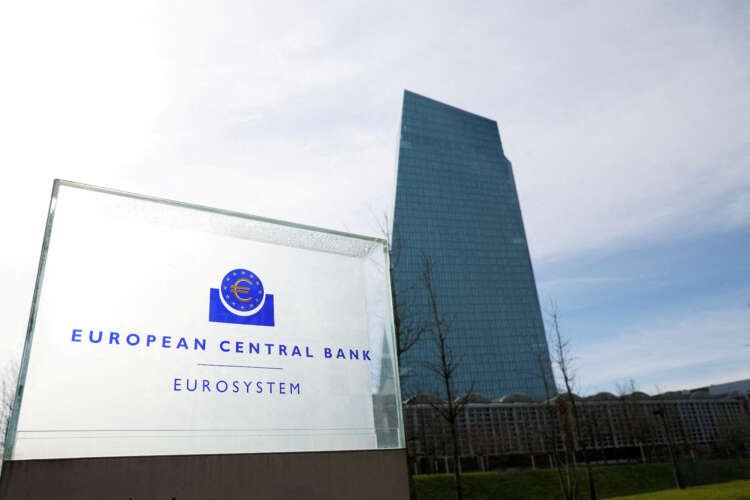
Published by Uma Rajagopal
Posted on September 13, 2023
2 min readLast updated: January 31, 2026
Add as preferred source on GoogleBy Francesco Canepa and Giuseppe Fonte
FRANKFURT (Reuters) – The European Central Bank (ECB) on Wednesday criticised the Italian government’s proposed tax on windfall bank profits, saying it did not consider lenders’ long-term prospects and could make some of them vulnerable to an economic downturn.
Last month, Rome dealt a surprise blow to the country’s lenders by imposing a one-off 40% tax on their profits resulting from higher interest rates, after reprimanding them for failing to reward deposits.
Bank shares tumbled before the economy ministry clarified that the new tax would amount to no more than 0.1% of lenders’ total assets.
“The amount of the extraordinary tax might not be commensurate with the longer-term profitability of a credit institution and its capital generation capacity,” the ECB said in a non-binding legal opinion.
“As a result of the general application of the extraordinary tax, credit institutions that have lower solvency positions or are more focused on lending activity (such as small banks) or have challenging capital projections could become less able to absorb the potential downside risks of an economic downturn,” the ECB added.
Italian lawmakers are expected to table proposals this week to soften the impact of the tax, including allowing banks to partly deduct what they have to pay from their overall corporate tax bill.
Other amendments are likely to exempt smaller banks from paying the tax or revisit its cap by anchoring it to risk-weighted assets (RWAs) instead of total assets, according to some ruling politicians.
The ECB said it was not fully clear how the calculation of “total assets” would be made and raised the prospect that banks might register losses or lower profits when paying the tax in mid-2024, as envisaged by the government scheme.
It noted that the positive effect on banks from higher interest rates could be offset by lower lending volumes, a higher cost of funding and losses on bad debts if the economy worsens.
“Caution must be taken to ensure that the extraordinary tax does not impact the ability of individual credit institutions to build strong capital bases,” the ECB said.
(Reporting by Francesco Canepa and Giuseppe Fonte; editing by Balazs Koranyi, Gavin Jones and Christina Fincher)
The European Central Bank (ECB) is responsible for managing the euro and formulating monetary policy for the Eurozone, aiming to maintain price stability and support economic growth.
Economic downturns refer to periods when the economy experiences a decline in activity, characterized by reduced consumer spending, increased unemployment, and lower production levels.
Capital generation capacity refers to a bank's ability to generate capital through profits, which is essential for maintaining financial stability and supporting lending activities.
Explore more articles in the Top Stories category











