
Top Stories
Dollar Rises as US Business Activity Ticks up in October
Published by Jessica Weisman-Pitts
Posted on October 25, 2023
3 min readLast updated: January 31, 2026
Add as preferred source on Google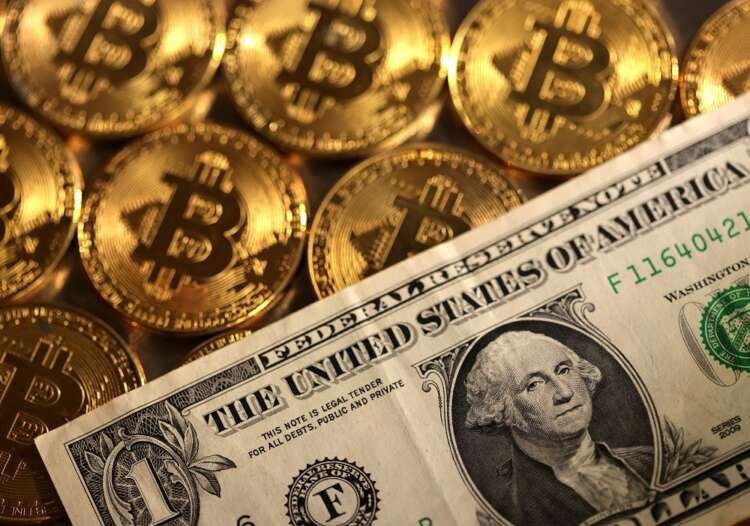
Published by Jessica Weisman-Pitts
Posted on October 25, 2023
3 min readLast updated: January 31, 2026
Add as preferred source on GoogleBy Saqib Iqbal Ahmed
NEW YORK (Reuters) -The dollar rose against a basket of currencies on Tuesday as a slew of fresh economic data highlighted the strength of the U.S. economy relative to the United Kingdom and the European Union.
U.S. business output ticked higher in October as the manufacturing sector pulled out of a five-month contraction on a pickup in new orders, and services activity accelerated modestly amid signs of easing inflationary pressures, S&P Global said on Tuesday.
It was the latest sign the U.S. economy is withstanding the surge in interest rates, spurred by the Federal Reserve’s campaign to beat back inflation.
The dollar index, which measures the currency’s strength against a basket of six rivals, was 0.6% higher at 106.27. The index had slipped to a one-month low of 105.35 earlier in the session.
“The big picture still clearly remains intact, especially when you compare U.S. PMI to the concurrent releases out of the UK and the euro zone this morning,” said Helen Given, FX trader at Monex USA.
“While all three PMI readings for the U.S. (manufacturing, services, and composite) were positive, both the UK and the euro zone showed contractions, re-emphasizing the continuing resilience of the larger U.S. economy in comparison to its peers around the world.”
Earlier on Tuesday, survey data showed euro zone business activity took a surprise turn for the worse this month in a broad-based downturn across the region, suggesting the bloc may slip into recession.
The euro was last 0.8% lower at $1.0588.
German data was particularly glum. The purchasing managers’ index survey showed the service sector joined the manufacturing sector in contractionary territory.
The Bank of England is due to set interest rates on Thursday next week, after the Fed’s decision on Wednesday. The European Central Bank’s meeting ends this Thursday, with traders expecting all three central banks to hold rates steady.
“The October flash PMI surveys suggest that economic activity got off to a weak start in Q4, especially in Europe,” Capital Economics global economist Ariane Curtis said in a note.
“And with weak activity taking some of the steam out of labor markets and inflation, we are growing more confident in our view that the Fed, ECB and Bank of England are done hiking policy rates,” she said.
Global financial markets have been gripped by a surge in U.S. bond yields, which on Monday pushed the benchmark 10-year Treasury yield above 5% to its highest since July 2007. The rise in yields drove the dollar index to an almost one-year high earlier this month.
The yield dropped sharply later on Monday. Analysts said one catalyst was a social media message by prominent hedge fund investor Bill Ackman, saying he had closed out his bet against longer-dated bonds and that geopolitical worries were a factor. Yields rise as prices fall and vice versa.
The dollar was last up 0.1% at 149.91 yen, keeping traders nervous about possible government intervention to prop up the Japanese currency.
The British pound was last down 0.72% at $1.2161. Britain’s businesses reported another decline in activity this month and cost pressures cooled further, surveys showed on Tuesday, underlining the risk of recession.
In cryptocurrency markets, bitcoin extended its rise, helped by speculation that an exchange-traded bitcoin fund is imminent. The world’s largest cryptocurrency by market cap was last up 2.4% at $33,850.
(Reporting by Saqib Iqbal Ahmed; Additional reporting by Harry Robertson in London and Brigid Riley in TokyoEditing by Emelia Sithole-Matarise, Mark Potter, Sharon Singleton and Richard Chang)
The dollar index measures the value of the U.S. dollar against a basket of foreign currencies, providing an indication of its strength in the global market.
Inflation is the rate at which the general level of prices for goods and services rises, eroding purchasing power. It is often measured by the Consumer Price Index (CPI).
Interest rates are the cost of borrowing money or the return on savings, expressed as a percentage of the principal amount, influenced by central bank policies.
Cryptocurrencies are digital or virtual currencies that use cryptography for security, operating on decentralized networks based on blockchain technology.
Explore more articles in the Top Stories category











