Search
00
GBAF Logo
trophy
Top StoriesInterviewsBusinessFinanceBankingTechnologyInvestingTradingVideosAwardsMagazinesHeadlinesTrends

Subscribe to our newsletter

Get the latest news and updates from our team.

Global Banking and Finance Review

Global Banking & Finance Review

Company

    GBAF Logo
    • About Us
    • Profile
    • Privacy & Cookie Policy
    • Terms of Use
    • Contact Us
    • Advertising
    • Submit Post
    • Latest News
    • Research Reports
    • Press Release
    • Awards▾
      • About the Awards
      • Awards TimeTable
      • Submit Nominations
      • Testimonials
      • Media Room
      • Award Winners
      • FAQ
    • Magazines▾
      • Global Banking & Finance Review Magazine Issue 79
      • Global Banking & Finance Review Magazine Issue 78
      • Global Banking & Finance Review Magazine Issue 77
      • Global Banking & Finance Review Magazine Issue 76
      • Global Banking & Finance Review Magazine Issue 75
      • Global Banking & Finance Review Magazine Issue 73
      • Global Banking & Finance Review Magazine Issue 71
      • Global Banking & Finance Review Magazine Issue 70
      • Global Banking & Finance Review Magazine Issue 69
      • Global Banking & Finance Review Magazine Issue 66
    Top StoriesInterviewsBusinessFinanceBankingTechnologyInvestingTradingVideosAwardsMagazinesHeadlinesTrends

    Global Banking & Finance Review® is a leading financial portal and online magazine offering News, Analysis, Opinion, Reviews, Interviews & Videos from the world of Banking, Finance, Business, Trading, Technology, Investing, Brokerage, Foreign Exchange, Tax & Legal, Islamic Finance, Asset & Wealth Management.
    Copyright © 2010-2025 GBAF Publications Ltd - All Rights Reserved.

    ;
    Editorial & Advertiser disclosure

    Global Banking and Finance Review is an online platform offering news, analysis, and opinion on the latest trends, developments, and innovations in the banking and finance industry worldwide. The platform covers a diverse range of topics, including banking, insurance, investment, wealth management, fintech, and regulatory issues. The website publishes news, press releases, opinion and advertorials on various financial organizations, products and services which are commissioned from various Companies, Organizations, PR agencies, Bloggers etc. These commissioned articles are commercial in nature. This is not to be considered as financial advice and should be considered only for information purposes. It does not reflect the views or opinion of our website and is not to be considered an endorsement or a recommendation. We cannot guarantee the accuracy or applicability of any information provided with respect to your individual or personal circumstances. Please seek Professional advice from a qualified professional before making any financial decisions. We link to various third-party websites, affiliate sales networks, and to our advertising partners websites. When you view or click on certain links available on our articles, our partners may compensate us for displaying the content to you or make a purchase or fill a form. This will not incur any additional charges to you. To make things simpler for you to identity or distinguish advertised or sponsored articles or links, you may consider all articles or links hosted on our site as a commercial article placement. We will not be responsible for any loss you may suffer as a result of any omission or inaccuracy on the website.

    Home > Technology > Digital Identities: The Innovation of the Decade?
    Technology

    Digital Identities: The Innovation of the Decade?

    Digital Identities: The Innovation of the Decade?

    Published by Jessica Weisman-Pitts

    Posted on July 11, 2022

    Featured image for article about Technology

    By Matthew Peake, Global Director of Public Policy, Onfido

    Before the digital economy transformed how consumers interact with products and services, the way businesses managed and verified their customers’ identities remained relatively stagnant. For many organisations, the default process was to ask a user to show a physical document like a paper ID, or to input a unique passcode. This was particularly the case in banking, travelling and even voting.

    Over time, companies sought alternatives to verify customer identities online for user convenience. One method was using Knowledge-Based Authentication (KBA) to verify identities in a virtual space. Powered by Credit Bureaus, this requires consumers to answer ‘secret questions’ about themselves and their financial history that only the legitimate person would supposedly know. However, this is often a lengthy process and is a cause of user frustration. Further, as fraudster tactics evolved and data breaches became more prolific, these systems became direct targets for bad actors because of the volume of information and data they hold.

    But as the last couple of years has seen a decisive shift to online services, what started as a mission for convenience is now a necessity that aligns with a long-term behavioural pattern. In fact, one in two now feel more comfortable with online services than they did before the pandemic. So, as businesses pivot to meet their users online, it’s a financial, reputational, and in some cases regulatory obligation that they can accurately and securely verify their customers. This is where digital identity innovation can act as the bridge between the physical and virtual worlds, provide protection against identity fraud and onboard customers quickly and seamlessly.

    What’s driving digital identities?

    The value of digital identities has been clearer than ever over the past two years, helping businesses onboard new customers efficiently as the digital economy expanded. But that’s not the only reason.

    Today’s fraud landscape is evolving fast. As consumers have moved online, malicious actors have closely followed. So much so that identity fraud has risen 44% since 2019, while the level of organised crime has jumped too with enhanced tactics like 2D/3D masks, deepfakes and replay attacks all being deployed. As a result, users are increasingly aware of their online presence and the value of their personal data. In fact, recent studies show that 57% of consumers now fear their identity is available for purchase online. As a consequence, many are taking a no-nonsense approach to fraud, particularly in the banking and finance sector. More than 40% of banking customers, for instance, said they would immediately close their account or switch provider if it was compromised by fraud.

    This shows that the stakes are higher than ever for online businesses: fail to verify customer identities and they could be hacked, leave their users exposed to fraudsters, lose revenue and ultimately dismantle the trust they’ve built. Over the next decade, digital identities will be crucial so that businesses can stay one step ahead of increasingly sophisticated fraudsters.

    Setting a new standard for virtual identities

    But how do they do this? Today, digital identities are grounded in emerging, innovative technologies that are designed to mitigate fraud attacks.

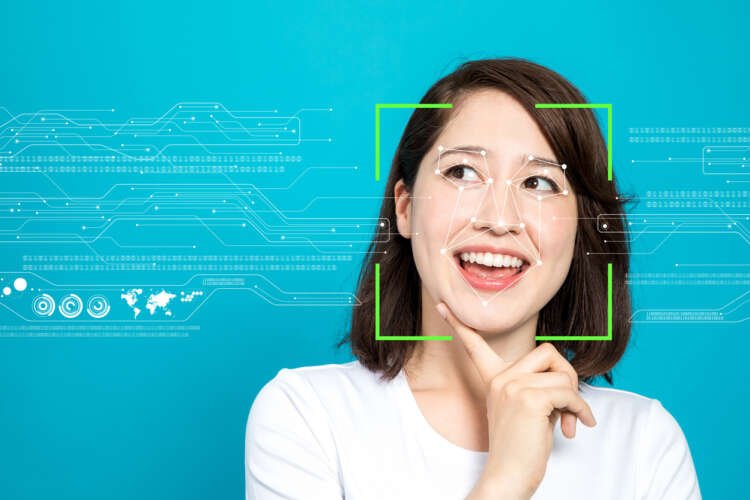
    Machine learning and biometrics play a critical role in the digital identity verification process. They enable users to verify their identity simply by taking a photo of their ID and posting a selfie. This confirms they are the legitimate ID owner and are physically present. Unlike traditional KBA processes, this protects against identity theft and impersonation, and significantly reduces the potential for identity fraud.

    Beyond this, digital identities are now paired with advanced innovation like AI and low-code solutions to power best practice in fraud prevention. For instance, AI is automating the entire identity verification process, allowing businesses to select ‘pass’ requirements based on risk, and complete checks in under 10 seconds. This means that businesses can layer the security behind their onboarding checks for high-value or riskier services, like mortgage applications and loans, without impacting the overall customer experience.

    While low and no-code solutions are making it easier than ever for businesses to implement digital identities. With improved accessibility, all businesses can access powerful analytics and make intelligent, real-time decisions on the onboarding process – staying one step ahead of fraudsters and protecting users.

    The decade ahead

    Early adopters are already seeing the benefits of this new and improved standard of identity verification. Today’s sophisticated fraudsters have closely followed consumers online and it’s no longer enough to combat this threat by asking users to input a unique passcode or to show a physical ID document to prove their identity. Those that do risk reputational damage, loss of revenue and a breakdown of trust with their users.

    Best practice in fraud prevention is now grounded in advanced AI and biometric technology which deters fraudsters and enables businesses to scale their protection based on risk. It’s what will keep businesses and their users safe in virtual spaces, replicating the level of security and convenience experienced in the physical world, and is why it should earn the title of innovation of the decade.

    Related Posts
    Financial services: a human-centric approach to managing risk
    Financial services: a human-centric approach to managing risk
    LakeFusion Secures Seed Funding to Advance AI-Native Master Data Management
    LakeFusion Secures Seed Funding to Advance AI-Native Master Data Management
    Clarity, Context, Confidence: Explainable AI and the New Era of Investor Trust
    Clarity, Context, Confidence: Explainable AI and the New Era of Investor Trust
    Data Intelligence Transforms the Future of Credit Risk Strategy
    Data Intelligence Transforms the Future of Credit Risk Strategy
    Architect of Integration Ushers in a New Era for AI in Regulated Industries
    Architect of Integration Ushers in a New Era for AI in Regulated Industries
    How One Technologist is Building Self-Healing AI Systems that Could Transform Financial Regulation
    How One Technologist is Building Self-Healing AI Systems that Could Transform Financial Regulation
    SBS is Doubling Down on SaaS to Power the Next Wave of Bank Modernization
    SBS is Doubling Down on SaaS to Power the Next Wave of Bank Modernization
    Trust Embedding: Integrating Governance into Next-Generation Data Platforms
    Trust Embedding: Integrating Governance into Next-Generation Data Platforms
    The Guardian of Connectivity: How Rohith Kumar Punithavel Is Redefining Trust in Private Networks
    The Guardian of Connectivity: How Rohith Kumar Punithavel Is Redefining Trust in Private Networks
    BNY Partners With HID and SwiftConnect to Provide Mobile Access to its Offices Around the Globe With Employee Badge in Apple Wallet
    BNY Partners With HID and SwiftConnect to Provide Mobile Access to its Offices Around the Globe With Employee Badge in Apple Wallet
    How Integral’s CTO Chidambaram Bhat is helping to solve  transfer pricing problems through cutting edge AI.
    How Integral’s CTO Chidambaram Bhat is helping to solve transfer pricing problems through cutting edge AI.
    Why Physical Infrastructure Still Matters in a Digital Economy
    Why Physical Infrastructure Still Matters in a Digital Economy

    Why waste money on news and opinions when you can access them for free?

    Take advantage of our newsletter subscription and stay informed on the go!

    Subscribe

    Previous Technology PostThe growth in click fraud and the telling signs to look out for when running ad campaigns
    Next Technology PostHow UK councils can unleash their data, held hostage by ‘legacy spaghetti’

    More from Technology

    Explore more articles in the Technology category

    Why Compliance Has Become an Engineering Problem

    Why Compliance Has Become an Engineering Problem

    Can AI-Powered Security Prevent $4.2 Billion in Banking Fraud?

    Can AI-Powered Security Prevent $4.2 Billion in Banking Fraud?

    Reimagining Human-Technology Interaction: Sagar Kesarpu’s Mission to Humanize Automation

    Reimagining Human-Technology Interaction: Sagar Kesarpu’s Mission to Humanize Automation

    LeapXpert: How financial institutions can turn shadow messaging from a risk into an opportunity

    LeapXpert: How financial institutions can turn shadow messaging from a risk into an opportunity

    Intelligence in Motion: Building Predictive Systems for Global Operations

    Intelligence in Motion: Building Predictive Systems for Global Operations

    Predictive Analytics and Strategic Operations: Strengthening Supply Chain Resilience

    Predictive Analytics and Strategic Operations: Strengthening Supply Chain Resilience

    How Nclude.ai   turned broken portals into completed applications

    How Nclude.ai turned broken portals into completed applications

    The Silent Shift: Rethinking Services for a Digital World?

    The Silent Shift: Rethinking Services for a Digital World?

    Culture as Capital: How Woxa Corporation Is Redefining Fintech Sustainability

    Culture as Capital: How Woxa Corporation Is Redefining Fintech Sustainability

    Securing the Future: We're Fixing Cyber Resilience by Finally Making Compliance Cool

    Securing the Future: We're Fixing Cyber Resilience by Finally Making Compliance Cool

    Supply chain security risks now innumerable and unmanageable for majority of cybersecurity leaders, IO research reveals

    Supply chain security risks now innumerable and unmanageable for majority of cybersecurity leaders, IO research reveals

    Why AI's Promise of Efficiency May Break Tomorrow's Workforce

    Why AI's Promise of Efficiency May Break Tomorrow's Workforce

    View All Technology Posts