Search
00
GBAF Logo
trophy
Top StoriesInterviewsBusinessFinanceBankingTechnologyInvestingTradingVideosAwardsMagazinesHeadlinesTrends

Subscribe to our newsletter

Get the latest news and updates from our team.

Global Banking and Finance Review

Global Banking & Finance Review

Company

    GBAF Logo
    • About Us
    • Profile
    • Privacy & Cookie Policy
    • Terms of Use
    • Contact Us
    • Advertising
    • Submit Post
    • Latest News
    • Research Reports
    • Press Release
    • Awards▾
      • About the Awards
      • Awards TimeTable
      • Submit Nominations
      • Testimonials
      • Media Room
      • Award Winners
      • FAQ
    • Magazines▾
      • Global Banking & Finance Review Magazine Issue 79
      • Global Banking & Finance Review Magazine Issue 78
      • Global Banking & Finance Review Magazine Issue 77
      • Global Banking & Finance Review Magazine Issue 76
      • Global Banking & Finance Review Magazine Issue 75
      • Global Banking & Finance Review Magazine Issue 73
      • Global Banking & Finance Review Magazine Issue 71
      • Global Banking & Finance Review Magazine Issue 70
      • Global Banking & Finance Review Magazine Issue 69
      • Global Banking & Finance Review Magazine Issue 66
    Top StoriesInterviewsBusinessFinanceBankingTechnologyInvestingTradingVideosAwardsMagazinesHeadlinesTrends

    Global Banking & Finance Review® is a leading financial portal and online magazine offering News, Analysis, Opinion, Reviews, Interviews & Videos from the world of Banking, Finance, Business, Trading, Technology, Investing, Brokerage, Foreign Exchange, Tax & Legal, Islamic Finance, Asset & Wealth Management.
    Copyright © 2010-2025 GBAF Publications Ltd - All Rights Reserved.

    Editorial & Advertiser disclosure

    Global Banking and Finance Review is an online platform offering news, analysis, and opinion on the latest trends, developments, and innovations in the banking and finance industry worldwide. The platform covers a diverse range of topics, including banking, insurance, investment, wealth management, fintech, and regulatory issues. The website publishes news, press releases, opinion and advertorials on various financial organizations, products and services which are commissioned from various Companies, Organizations, PR agencies, Bloggers etc. These commissioned articles are commercial in nature. This is not to be considered as financial advice and should be considered only for information purposes. It does not reflect the views or opinion of our website and is not to be considered an endorsement or a recommendation. We cannot guarantee the accuracy or applicability of any information provided with respect to your individual or personal circumstances. Please seek Professional advice from a qualified professional before making any financial decisions. We link to various third-party websites, affiliate sales networks, and to our advertising partners websites. When you view or click on certain links available on our articles, our partners may compensate us for displaying the content to you or make a purchase or fill a form. This will not incur any additional charges to you. To make things simpler for you to identity or distinguish advertised or sponsored articles or links, you may consider all articles or links hosted on our site as a commercial article placement. We will not be responsible for any loss you may suffer as a result of any omission or inaccuracy on the website.

    Home > Technology > Cybercriminals Continue Attacks on Banks: How Banks Can Strengthen Their Security?
    Technology

    Cybercriminals Continue Attacks on Banks: How Banks Can Strengthen Their Security?

    Cybercriminals Continue Attacks on Banks: How Banks Can Strengthen Their Security?

    Published by Jessica Weisman-Pitts

    Posted on February 16, 2023

    Featured image for article about Technology

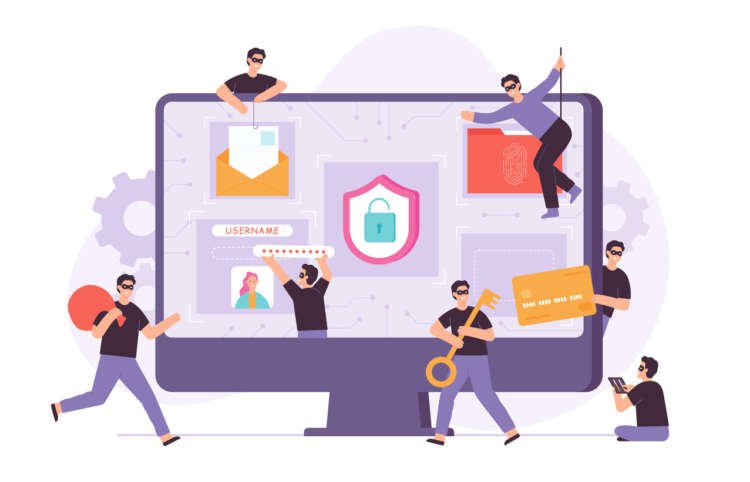
    Financial institutions in French-speaking African countries have been targeted by cybercriminals for months. The hackers carried out their last attack in September 2022 and continue to pose a threat.

    Researchers reported in November that a crew of French-speaking attackers, nicknamed “OPERA1ER”, had targeted financial institutions around the world, netting as much as over $30 million.

    More recently, another cybercrime group, “Bluebottle,” reportedly targeted financial institutions in French-speaking Africa. Although it is difficult to link the two groups due to their different strategies, researchers have concluded that both actors may be the same.

    Similarities between the two cybercrime groups include:

    • the same set of tools
    • lack of custom malware
    • targeting industry- and region-specific domain names.

    Researchers say the latest attacks may have been carried out with the help of phishing and spear-phishing. Some malicious files were executables disguised as PDFs and had French, non-threatening names, such as “job description.”

    Cyberattacks on banks are on the rise

    French-speaking parts of Africa are not the only ones dealing with cyber criminals. Financial institutions have become a target around the world. This industry is probably up to 300 times more vulnerable to attacks than any other.

    Even now, European banks have to fend off attacks. In Denmark, both the central bank and private banks have been recently targeted by cybercriminals launching DDoS attacks to disrupt their services and render them useless to clients. The attacks were most likely the responsibility of pro-Russian hackers, who are also the cause of the country’s increased national threat level.

    The Ukraine-Russia war has left its mark on financial institutions around the world. Pro-Russian cybercriminals are targeting banks in the U.S. and Europe, claiming to be fighting “neo-Nazis” who support Ukraine’s defense against unjustified invasion.

    What are the biggest cyber threats in the financial industry?

    Ransomware

    Ransomware attacks account for a large portion of all cyberattacks initiated against financial institutions. Ransomware is a type of malware capable of encrypting important files so that they can no longer be used. Criminals using ransomware force their victims to pay them to recover data.

    Social engineering

    Those criminals who do not code or break into systems simply use humans. Workers in the financial industry are especially vulnerable to all kinds of scams. They can be tricked into revealing important data or letting the hacker into a closed system.

    Attacks on suppliers

    This is one of the most sophisticated and complex methods used by hackers. Instead of targeting institutions, they can target their software vendors and, for example, replace future updates with malware. This method allows hackers to profit from multiple organizations that happen to be their victim’s clients.

    How can institutions protect themselves?

    1. Limiting access to data. No organization should allow employers access to all of its confidential data. Each employee should only have access to the data necessary to perform their job. This limits the damage that can be done if the company is breached.
    2. Constant threat monitoring. Banks do not sleep, and neither do hackers. It is important to perform threat monitoring and patch any loopholes immediately. Financial organizations can use professional software (firewalls, Intrusion Detection Systems) to monitor their networks.
    3. Keeping in touch with partners. As stated earlier, software vendors and other partners can put organizations at risk. Financial institutions should frequently ask their providers and associates to assess their risks. This is especially important when it comes to software vendors responsible for solutions used by banks.
    4. Staff training. In the age of social engineering attacks, it is crucial to know how to recognize and prevent them. Every employee who has access to confidential data should know how to use a VPN when working remotely (learn more), how to spot a phishing message, or what not to share on social media.
    5. Backing up data. This sounds trivial, but some organizations do not care about backups. And as IT experts say, there are people who do backups and those who will start doing them. Copies of important files can be crucial when a ransomware attack occurs and everything is encrypted.

    What about the clients?

    Unfortunately, as their customer, you have little say regarding their security regarding banks and other financial institutions. You cannot control how they protect your data or what preventive measures they take.

    You can, however, increase your online safety by deciding how to use financial services.

    1. Use online banking wisely. If you want to secure your bank accounts, do not use them while connected to the web via unsafe public Wi-Fi. Hackers can infiltrate such networks, so wait until you can use a private, secure connection. If you have to use a public one – install a VPN to encrypt your data.
    2. Shop smart. Some hackers create mirror sites of popular services (e.g., online stores) to trick people into using them instead of the real ones. Always make sure you are on an official, legitimate website when shopping. Check the address bar for typos and look for the padlock symbol to ensure the site uses a secure connection. Do not use links that were sent to you by unknown individuals.
    3. Be aware of phishing scams. If someone has sent you an email saying that they need your sensitive data to check your account for potentially malicious activity – this is a scam. No bank employee will need your logins or passwords, so do not share them with anyone.
    4. Use antivirus software. Some types of malware, e.g., keyloggers, can spy on you and steal your data by capturing your passwords, logins, etc. Hackers can later sell this information on the black market to access and clean out your bank accounts. Good antivirus software will protect you from files that could potentially hide malicious code.
    5. Enable Multi-Factor Authentication. Enabling MFA wherever possible will keep your profiles and accounts more secure. To log in, you will have to use your credentials and an additional authentication method, like a single-use SMS code. This will keep your accounts safe, even if your laptop or phone is stolen.
    Related Posts
    Treasury transformation must be built on accountability and trust
    Treasury transformation must be built on accountability and trust
    Financial services: a human-centric approach to managing risk
    Financial services: a human-centric approach to managing risk
    LakeFusion Secures Seed Funding to Advance AI-Native Master Data Management
    LakeFusion Secures Seed Funding to Advance AI-Native Master Data Management
    Clarity, Context, Confidence: Explainable AI and the New Era of Investor Trust
    Clarity, Context, Confidence: Explainable AI and the New Era of Investor Trust
    Data Intelligence Transforms the Future of Credit Risk Strategy
    Data Intelligence Transforms the Future of Credit Risk Strategy
    Architect of Integration Ushers in a New Era for AI in Regulated Industries
    Architect of Integration Ushers in a New Era for AI in Regulated Industries
    How One Technologist is Building Self-Healing AI Systems that Could Transform Financial Regulation
    How One Technologist is Building Self-Healing AI Systems that Could Transform Financial Regulation
    SBS is Doubling Down on SaaS to Power the Next Wave of Bank Modernization
    SBS is Doubling Down on SaaS to Power the Next Wave of Bank Modernization
    Trust Embedding: Integrating Governance into Next-Generation Data Platforms
    Trust Embedding: Integrating Governance into Next-Generation Data Platforms
    The Guardian of Connectivity: How Rohith Kumar Punithavel Is Redefining Trust in Private Networks
    The Guardian of Connectivity: How Rohith Kumar Punithavel Is Redefining Trust in Private Networks
    BNY Partners With HID and SwiftConnect to Provide Mobile Access to its Offices Around the Globe With Employee Badge in Apple Wallet
    BNY Partners With HID and SwiftConnect to Provide Mobile Access to its Offices Around the Globe With Employee Badge in Apple Wallet
    How Integral’s CTO Chidambaram Bhat is helping to solve  transfer pricing problems through cutting edge AI.
    How Integral’s CTO Chidambaram Bhat is helping to solve transfer pricing problems through cutting edge AI.

    Why waste money on news and opinions when you can access them for free?

    Take advantage of our newsletter subscription and stay informed on the go!

    Subscribe

    Previous Technology PostExclusive-Microsoft’s Bing plans AI ads in early pitch to advertisers
    Next Technology PostHow biometrics provides retailers security, trust and competitive advantage

    More from Technology

    Explore more articles in the Technology category

    Why Physical Infrastructure Still Matters in a Digital Economy

    Why Physical Infrastructure Still Matters in a Digital Economy

    Why Compliance Has Become an Engineering Problem

    Why Compliance Has Become an Engineering Problem

    Can AI-Powered Security Prevent $4.2 Billion in Banking Fraud?

    Can AI-Powered Security Prevent $4.2 Billion in Banking Fraud?

    Reimagining Human-Technology Interaction: Sagar Kesarpu’s Mission to Humanize Automation

    Reimagining Human-Technology Interaction: Sagar Kesarpu’s Mission to Humanize Automation

    LeapXpert: How financial institutions can turn shadow messaging from a risk into an opportunity

    LeapXpert: How financial institutions can turn shadow messaging from a risk into an opportunity

    Intelligence in Motion: Building Predictive Systems for Global Operations

    Intelligence in Motion: Building Predictive Systems for Global Operations

    Predictive Analytics and Strategic Operations: Strengthening Supply Chain Resilience

    Predictive Analytics and Strategic Operations: Strengthening Supply Chain Resilience

    How Nclude.ai   turned broken portals into completed applications

    How Nclude.ai turned broken portals into completed applications

    The Silent Shift: Rethinking Services for a Digital World?

    The Silent Shift: Rethinking Services for a Digital World?

    Culture as Capital: How Woxa Corporation Is Redefining Fintech Sustainability

    Culture as Capital: How Woxa Corporation Is Redefining Fintech Sustainability

    Securing the Future: We're Fixing Cyber Resilience by Finally Making Compliance Cool

    Securing the Future: We're Fixing Cyber Resilience by Finally Making Compliance Cool

    Supply chain security risks now innumerable and unmanageable for majority of cybersecurity leaders, IO research reveals

    Supply chain security risks now innumerable and unmanageable for majority of cybersecurity leaders, IO research reveals

    View All Technology Posts