
Top Stories
Credit Suisse Bond Wipe-Out Will Not Trigger Credit Insurance Payout
Published by Uma Rajagopal
Posted on May 18, 2023
3 min readLast updated: February 1, 2026
Add as preferred source on Google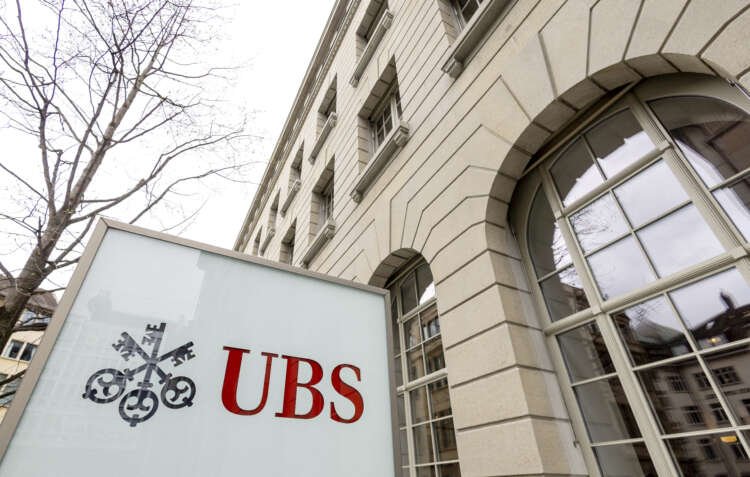
Published by Uma Rajagopal
Posted on May 18, 2023
3 min readLast updated: February 1, 2026
Add as preferred source on GoogleLONDON (Reuters) -Holders of credit insurance linked to Credit Suisse bonds will not get a payout after a committee that adjudicates on disputes in the derivatives market said on Wednesday the bank’s state-engineered merger with UBS was not a credit event.
LONDON (Reuters) -Holders of credit insurance linked to Credit Suisse bonds will not get a payout after a committee that adjudicates on disputes in the derivatives market said on Wednesday the bank’s state-engineered merger with UBS was not a credit event.
The Swiss bank in March was taken over by UBS in a state-assisted rescue deal that wiped out Credit Suisse’s $17 billion Additional Tier 1 (AT1) bondholders.
“A Governmental Intervention Credit Event had not occurred,” the EMEA Credit Derivatives Determination Committee (CDDC) said in a statement on its website, responding to a question from an investor last week.
The CDDC said it had come to the conclusion following an examination of the ranking clauses for the AT1 bonds listed in the request made by the investor.
The investor said the AT1 bonds were pari passu, in other words ranking at the same level, with the reference bond underlying the CDS contracts, which included a subordinated bond that matured in 2020.
But the committee’s view was that holders of the 2020 bonds were priority creditors compared with AT1 bondholders.
“Common sense prevailed,” said Jerome Legras, managing partner and head of research at Axiom Alternative Investments. “Effectively, saying that subordinated Tier 2 and AT1 are pari passu would have been very problematic for the AT1 market.”
The amount of gross notional outstanding CDS linked to Credit Suisse bonds stood at more than $19 billion in March, according to data from the Depository Trust & Clearing Corporation. The DTCC provided no details of what seniority of bonds the CDS contracts were written against.
A panel of eleven finance companies, including Barclays, Citibank, Deutsche Bank and Goldman Sachs as well as Elliot Investment Management and PIMCO came to a unanimous decision, the CDDC statement said.
Credit Suisse, which is still listed as a member of the EMEA CDDC on the group’s website, was not listed as having taken part in the decision.
TEST CASE
The debate on the CDDC committee was another test case for AT1s, which took a beating in March following the surprise decision by Swiss regulators.
AT1 bonds, introduced after the 2008 financial crisis, act as shock absorbers if a bank’s capital levels fall below a certain threshold as they can be converted into equity.
European regulators have said they would continue to impose losses on shareholders first if a bank fails, helping to calm panicky investors. Hong Kong and Singapore also said they would stick to the traditional hierarchy of insolvency claims in which equity investors usually rank below bondholders.
Some investors still hope to recover some of their money if litigation attempts prove successful.
Hundreds of lawsuits have been filed over the terms of the emergency deal to save Credit Suisse.
The 3 billion Swiss franc ($3.35 billion) rescue, hammered out over a March weekend amid turmoil in the global banking sector, upended a long-established practice of giving bondholders priority over shareholders in a debt recovery.
Law firms including Quinn Emanuel Urquhart & Sullivan and Pallas Partners have filed claims on behalf of investors.
(Reporting by Chiara Elisei, editing by Karin Strohecker and Jane Merriman)
Credit insurance is a type of insurance that protects lenders against the risk of default by borrowers, ensuring that they receive payment even if the borrower fails to meet their obligations.
Additional Tier 1 (AT1) bonds are a type of contingent convertible bond that banks issue to help meet capital requirements. They can be converted into equity or written down in times of financial distress.
A credit event refers to a situation that triggers a payout under a credit derivative contract, typically involving a default or significant deterioration in the creditworthiness of a borrower.
A subordinated bond is a type of debt that ranks below other debts in terms of claims on assets or earnings. In the event of liquidation, subordinated bondholders are paid after senior bondholders.
A merger in banking occurs when two financial institutions combine to form a single entity, often to enhance operational efficiency, expand market reach, or improve financial stability.
Explore more articles in the Top Stories category











