Search
00
GBAF Logo
trophy
Top StoriesInterviewsBusinessFinanceBankingTechnologyInvestingTradingVideosAwardsMagazinesHeadlinesTrends

Subscribe to our newsletter

Get the latest news and updates from our team.

Global Banking & Finance Review®

Global Banking & Finance Review® - Subscribe to our newsletter

Company

    GBAF Logo
    • About Us
    • Profile
    • Privacy & Cookie Policy
    • Terms of Use
    • Contact Us
    • Advertising
    • Submit Post
    • Latest News
    • Research Reports
    • Press Release
    • Awards▾
      • About the Awards
      • Awards TimeTable
      • Submit Nominations
      • Testimonials
      • Media Room
      • Award Winners
      • FAQ
    • Magazines▾
      • Global Banking & Finance Review Magazine Issue 79
      • Global Banking & Finance Review Magazine Issue 78
      • Global Banking & Finance Review Magazine Issue 77
      • Global Banking & Finance Review Magazine Issue 76
      • Global Banking & Finance Review Magazine Issue 75
      • Global Banking & Finance Review Magazine Issue 73
      • Global Banking & Finance Review Magazine Issue 71
      • Global Banking & Finance Review Magazine Issue 70
      • Global Banking & Finance Review Magazine Issue 69
      • Global Banking & Finance Review Magazine Issue 66
    Top StoriesInterviewsBusinessFinanceBankingTechnologyInvestingTradingVideosAwardsMagazinesHeadlinesTrends

    Global Banking & Finance Review® is a leading financial portal and online magazine offering News, Analysis, Opinion, Reviews, Interviews & Videos from the world of Banking, Finance, Business, Trading, Technology, Investing, Brokerage, Foreign Exchange, Tax & Legal, Islamic Finance, Asset & Wealth Management.
    Copyright © 2010-2026 GBAF Publications Ltd - All Rights Reserved. | Sitemap | Tags | Developed By eCorpIT

    Editorial & Advertiser disclosure

    Global Banking & Finance Review® is an online platform offering news, analysis, and opinion on the latest trends, developments, and innovations in the banking and finance industry worldwide. The platform covers a diverse range of topics, including banking, insurance, investment, wealth management, fintech, and regulatory issues. The website publishes news, press releases, opinion and advertorials on various financial organizations, products and services which are commissioned from various Companies, Organizations, PR agencies, Bloggers etc. These commissioned articles are commercial in nature. This is not to be considered as financial advice and should be considered only for information purposes. It does not reflect the views or opinion of our website and is not to be considered an endorsement or a recommendation. We cannot guarantee the accuracy or applicability of any information provided with respect to your individual or personal circumstances. Please seek Professional advice from a qualified professional before making any financial decisions. We link to various third-party websites, affiliate sales networks, and to our advertising partners websites. When you view or click on certain links available on our articles, our partners may compensate us for displaying the content to you or make a purchase or fill a form. This will not incur any additional charges to you. To make things simpler for you to identity or distinguish advertised or sponsored articles or links, you may consider all articles or links hosted on our site as a commercial article placement. We will not be responsible for any loss you may suffer as a result of any omission or inaccuracy on the website.

    Home > Technology > COVID-19 – The Omnichannel Accelerant – The Clock is Ticking
    Technology

    COVID-19 – The Omnichannel Accelerant – The Clock is Ticking

    Published by linker 5

    Posted on November 6, 2020

    8 min read

    Last updated: January 21, 2026

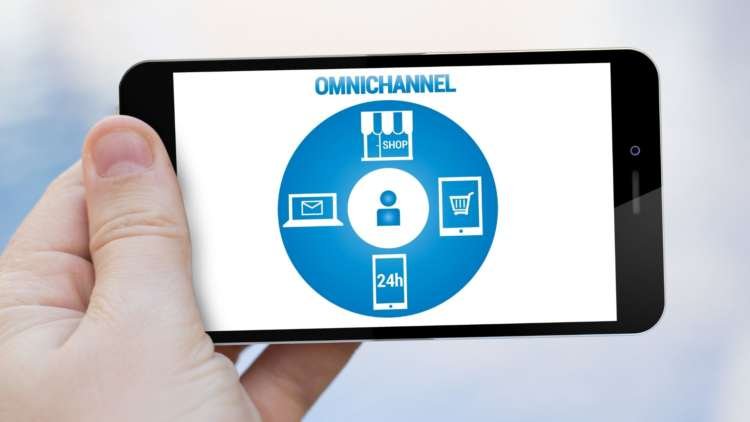
    An illustration depicting the shift to omnichannel retail strategies amid the COVID-19 pandemic, highlighting the urgency for retailers to adapt and meet evolving consumer demands.
    Retailers adapting to omnichannel strategies during COVID-19 pandemic - Global Banking & Finance Review
    Why waste money on news and opinion when you can access them for free?

    Take advantage of our newsletter subscription and stay informed on the go!

    Subscribe

    By Chris Robinson, Director and Executive Chairman, Awaken Intelligence

    It is a particularly frantic time for retailers. Friday 27th November, Monday 30th November, Saturday 26th December, and Friday 1st January are all key dates in the retail calendar where consumers can nab deals at astounding prices.

    In previous times we have watched and listened to views of the sector’s performance, whether sales are up or down and how consumers’ high street and ecommerce habits are gradually evolving.

    However, as highlighted by IMRG’s Customer Week Report 2020, “The coronavirus pandemic has caused unique and significant challenges for the industry. It temporarily shut down non-essential shops and turned many retailers into online pureplays overnight, meaning companies had to evolve to serve customers and keep their businesses alive.”

    The pandemic is far from over so as we head into what is traditionally a busy time of year for retailers, we look at how brands and retailers need to evolve to meet customers’ exceptionally high demands in these new, challenging circumstances.

    The ContactBabel report, UK Contact Centre Verticals – Retail & Distribution, published during the pandemic, highlighted that:

    “Delivering an integrated multichannel experience is vital to the retail experience – customers view the business as one brand, regardless of channel and the retail and distribution sector has been at the forefront of email-based customer service, consistently handling a greater proportion of interactions through email than an average UK business. 

    As ever, pressure on margins has increased for many companies, with price-comparison sites adding to the consumer power. The result is that retailers need to cut the cost of contact over the next few years, with telephony seen as a higher-cost channel for them.”

    The report goes on to highlight that while web chat is a relatively cheap and immediate channel for retailers to embrace, adoption amongst brands and retailers has been relatively slow. In fact, it advised that the level of automation used in digital channels was far underperforming its potential. That is until now…

    COVID-19 – The Accelerant

    We know from our own personal experiences, and from the headlines, that while some brands and retailers have thrived during the unprecedented events of 2020 many have found themselves superfluous as people adapted to staying in and working from home. The impact of lockdown has changed not only the types of purchases made but also buying habits for good. Strolling down the high street and buying products or services on a whim no longer feels necessary or relevant in a COVID-19 world. The appeal of online shopping has never been greater.

    So, if our buying behaviours have changed how are brands and retailers adapting? It’s one thing to switch your business to online pureplay or multi-channel (almost overnight) but how are you serving your customers? The IMRG report highlights the approaches of Maplin, the consumer electronics e-tailer as well as mobile phone and network provider Vodafone, among others. Having faced its own, well-documented, challenges in recent years Maplin, under new ownership, evolved into a pureplay retailer in 2019. And as Ollie Marshall, MD explained in the report, “We’re online so we have been able to continue to trade, and we’re in categories that are booming. Overall trading has been very positive for us.”

    For example, the business recognised a need for electronic scooters as people looked for alternative modes of transport and thanks to its new hybrid inventory model was able to list the relevant merchandise within two days – instantly making the scooters the best-selling product on the website.

    Experience – The Ultimate Differentiator

    So smart inventory and a flexible approach to operations has proved successful and helped some retailers and brands to thrive at this very strange time. But, importantly, Vodafone recognised the importance of their customers’ experiences, whether good or bad. Flavio Lamenza, senior user experience designer at Vodafone also featured in the report and asked “What do you have in place to capture how consumers feel about your product or service? Knowing how we made users feel gave us the evidence to make a change and fix a friction point.” He quite rightly added, “Once users can’t differentiate on price, the only thing left is the experience.”

    A crucial part of that experience is your contact centre and let’s be clear, that doesn’t just mean handling inbound calls from customers. The businesses thriving are the ones that meet their customers when and however they want. They’re offering the true omni-channel experience where they can interact with their customers by telephone, email, web and social media. Some might even say that COVID-19 has been the accelerant to omni-channel adoption that countless retailers have talked about for so many years!

    But to Vodafone’s point – how do you know if your customer experience is living up to expectations or falling short? A recent study by Thisismoney.co.uk found that over 50 major firms are blaming COVID-19 for poor call-waiting times, refund delays or reduced opening hours. And that’s only in the UK! Notably the article highlights that the initial customer patience, understanding and goodwill businesses experienced in the early phase of lockdown has since evaporated as people become exasperated by poor customer service. Volumes of calls and emails may have increased, as our own retail customers have experienced but when organisations can access tools, such as Interaction Analytics there really is no excuse for these types of complaints.

    As Adam French, consumer rights expert at Which?, said, “While COVID initially caused significant upheaval, six months down the line it’s no longer acceptable to blame it. How businesses treated customers during the pandemic won’t be forgotten, and those that do not make customer service a priority are likely to find people will take their business elsewhere.”

    Why Interaction Analytics is the Foolproof Solution to Your Retail Experience

    Interaction Analytics (IA) provides you with the actionable insight to remedy this dire situation. Consumers have adapted their behaviours and shown that they’re more than capable of self-service via web, email or social media. In fact, they want their encounters with your business to be as effective and efficient as possible. Interaction Analytics does just that by helping you to:

    • Identify which customer requests can be resolved quickly and effectively via email, web and social media.
    • Prioritise high value customers or those in need of urgent support that need an in-bound or out-bound telephone call with agents.
    • Meet SLAs while being certain that your business is delivering a consistent and valuable experience.
    • Ensure compliance and governance regulations are met to the highest standards possible. This includes being able to monitor for fraudulent activity even if your agents are working from home.

    What Interaction Analytics (IA) Does for Your Customers and Your Agents

    For Your Customers

    • Customer service whenever and wherever they need it.
    • Ability to ask all kinds of questions and not be transferred across multiple departments.
    • Instant solutions to problems resolved with insight and, voice to voice translation means customers can have their query resolved in their own language, not that of your business.
    • Competence to provide outstanding customer service rather than focusing on the process will make communication with your customers more personalised and will allow you to meet their needs better.

    For Your Agents

    • The intuitive way IA works means your agents require less training or can move on to different campaigns without spending hours reading reams of training manuals.
    • Ability to handle calls and resolve them faster than before, which means your cost per call is kept in control and your AHT performance improves.
    • Your agents have ability to focus on the conversation, rather than the process which means both agent and customer have a better experience. Consequently, your staff retention improves dramatically.
    • Analysing only the calls with known issues, flagged by Auto QAyou will save up to 67% of your QA team’s time.
    • By providing you with actionable insights formed into one report, it will allow you will be able to motivate your agents and steer them in the right direction while stimulating continuous improvement.

    Time Waits for No Man

    The ContactBabel report mentioned earlier highlighted the levels of omnichannel engagement across the retail and distribution sector from 2016-2019. According to the research, three of the most significant contact channels chose by clients to contact companies are telephone, email and web chat.  We’ll only know for sure in late 2021, or even 2022, the full force of the pandemic and its impact upon the retail sector but what we do know is that time waits for no man. Can you really afford to wait and see what the rest of your market is doing? Or are you ready to embrace IA so that you can make some informed decisions around your organisation’s omnichannel experience and, ultimately, the future of your company.

    More from Technology

    Explore more articles in the Technology category

    Image for Debtist: Digital Debt Collection for Modern Businesses
    Debtist: Digital Debt Collection for Modern Businesses
    Image for Infosecurity Europe launches new Cyber Startup Programme to champion the next generation of cybersecurity innovators
    Infosecurity Europe launches new Cyber Startup Programme to champion the next generation of cybersecurity innovators
    Image for BLOXX Launches ĀRIKI BLOXX at Web Summit Qatar
    BLOXX Launches ĀRIKI BLOXX at Web Summit Qatar
    Image for Engineering Trust in the Age of Data: A Blueprint for Global Resilience
    Engineering Trust in the Age of Data: A Blueprint for Global Resilience
    Image for Over half of organisations predict their OT environments will be targeted by cyber attacks
    Over half of organisations predict their OT environments will be targeted by cyber attacks
    Image for Engineering Financial Innovation in Renewable Energy and Climate Technology
    Engineering Financial Innovation in Renewable Energy and Climate Technology
    Image for Industry 4.0 in 2025: Trends Shaping the New Industrial Reality
    Industry 4.0 in 2025: Trends Shaping the New Industrial Reality
    Image for Engineering Tomorrow’s Cities: On a Mission to Build Smarter, Safer, and Greener Mobility
    Engineering Tomorrow’s Cities: On a Mission to Build Smarter, Safer, and Greener Mobility
    Image for In Conversation with Faiz Khan: Architecting Enterprise Solutions at Scale
    In Conversation with Faiz Khan: Architecting Enterprise Solutions at Scale
    Image for Ballerine Launches Trusted Agentic Commerce Governance Platform
    Ballerine Launches Trusted Agentic Commerce Governance Platform
    Image for Maximising Corporate Visibility in a Digitally Driven Investment Landscape
    Maximising Corporate Visibility in a Digitally Driven Investment Landscape
    Image for The Digital Transformation of Small Business Lending: How Technology is Reshaping Credit Access
    The Digital Transformation of Small Business Lending: How Technology is Reshaping Credit Access
    View All Technology Posts
    Previous Technology PostCausal AI – machine learning for the real world
    Next Technology PostThe dual role of data science in fighting financial crime