
Top Stories
COP28 President Says Fossil Fuels Phasedown Is Inevitable
Published by Uma Rajagopal
Posted on June 9, 2023
3 min readLast updated: February 1, 2026
Add as preferred source on Google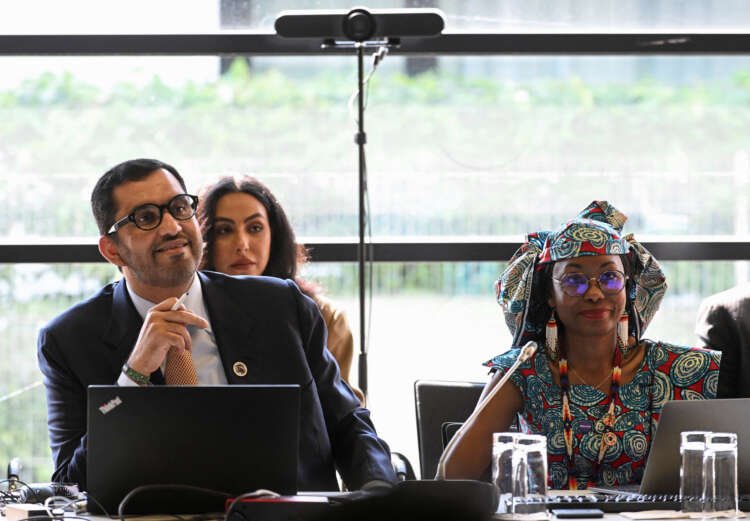
Published by Uma Rajagopal
Posted on June 9, 2023
3 min readLast updated: February 1, 2026
Add as preferred source on GoogleBERLIN (Reuters) – The phasedown of fossil fuels is inevitable, the United Arab Emirates’ incoming COP28 president said on Thursday, in stronger remarks than previous comments where he called for the scaling down of fossil fuel emissions rather than the fuels themselves.
BERLIN (Reuters) – The phasedown of fossil fuels is inevitable, the United Arab Emirates’ incoming COP28 president said on Thursday, in stronger remarks than previous comments where he called for the scaling down of fossil fuel emissions rather than the fuels themselves.
Sultan Ahmed al-Jaber, who also runs the UAE’s state oil giant, has been criticized by climate activists for what they saw as a soft stance on fossil fuel, calling for the tackling of their emissions rather than cutting their use.
That could allow countries to keep using fossil fuels, while using technologies to capture the CO2 emissions that result from burning them.
“The phasedown of fossil fuels is inevitable. The speed at which this happens depends on how quickly we can phase up zero carbon alternatives, while ensuring energy security, accessibility and affordability,” he said at an event on the sidelines of the UN climate talks in Bonn.
Alden Meyer, senior associate at climate think tank E3G, said the acknowledgement of the need to phase down fossil fuels was a useful first step; but al-Jaber needed to recognise the pace at which that needs to happen.
“He needs to commit to reaching agreement at COP28 on a plan for how to deliver those emissions reductions,” Meyer told Reuters.
In November, Abu Dhabi’s ADNOC, which al-Jaber heads endorsed plans to bring forward the company’s five million barrel per day oil production capacity expansion to 2027 from a previous target of 2030, to meet rising global energy demand.
More than 100 members of Congress and the European Parliament last month urged U.S. President Joe Biden and European Commission President Ursula von der Leyen to pressure the UAE government to oust al-Jaber from the COP job, saying his dual position could undermine negotiations.
COP28 Director General Majid Al Suwaidi on Tuesday dismissed criticism for his boss, saying having a CEO to head COP for the first time in the climate summits’ history, and moving away from having a purely political process, would help deliver results from the December meeting.
At a reception hosted by the UAE in Bonn on Thursday, al-Jaber pushed for more progress at the UN climate conference that is seen as a mid-way check for how ambitious international climate talks will take shape at COP28 in December.
The conference had started on Monday with no agreement on final agenda, clouding optimism that the 10-day meeting would result in a clear programme for Dubai.
“As we have learned from past experience, the more progress we make in Bonn, the higher the likelihood of success in December,” al-Jaber said.
(Reporting by Riham Alkousaa; editing by Jonathan Oatis and Alistair Bell)
Fossil fuels are natural resources formed from the remains of ancient plants and animals, primarily consisting of coal, oil, and natural gas. They are used extensively for energy production but contribute to greenhouse gas emissions.
Carbon capture technology refers to methods used to capture carbon dioxide emissions produced from the use of fossil fuels in electricity generation and industrial processes, preventing CO2 from entering the atmosphere.
Sustainability refers to the ability to maintain or improve certain essential processes or systems over time, ensuring that resources are used responsibly and preserved for future generations.
COP28 refers to the 28th Conference of the Parties to the United Nations Framework Convention on Climate Change, where global leaders gather to discuss and negotiate actions to combat climate change.
Explore more articles in the Top Stories category











