Search
00
GBAF Logo
trophy
Top StoriesInterviewsBusinessFinanceBankingTechnologyInvestingTradingVideosAwardsMagazinesHeadlinesTrends

Subscribe to our newsletter

Get the latest news and updates from our team.

Global Banking and Finance Review

Global Banking & Finance Review

Company

    GBAF Logo
    • About Us
    • Profile
    • Privacy & Cookie Policy
    • Terms of Use
    • Contact Us
    • Advertising
    • Submit Post
    • Latest News
    • Research Reports
    • Press Release
    • Awards▾
      • About the Awards
      • Awards TimeTable
      • Submit Nominations
      • Testimonials
      • Media Room
      • Award Winners
      • FAQ
    • Magazines▾
      • Global Banking & Finance Review Magazine Issue 79
      • Global Banking & Finance Review Magazine Issue 78
      • Global Banking & Finance Review Magazine Issue 77
      • Global Banking & Finance Review Magazine Issue 76
      • Global Banking & Finance Review Magazine Issue 75
      • Global Banking & Finance Review Magazine Issue 73
      • Global Banking & Finance Review Magazine Issue 71
      • Global Banking & Finance Review Magazine Issue 70
      • Global Banking & Finance Review Magazine Issue 69
      • Global Banking & Finance Review Magazine Issue 66
    Top StoriesInterviewsBusinessFinanceBankingTechnologyInvestingTradingVideosAwardsMagazinesHeadlinesTrends

    Global Banking & Finance Review® is a leading financial portal and online magazine offering News, Analysis, Opinion, Reviews, Interviews & Videos from the world of Banking, Finance, Business, Trading, Technology, Investing, Brokerage, Foreign Exchange, Tax & Legal, Islamic Finance, Asset & Wealth Management.
    Copyright © 2010-2025 GBAF Publications Ltd - All Rights Reserved.

    Editorial & Advertiser disclosure

    Global Banking and Finance Review is an online platform offering news, analysis, and opinion on the latest trends, developments, and innovations in the banking and finance industry worldwide. The platform covers a diverse range of topics, including banking, insurance, investment, wealth management, fintech, and regulatory issues. The website publishes news, press releases, opinion and advertorials on various financial organizations, products and services which are commissioned from various Companies, Organizations, PR agencies, Bloggers etc. These commissioned articles are commercial in nature. This is not to be considered as financial advice and should be considered only for information purposes. It does not reflect the views or opinion of our website and is not to be considered an endorsement or a recommendation. We cannot guarantee the accuracy or applicability of any information provided with respect to your individual or personal circumstances. Please seek Professional advice from a qualified professional before making any financial decisions. We link to various third-party websites, affiliate sales networks, and to our advertising partners websites. When you view or click on certain links available on our articles, our partners may compensate us for displaying the content to you or make a purchase or fill a form. This will not incur any additional charges to you. To make things simpler for you to identity or distinguish advertised or sponsored articles or links, you may consider all articles or links hosted on our site as a commercial article placement. We will not be responsible for any loss you may suffer as a result of any omission or inaccuracy on the website.

    Home > Technology > Contactless cards: 5 security myths debunked
    Technology

    Contactless cards: 5 security myths debunked

    Contactless cards: 5 security myths debunked

    Published by Jessica Weisman-Pitts

    Posted on September 8, 2021

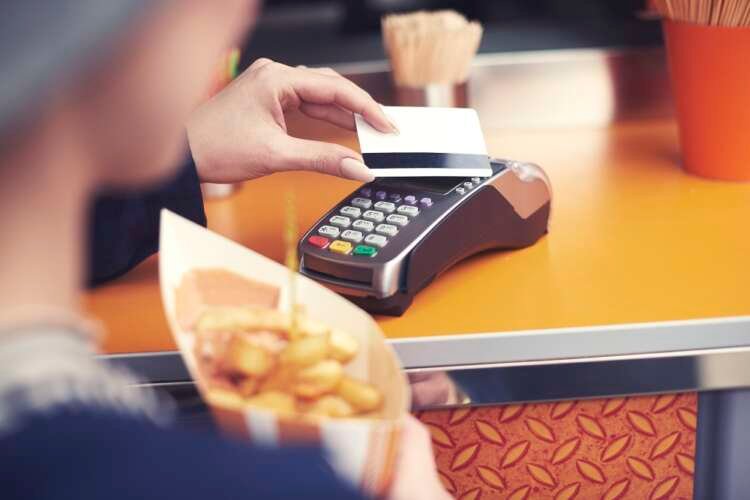
    Featured image for article about Technology

    Contactless payments are becoming more prevalent in the UK, with a previous study by Merchant Machine revealing cash usage in the UK is on the decline and is forecasted to hit 0% in just five years– as soon as 2026. Regardless of the fact that this technology is available, customers aren’t fully aware about how safe this means of payment is, with some individuals being concerned about the security due to contactless payment information being transmitted wirelessly.

    A number of myths have built up around contactless payments, which the experts at Merchant Machine have taken it upon themselves to debunk.

    Myth 1: If a criminal approaches you with a terminal, they may steal your contactless card electronically and use it to complete a fraudulent purchase.

    To obtain a terminal for the purpose of starting a company, you must visit a terminal provider. This means that they know everyone who owns a terminal in the country. Due to contactless payments being electronic, they can be tracked. The terminal, card owner and payment can all be identified.

    Thieves can only get your account number and expiration date using these devices, meaning they would not be able to complete a transaction. If the thief has used a registered terminal, the transaction would also appear as processed, allowing the terminal provider to identify the thief.

    Myth 2: Thieves can duplicate contactless cards

    Some people are concerned that if your contactless information is intercepted, a thief will be able to make a replica card. This is incorrect. During card transactions, the scanner receives a one-time code from the card/device that validates the payment. This is an unique number that would be impossible to duplicate. One-time codes are generated using sophisticated encryption technologies stopping thieves from being able to duplicate any cards.

    Myth 3: I could accidentally pay another customer’s bill or make several consecutive payments

    Payment terminals are designed to prevent payments for the same transaction from being made again, reducing the chance of being charged twice. If a terminal detects several cards, it may ask for only one to be presented, or the transaction may be cancelled to avoid double billing. Fears of paying another customer’s bill accidently are unnecessary, as the card must be placed within a very short distance (one to two inches) of the payment terminal to be read.

    Myth 4: Even if a thief cannot counterfeit your card, they can make purchases online or by phone

    Contactless is nothing more than a feature to enable communication between a card/device and a terminal. It is technology that is only relevant in the physical world. Just like a regular card, a contactless card does not know your name, billing address, or even the 3-digit CVC code at the back of your card. Since these data cannot be transmitted, there is no risk someone gets access to it through contactless communication.

    Myth 5: Apple pay or Google wallet contactless payment is not secure.

    When contactless payments first made their debut on smartphones, concerns were raised about the security of card details being stored on, and transmitted from, a smartphone. In the case of ApplePay, for example, card details are only transmitted when the phone detects a Chip & PIN machine that is requesting payment and  requires either a passcode, retina scan or thumbprint to complete the transaction, along with the 16-digit card number transmitted is semi-randomized per transaction. These features give contactless payments via a phone another level of security.

    Ian Wright, Founder of Merchant Machine comments:

    “The way we make payments has been evolving over the last decade, but amidst the COVID-19 situation, cash usage has decreased even further as more people stay at home due to government measures, and there was/is still a fear of coming into contact with the virus itself.’’

    Contactless payments are becoming more prevalent in the UK, with a previous study by Merchant Machine revealing cash usage in the UK is on the decline and is forecasted to hit 0% in just five years– as soon as 2026. Regardless of the fact that this technology is available, customers aren’t fully aware about how safe this means of payment is, with some individuals being concerned about the security due to contactless payment information being transmitted wirelessly.

    A number of myths have built up around contactless payments, which the experts at Merchant Machine have taken it upon themselves to debunk.

    Myth 1: If a criminal approaches you with a terminal, they may steal your contactless card electronically and use it to complete a fraudulent purchase.

    To obtain a terminal for the purpose of starting a company, you must visit a terminal provider. This means that they know everyone who owns a terminal in the country. Due to contactless payments being electronic, they can be tracked. The terminal, card owner and payment can all be identified.

    Thieves can only get your account number and expiration date using these devices, meaning they would not be able to complete a transaction. If the thief has used a registered terminal, the transaction would also appear as processed, allowing the terminal provider to identify the thief.

    Myth 2: Thieves can duplicate contactless cards

    Some people are concerned that if your contactless information is intercepted, a thief will be able to make a replica card. This is incorrect. During card transactions, the scanner receives a one-time code from the card/device that validates the payment. This is an unique number that would be impossible to duplicate. One-time codes are generated using sophisticated encryption technologies stopping thieves from being able to duplicate any cards.

    Myth 3: I could accidentally pay another customer’s bill or make several consecutive payments

    Payment terminals are designed to prevent payments for the same transaction from being made again, reducing the chance of being charged twice. If a terminal detects several cards, it may ask for only one to be presented, or the transaction may be cancelled to avoid double billing. Fears of paying another customer’s bill accidently are unnecessary, as the card must be placed within a very short distance (one to two inches) of the payment terminal to be read.

    Myth 4: Even if a thief cannot counterfeit your card, they can make purchases online or by phone

    Contactless is nothing more than a feature to enable communication between a card/device and a terminal. It is technology that is only relevant in the physical world. Just like a regular card, a contactless card does not know your name, billing address, or even the 3-digit CVC code at the back of your card. Since these data cannot be transmitted, there is no risk someone gets access to it through contactless communication.

    Myth 5: Apple pay or Google wallet contactless payment is not secure.

    When contactless payments first made their debut on smartphones, concerns were raised about the security of card details being stored on, and transmitted from, a smartphone. In the case of ApplePay, for example, card details are only transmitted when the phone detects a Chip & PIN machine that is requesting payment and  requires either a passcode, retina scan or thumbprint to complete the transaction, along with the 16-digit card number transmitted is semi-randomized per transaction. These features give contactless payments via a phone another level of security.

    Ian Wright, Founder of Merchant Machine comments:

    “The way we make payments has been evolving over the last decade, but amidst the COVID-19 situation, cash usage has decreased even further as more people stay at home due to government measures, and there was/is still a fear of coming into contact with the virus itself.’’

    Related Posts
    Treasury transformation must be built on accountability and trust
    Treasury transformation must be built on accountability and trust
    Financial services: a human-centric approach to managing risk
    Financial services: a human-centric approach to managing risk
    LakeFusion Secures Seed Funding to Advance AI-Native Master Data Management
    LakeFusion Secures Seed Funding to Advance AI-Native Master Data Management
    Clarity, Context, Confidence: Explainable AI and the New Era of Investor Trust
    Clarity, Context, Confidence: Explainable AI and the New Era of Investor Trust
    Data Intelligence Transforms the Future of Credit Risk Strategy
    Data Intelligence Transforms the Future of Credit Risk Strategy
    Architect of Integration Ushers in a New Era for AI in Regulated Industries
    Architect of Integration Ushers in a New Era for AI in Regulated Industries
    How One Technologist is Building Self-Healing AI Systems that Could Transform Financial Regulation
    How One Technologist is Building Self-Healing AI Systems that Could Transform Financial Regulation
    SBS is Doubling Down on SaaS to Power the Next Wave of Bank Modernization
    SBS is Doubling Down on SaaS to Power the Next Wave of Bank Modernization
    Trust Embedding: Integrating Governance into Next-Generation Data Platforms
    Trust Embedding: Integrating Governance into Next-Generation Data Platforms
    The Guardian of Connectivity: How Rohith Kumar Punithavel Is Redefining Trust in Private Networks
    The Guardian of Connectivity: How Rohith Kumar Punithavel Is Redefining Trust in Private Networks
    BNY Partners With HID and SwiftConnect to Provide Mobile Access to its Offices Around the Globe With Employee Badge in Apple Wallet
    BNY Partners With HID and SwiftConnect to Provide Mobile Access to its Offices Around the Globe With Employee Badge in Apple Wallet
    How Integral’s CTO Chidambaram Bhat is helping to solve  transfer pricing problems through cutting edge AI.
    How Integral’s CTO Chidambaram Bhat is helping to solve transfer pricing problems through cutting edge AI.

    Why waste money on news and opinions when you can access them for free?

    Take advantage of our newsletter subscription and stay informed on the go!

    Subscribe

    Previous Technology PostCavai further bolsters its team with the appointment of a Group Agency Director as it continues upon steep growth trajectory
    Next Technology PostWhy digital natives hold the key to widespread transformation in insurance

    More from Technology

    Explore more articles in the Technology category

    Why Physical Infrastructure Still Matters in a Digital Economy

    Why Physical Infrastructure Still Matters in a Digital Economy

    Why Compliance Has Become an Engineering Problem

    Why Compliance Has Become an Engineering Problem

    Can AI-Powered Security Prevent $4.2 Billion in Banking Fraud?

    Can AI-Powered Security Prevent $4.2 Billion in Banking Fraud?

    Reimagining Human-Technology Interaction: Sagar Kesarpu’s Mission to Humanize Automation

    Reimagining Human-Technology Interaction: Sagar Kesarpu’s Mission to Humanize Automation

    LeapXpert: How financial institutions can turn shadow messaging from a risk into an opportunity

    LeapXpert: How financial institutions can turn shadow messaging from a risk into an opportunity

    Intelligence in Motion: Building Predictive Systems for Global Operations

    Intelligence in Motion: Building Predictive Systems for Global Operations

    Predictive Analytics and Strategic Operations: Strengthening Supply Chain Resilience

    Predictive Analytics and Strategic Operations: Strengthening Supply Chain Resilience

    How Nclude.ai   turned broken portals into completed applications

    How Nclude.ai turned broken portals into completed applications

    The Silent Shift: Rethinking Services for a Digital World?

    The Silent Shift: Rethinking Services for a Digital World?

    Culture as Capital: How Woxa Corporation Is Redefining Fintech Sustainability

    Culture as Capital: How Woxa Corporation Is Redefining Fintech Sustainability

    Securing the Future: We're Fixing Cyber Resilience by Finally Making Compliance Cool

    Securing the Future: We're Fixing Cyber Resilience by Finally Making Compliance Cool

    Supply chain security risks now innumerable and unmanageable for majority of cybersecurity leaders, IO research reveals

    Supply chain security risks now innumerable and unmanageable for majority of cybersecurity leaders, IO research reveals

    View All Technology Posts